6 Animals With Social Lives That Sound Surprisingly Human
“Animals have feelings” is true but vague. The interesting parallels are specific — voting procedures, banking-style trust, third-party political interference, post-menopausal authority. Six animals whose social institutions look like ours in load-bearing ways.
Honeybee swarms choose a new nest by holding a deliberative vote — including head-butting rival scouts to suppress competing arguments
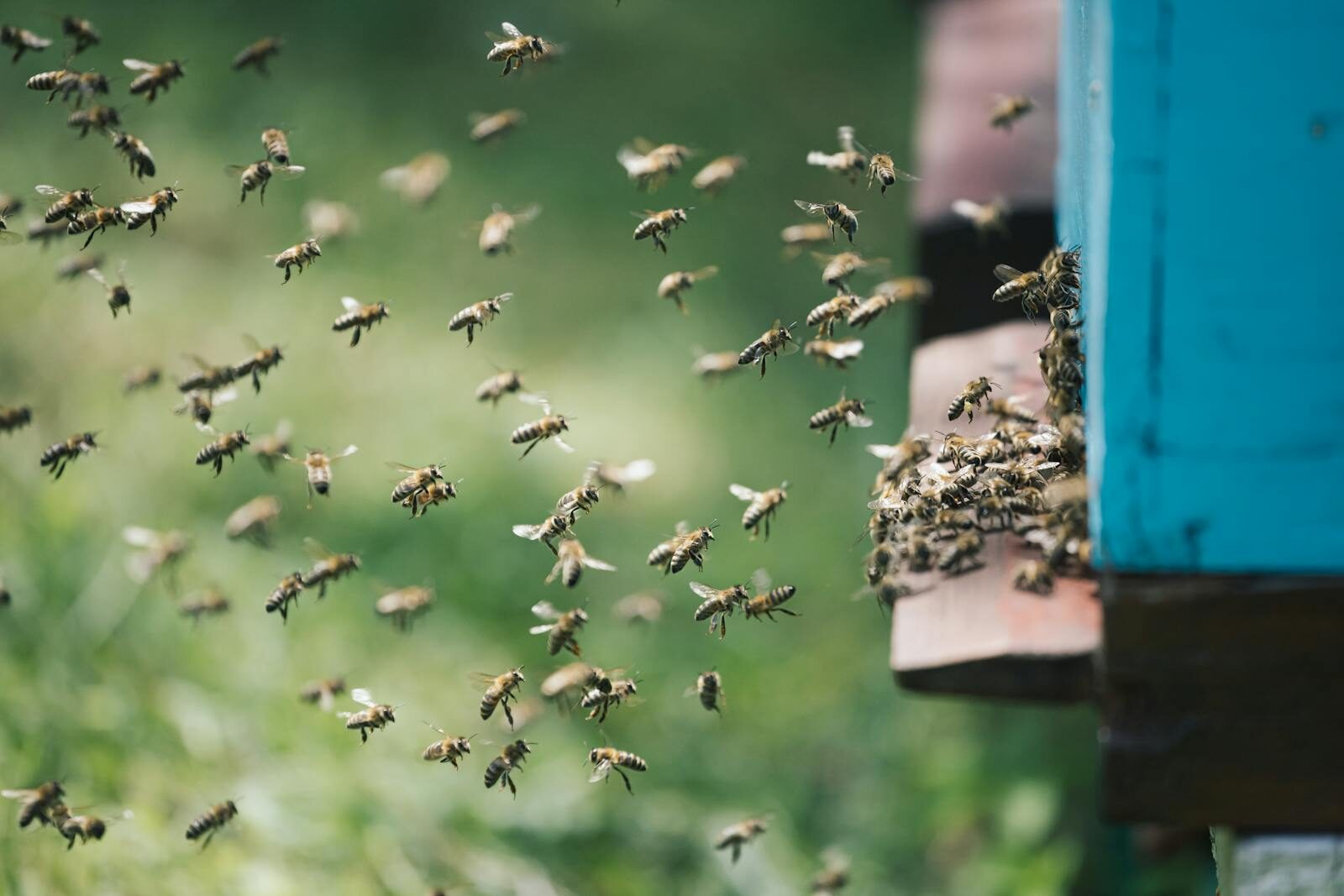
When a honeybee swarm needs a new home, roughly 300 scout bees fly out independently to inspect candidate sites. Each one returns and waggle-dances its report to the swarm. Other scouts watch, then go check the recommended site themselves and come back with their own dance.
The procedural detail is where it gets human. Scouts that have committed to one site will head-butt scouts who are dancing for a different site, physically interrupting the rival’s advocacy. Each scout is also time-limited — she stops dancing for her preferred site after a while whether or not it’s been chosen, which prevents permanent deadlocks. The swarm doesn’t move until a quorum threshold is reached at one site.
Thomas Seeley at Cornell ran the experiments that worked this out, and his book Honeybee Democracy lays out the mechanism in detail. It’s closer to parliamentary procedure with a forced-cloture rule than to a hive mind. Honeybees solved deliberative democracy thirty million years before we did.
Vampire bats build “credit” through low-cost favors before sharing food — the same trust-graduating dynamic economists describe in human friendships
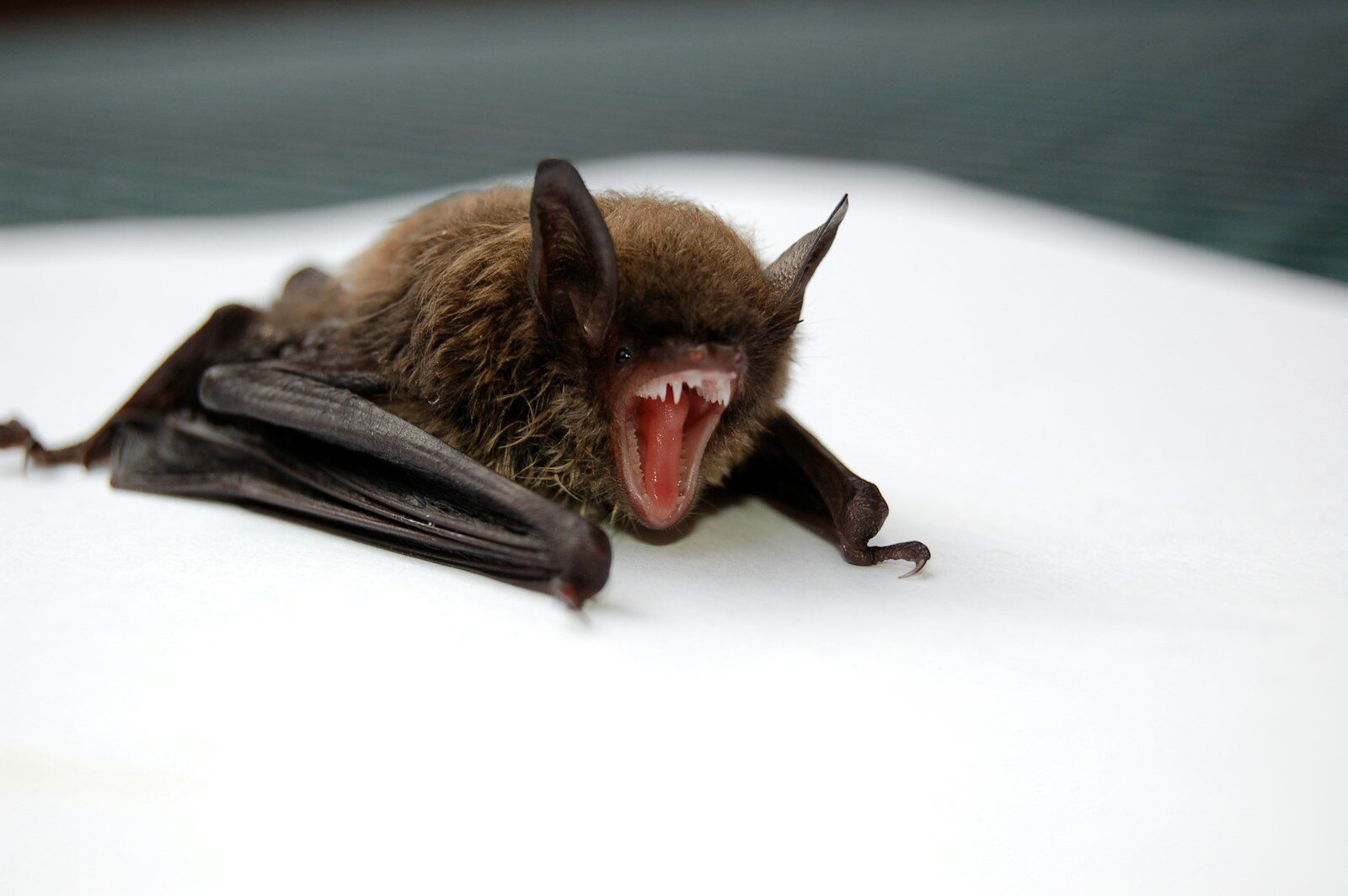
A vampire bat that fails to feed will starve within 70 hours. Roostmates regurgitate blood to save them. Which raises an obvious question: why share with anyone but kin, in a species where defectors could just take and take?
Gerald Wilkinson’s original 1984 Nature paper and Gerald Carter’s 2013 follow-up showed bats share with non-relatives, and that reciprocal help predicts donations more strongly than kinship does. The mechanism is graduated trust. Bats establish a relationship through low-cost favors — grooming, mostly — over weeks before they extend a high-cost favor like blood. They tolerate temporary imbalances. The relationship absorbs short-term inequality the way long-term friendships do.
Carter’s preferred framing is “raising the stakes” — the same protocol economists describe in human friendship and credit formation. Less Hammurabi, more LinkedIn.
Ravens deliberately interrupt other ravens who are trying to form new alliances — and only when the new bond is loose enough to disrupt
Ravens form political alliances through grooming and play. Already-bonded pairs of ravens deliberately interfere when they see other ravens trying to form bonds, breaking up grooming sessions, inserting themselves into the interaction. Divide and rule, in a corvid.
What makes this remarkable is the targeting. Jorg Massen, Thomas Bugnyar, and colleagues at the University of Vienna documented in a 2014 Current Biology paper that ravens only intervene when the rival bond is still developmentally loose — early enough to disrupt. They ignore established pairs (too late) and ignore casual flirtations (not worth the energy). They time the sabotage to the precise window where it works.
The cognitive lift is heavy. The intervening raven has to track other ravens’ relationships, evaluate how mature each one is, and act at exactly the moment of maximum disruption. That’s third-order social cognition — “I know that you are bonding with him” — in a non-mammal.
Killer whale grandmothers go through menopause and become ecological leaders — and their grandkids’ survival measurably drops when they die
Resident killer whales are one of only five mammal species in which females undergo true menopause. Post-reproductive grandmother orcas live decades past their last calf and lead pod foraging movements — especially in years when salmon are scarce. They function as ecological elders, carrying knowledge of where to find food when conditions go bad.
This isn’t a soft-feelings observation. Darren Croft, Lauren Brent, and colleagues at Exeter have 35-plus years of demographic data from the Pacific Northwest Resident population, and the 2019 PNAS analysis shows that when a grandmother orca dies, the survival rate of her grandcalves drops measurably. The effect is strongest in low-salmon years — which is exactly when memory of past foraging locations matters most.
It’s a fitness-grounded explanation for menopause itself. The institution of post-reproductive elders exists because ecological volatility makes accumulated knowledge load-bearing. The same argument anthropologists make for human grandmothers in hunter-gatherer societies.
Adult meerkats teach pups to handle scorpions in graduated stages — dead first, then live with the stinger removed, then intact
Scorpions are a meerkat staple, but a pup that mishandles one gets stung. So adults teach. They start by bringing a dead scorpion to a young pup. As the pup gets better, they upgrade to a live scorpion with the stinger removed. Eventually they bring an intact, fully venomous one.
Alex Thornton and Katherine McAuliffe at Cambridge published this in a 2006 Science paper and it was the first rigorous demonstration of teaching outside humans. Most claims of animal “teaching” don’t survive the strict definition — modifying your behavior in the presence of a naive observer, at a cost to yourself. Meerkats clear the bar. They also monitor pup performance, retrieve scorpions that escape, and escalate difficulty in response to how well the pup is doing.
That last piece — adjusting the lesson to the student’s competence — is the same pedagogical scaffolding human apprenticeships use. It’s not just provisioning. It’s curriculum design.
Enslaved ant workers kill 65% of their captors’ pupae — and the kin-selection math means the revolt isn’t for themselves, it’s for their cousins
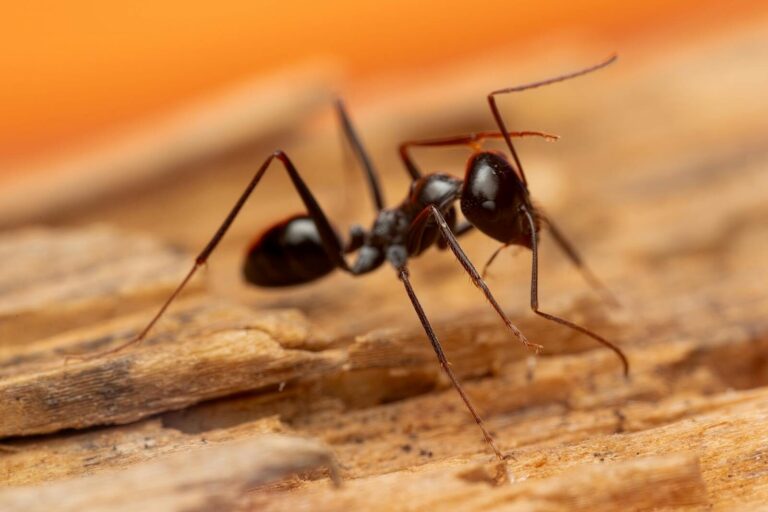
Slave-maker ants Protomognathus americanus raid the colonies of a host ant called Temnothorax longispinosus, kill the queen, and abduct the brood. The kidnapped workers grow up inside the parasite colony and are forced to raise the parasites’ young. Most of the time they comply. Then, at the pupation stage, they suddenly start killing the pupae — and they do it on a massive scale.
Susanne Foitzik’s 2009 Evolution paper, replicated across populations in West Virginia, New York, and Ohio, documented that enslaved workers selectively kill about 65% of the parasite’s pupae. This isn’t sabotage in the general sense. The targeting is specific and the timing matches a kin-selection calculation.
The enslaved workers can’t reproduce or escape, so the revolt has zero direct payoff for them. The payoff is for nearby free Temnothorax colonies — often close relatives — who benefit from a weakened parasite that will be less able to launch future raids. The slaves rebel for their cousins. It’s Hamilton’s rule applied to a literal slave revolt.
The bridge from animal behavior to human institution is sometimes a metaphor and sometimes an isomorphism. When the underlying math lines up — kin selection, quorum, credit — what you’re looking at is the same problem solved twice.