7 Creatures That Completely Changed What Scientists Thought Was Possible
Some animals don’t just expand the catalog. They break a textbook. Seven cases where a single species forced a rewrite of what biology thought it knew, with named researchers, the specific theory that got overturned, and the year the field had to update its priors.
Henneguya salminicola is a multicellular animal that has lost the ability to breathe oxygen — it has no mitochondrial genome at all
Until 2020, the textbook definition of an animal included “obligately aerobic — breathes oxygen, has mitochondrial DNA.” Then Henneguya salminicola, a tiny myxozoan parasite that lives in salmon muscle, ended that streak.
Dorothée Huchon’s group at Tel Aviv University sequenced its genome in February 2020 and found no mitochondrial genome — none. The parasite has reduced its mitochondria to non-respiring vestiges, lost the associated genes, and evidently runs on anaerobic metabolism in the low-oxygen environment of its host’s flesh.
The implications go past one weird parasite. It establishes that anaerobic animal life is biologically possible at all, which matters for thinking about life in extreme environments — including extraterrestrial ones where oxygen isn’t on the menu.
Halicephalobus mephisto is a nematode found 3.6 kilometers underground — proving multicellular animals live deep inside Earth’s continental crust
The deep continental subsurface was thought to be an exclusively microbial biosphere. Multicellular animals were expected to bottom out somewhere in the top two kilometers, below which conditions were too hot, too cramped, and too oxygen-starved.
Then Gaetan Borgonie and Tullis Onstott reported in a June 2011 Nature paper that they’d recovered a free-living nematode from fracture water 0.9 to 3.6 kilometers below the surface in South African gold mines. The water was radiocarbon-dated at 3,000 to 12,000 years old. The temperature was around 37°C. They named it Halicephalobus mephisto, after the devil.
The discovery expanded the known habitable zone for animals by orders of magnitude — and gets cited in arguments for the plausibility of subsurface life on Mars. A worm in a South African gold mine made Martian biology a more reasonable conversation.
A freshwater ciliate called Halteria is the first organism known to thrive on a diet of nothing but viruses — forcing aquatic food-web models to be rewritten
The standard model of aquatic food webs treats viruses as parasites and dead-ends. Viruses lyse cells, the cell contents become dissolved organic matter, that matter is consumed by bacteria, and the energy doesn’t flow upward to larger organisms. This is called the “viral shunt,” and it’s been a load-bearing assumption in marine and freshwater ecology for decades.
Then John DeLong at the University of Nebraska put a freshwater ciliate called Halteria into a beaker with chloroviruses and nothing else. In a December 2022 PNAS paper, his group showed the ciliate grew and reproduced on the viruses alone. Virovory — eating viruses as a full diet — is a real trophic mode.
Heterotrophic protists ingest viral particles all the time as part of mixed diets, which isn’t new. What’s new is thriving on viruses alone, which means viruses are not the dead-end of the food web. They’re a rung. Aquatic carbon-flow models are getting rewritten.
A reef fish called the passed the mirror self-recognition test — breaking a list that used to include only great apes, elephants, dolphins, and magpies
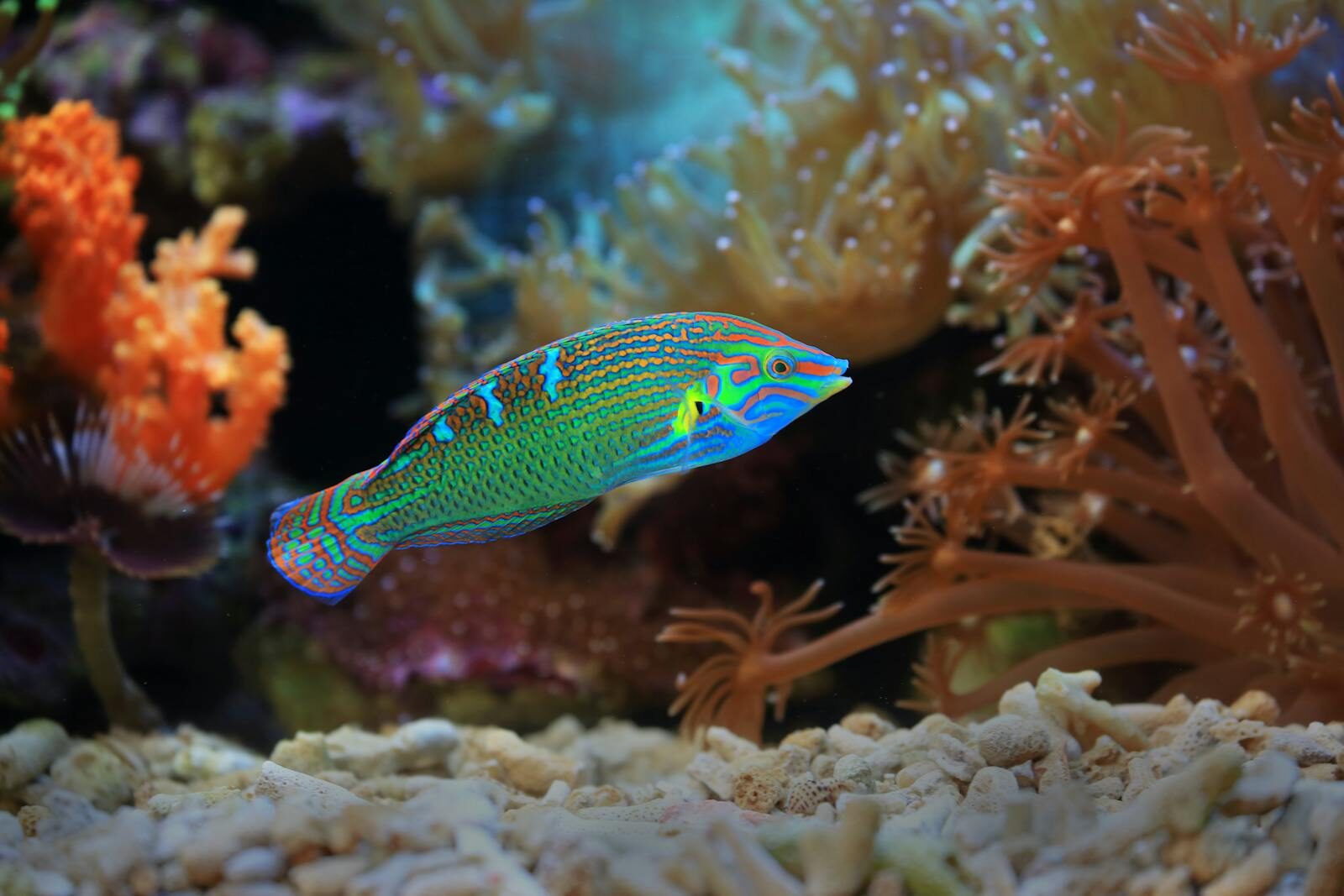
The mirror mark test has been the standard proxy for self-awareness in animals since Gordon Gallup invented it in 1970. You put a mark on the animal in a place it can only see in a mirror. If the animal touches the mark on its own body after seeing it in the reflection, it’s interpreted as recognizing itself.
Masanori Kohda’s group at Osaka City University ran the test on cleaner wrasse Labroides dimidiatus in a 2019 PLOS Biology paper. When researchers injected a brown mark visible only in the mirror, the fish scraped its throat against the substrate and then went back to inspect itself in the mirror. A 2023 PNAS follow-up extended the result to photographs.
The reaction in the field was complicated. Gordon Gallup himself publicly disputed the interpretation, arguing the fish were treating the mark as an ectoparasite, not as part of “self.” Even on the skeptical reading, the result broke the clean species list and forced a rethink of what the test measures. A small reef fish reopened a fifty-year-old debate about consciousness.
The “leaf slug” Elysia chlorotica steals chloroplasts from algae and stays solar-powered for months — and the explanation we had for how just collapsed
The sea slug Elysia chlorotica looks like a small green leaf because it is, functionally, photosynthetic. It eats the alga Vaucheria litorea, extracts the chloroplasts, and incorporates them into its own tissue. The slug can then live for months on light alone.
This was supposed to be impossible. Chloroplasts depend on nuclear-encoded genes from the algal cell, so a stolen chloroplast without those genes should stop working within hours. Mary Rumpho’s 2008 PNAS paper proposed a satisfying answer: horizontal gene transfer. The slug had stolen the algal genes too, integrated them into its own genome, and was running the chloroplasts on borrowed instructions.
Then the answer collapsed. Follow-up work — Bhattacharya and colleagues in 2013 — sequenced the slug genome and found no evidence of the algal nuclear genes. The horizontal gene transfer story doesn’t hold up. The slug is still solar-powered. We just don’t know how it pulls it off. One animal blew up a paradigm, and then blew up the replacement paradigm.
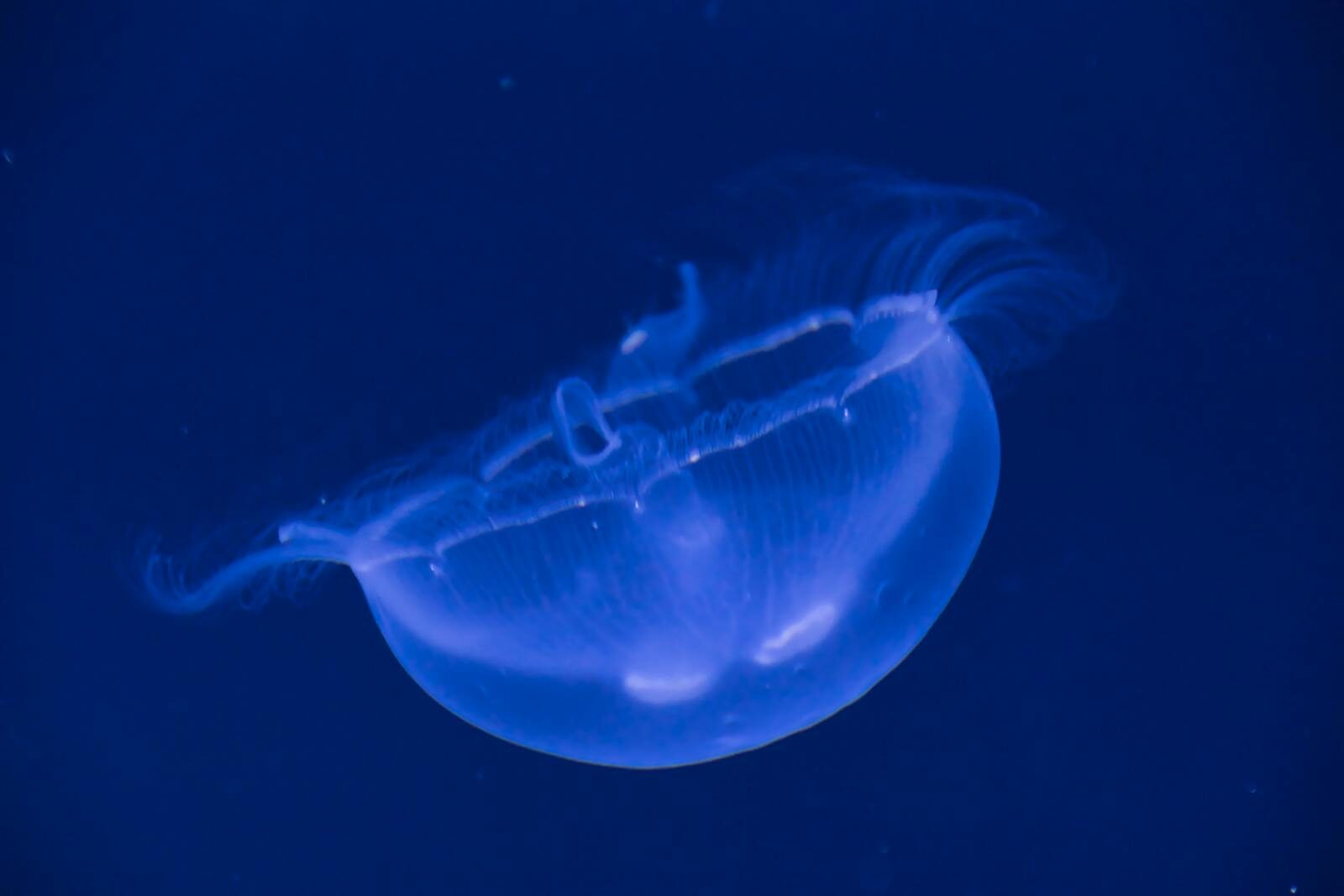
Turritopsis dohrnii is a small jellyfish that can revert to its juvenile form indefinitely — biological immortality, demonstrated 10 years before Yamanaka factors
Adult metazoan cells aren’t supposed to be able to dedifferentiate. Once a cell commits to being a muscle cell or a neuron, it’s supposed to stay that way until it dies. That’s why mammals can’t regrow limbs and why cancer is rare in proportion to how rare full dedifferentiation is.
Then Stefano Piraino and Ferdinando Boero published a 1996 paper in The Biological Bulletin showing that the hydrozoan jellyfish Turritopsis dohrnii does exactly that. Under stress, the adult medusa reverts to its polyp stage by transdifferentiating its cells wholesale, then grows back up into a medusa. The life cycle resets. Indefinitely.
It was a natural example of what Shinya Yamanaka would later imitate artificially with the Yamanaka factors in 2006, work that won a Nobel. The “immortal jellyfish never dies” framing is overplayed — they still get eaten and diseased — but the cell lineage itself is biologically immortal. Regenerative medicine is partly downstream of a jellyfish that figured out the trick first.
Bumblebees taught each other to roll balls into goals for a sugar reward — and the bees who learned by watching improved on what they were shown
Tool use, observational learning, and goal-directed improvisation were supposed to be the province of large vertebrate brains. Apes, corvids, dolphins. Insects were the textbook example of stereotyped, rigid behavior — they did what their genes told them and nothing else.
Olli Loukola and Lars Chittka at Queen Mary University of London published a February 2017 Science paper in which trained bumblebees rolled small wooden balls into a target for sugar. Naïve bumblebees watched, then performed the task themselves when given the chance. Insect observational learning of a non-natural task, demonstrated.
The decisive part is what happened when researchers gave the observer bees a choice of balls at different distances from the goal. They didn’t copy the demonstrator’s path. They went straight for the closest ball. They had understood the goal, not the action — and they improvised a better solution. That’s the move that broke the paradigm, and it was an insect.
Every textbook contains an “exception that proves the rule” footnote. Every so often, the footnote turns out to be the new rule.