5 Animal Myths People Still Believe
Most animal “facts” are rumor with a long enough beard to look respectable. Five of the most stubborn ones have specific origins — a Disney film, a 1947 zoo study, one Roosevelt expedition — and specific people who later debunked them. Here’s where each myth came from and why it’s wrong.
Wolves don’t have alpha males who fight for dominance — and the researcher who popularized that idea spent the next 25 years trying to retract it
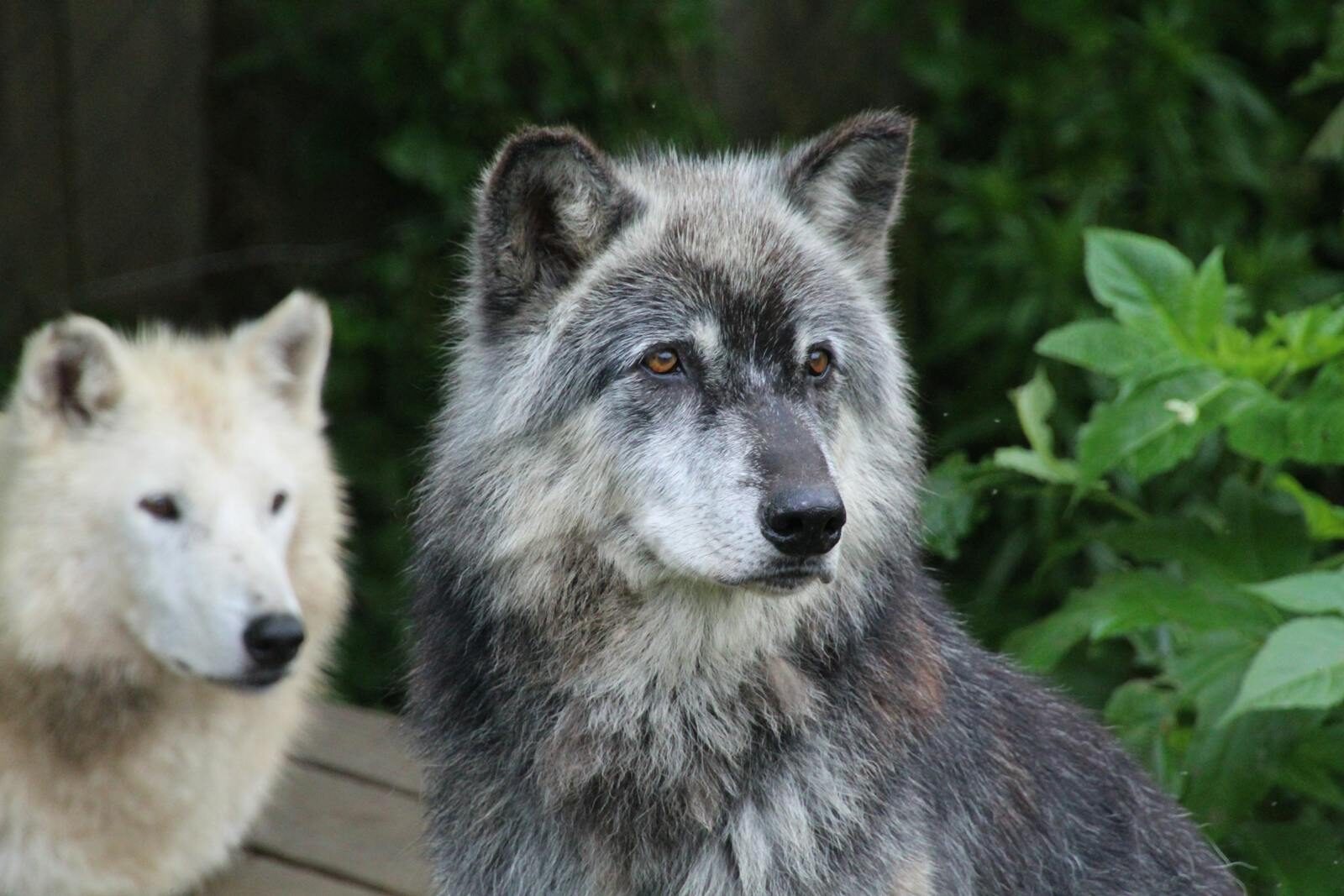
Wild wolf packs are families. A breeding pair plus their offspring from the previous two or three years. There is no dominance contest, no challenge for the throne. The “alphas” are just mom and dad.
The original alpha research was Rudolf Schenkel’s 1947 study of captive wolves at Basel Zoo — unrelated adults forced together in a cage, producing an artificial dominance hierarchy roughly equivalent to studying human behavior by observing a prison yard. L. David Mech popularized the alpha framework in his 1970 book and then went off to study wild wolves on Ellesmere Island for the next 25 years.
What he found there contradicted his own book. Mech published the formal retraction in the Canadian Journal of Zoology in 1999, has spent decades asking publishers to stop reprinting the 1970 book, and finally got it taken out of print in 2022. The original author of the myth is also the original author of its debunking. Which has not stopped the dog-training industry from running on it.
Sharks get cancer — including in their cartilage — and the entire shark cartilage supplement industry traces to one 1992 book
Sharks absolutely get cancer. Tumors in the liver, in reproductive tissue, and yes, in cartilage itself. Gary Ostrander of Johns Hopkins led a 2004 review of the Registry for Tumors in Lower Animals that documented 42 tumors in cartilaginous fish, at least 12 malignant, several growing directly in cartilage.
The myth has a single point of origin. In the 1970s, Henry Brem and Judah Folkman at Johns Hopkins found that cartilage inhibited blood-vessel growth into tumors in lab dishes — legitimate, interesting angiogenesis research. In 1992, William Lane published a book called Sharks Don’t Get Cancer that wildly oversold the finding. A 60 Minutes segment in 1993 made it a phenomenon, and a multi-million-dollar shark cartilage supplement industry was born.
Ostrander called the whole thing “a triumph of marketing and pseudoscience over reason.” Clinical trials of shark cartilage as cancer therapy have failed every time. The supplement diverted cancer patients from real treatment, and helped deplete shark populations to satisfy demand. One bad book, three decades of damage.
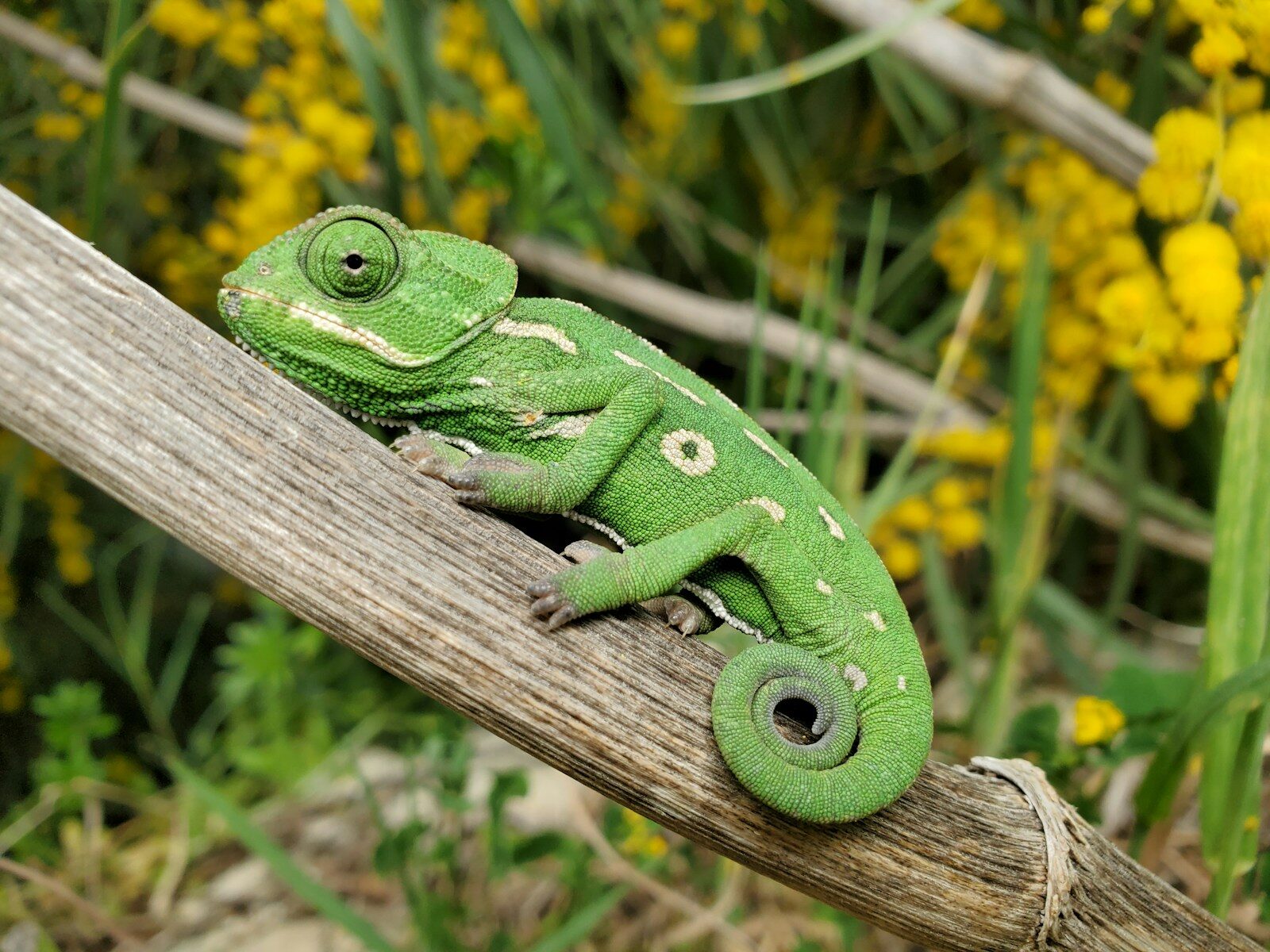
Chameleons don’t change color to camouflage — they do it to communicate, by rearranging a lattice of nanocrystals under their skin
The “chameleon changes color to blend in” thing is upside down. Their baseline coloring is already their camouflage. The dramatic color changes are for communication — mostly mating displays and threat displays at rival males — and for thermoregulation.
The mechanism is the better surprise. Until 2015, biologists thought chameleons shifted color by moving pigment around in cells. A University of Geneva paper by Jérémie Teyssier and Michel Milinkovitch showed that panther chameleons do something completely different. They have iridophore cells under the skin filled with a lattice of guanine nanocrystals. By actively stretching or relaxing the spacing between those crystals, the chameleon changes which wavelengths of light reflect back. It’s structural color, like a butterfly wing, except adjustable in real time.
A deeper iridophore layer with larger crystals reflects near-infrared, giving the animal passive thermal protection. So the chameleon is wearing two tunable optical instruments, one for talking and one for not overheating. The actual mechanism is more interesting than the myth.
Opossums don’t choose to play dead — their nervous system collapses them into an involuntary seizure they can’t snap out of
Opossums don’t decide to play dead. When extreme stress hits, the nervous system triggers a cascade called thanatosis or tonic immobility. Heart rate and breathing drop to barely perceptible levels. Muscles lock rigid. The tongue turns blue. The mouth fills with foam. The animal releases urine, feces, and a foul cadaver-smelling discharge from anal glands.
They cannot snap out of it on command. Recovery takes anywhere from 40 minutes to four hours, during which the opossum is completely defenseless. It’s much closer to a fainting spell than a performance — a person doesn’t decide to faint either.
The English phrase “playing possum” dates to the early 1800s and assumed deliberate trickery. Which made for a better folk story than “the animal had a stress-induced seizure with simulated decomposition.”
The “piranhas strip a cow to the bone” image traces to a single staged demonstration arranged for Theodore Roosevelt in 1913
Piranhas are mostly opportunistic — they scavenge dead fish, eat fruit and plants and insects, occasionally take other fish. Their schools form for protection from predators (caimans, river dolphins), not for cooperative hunting. They will sometimes bite humans, but the blood-frenzy-strips-a-cow image is fiction.
It traces to one event. In 1913, Theodore Roosevelt was on his Amazon expedition. His Brazilian hosts had netted off a section of river and dumped pre-caught piranhas into it. They starved the fish for weeks. When Roosevelt arrived, they threw a butchered cow into the water, and the famished trapped fish did exactly what a famished trapped predator would do.
Roosevelt described the spectacle in his 1914 book Through the Brazilian Wilderness, calling piranhas “the embodiment of evil ferocity” and “blood-crazed.” That description shaped a century of B-movies, including Joe Dante’s 1978 Piranha. One staged stunt, one bestseller, one ecosystem of nightmares.
Each of these survived because the false version was a better story. The actual mechanism is usually more interesting, but only if you know to look for it.