5 Animal Abilities Scientists Are Still Trying to Understand
5 Animal Abilities Scientists Are Still Trying to Understand
Science likes to project an air of having the world figured out. Most of the time, this works. We can predict eclipses to the second, sequence a genome in a weekend, and bounce signals off probes on Mars. And yet there are creatures on this planet doing things that researchers still cannot fully explain — not in a vague, philosophical way, but in the precise sense that the mechanism is documented, the behavior is reproducible, and nobody knows how it works.
The list below is not folklore or speculation. Each of these abilities is being actively investigated at major research institutions right now, by scientists who have spent careers trying to crack open the underlying biology. The fact that they’re still working tells you something. Here are five animal abilities that remain partial mysteries to the people studying them.
Axolotls Can Regrow Limbs Without Scarring — and Scientists Want to Know Why
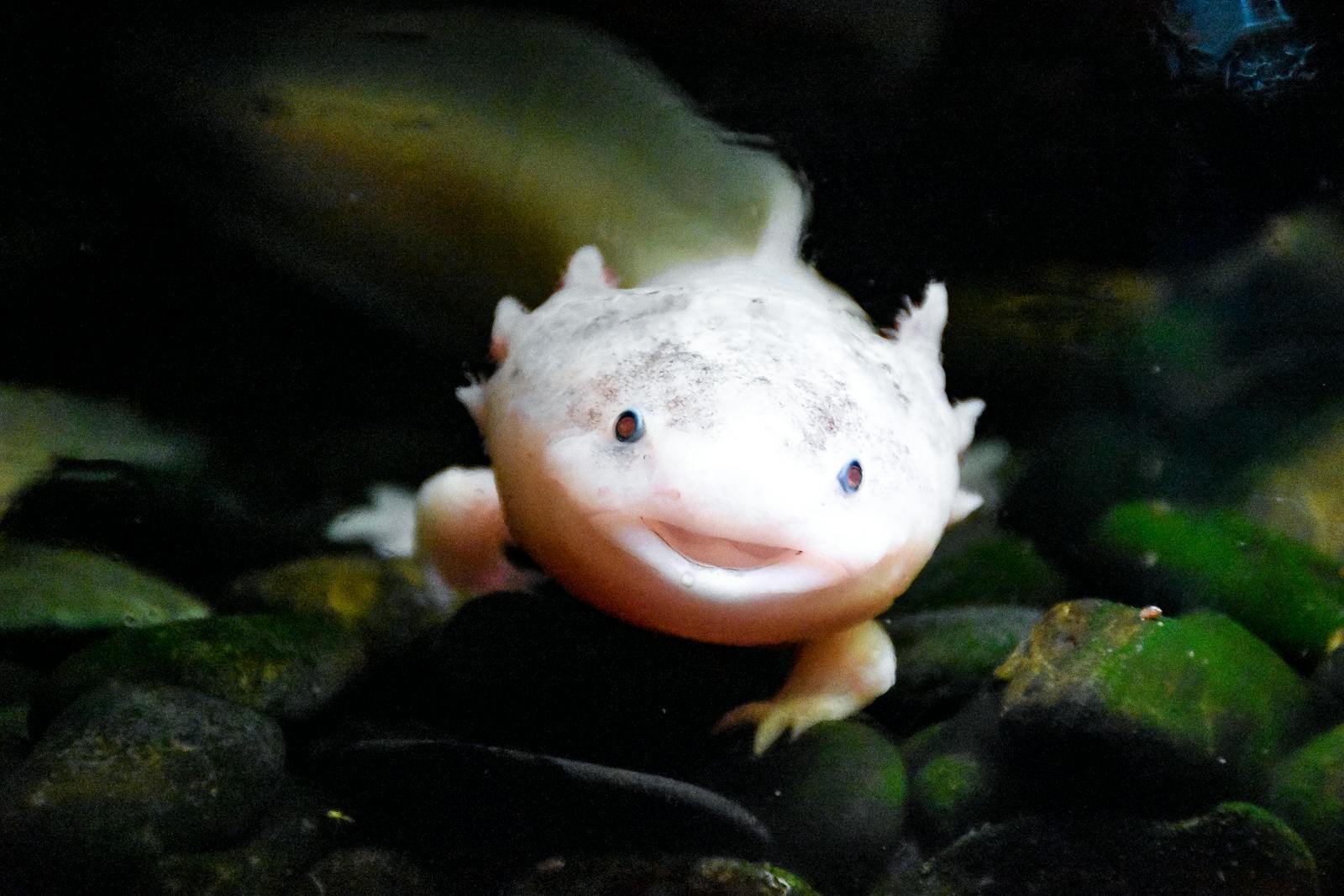
The axolotl is a Mexican salamander with feathery external gills and a permanent expression that looks vaguely amused. It can also regrow an entire limb — bone, muscle, skin, blood vessels, nerves, fingertip cartilage, all of it — after losing the original to a predator. The replacement is functionally identical to the lost limb. There is no scar.
For roughly a century, biologists have been trying to understand the cellular accounting that makes this possible. After an injury, axolotl cells near the wound undergo a process called dedifferentiation: mature, specialized cells revert to a more primitive, embryonic-like state, then proliferate into a structure called a blastema, which patterns itself into the missing limb. The genome makes this harder to study, not easier. The axolotl has the largest genome ever sequenced — roughly ten times the size of the human genome — which means an enormous amount of regulatory machinery to sift through.
Progress is real but slow. James Monaghan’s lab at Northeastern University identified a signaling molecule called neuregulin-1 that appears essential for limb, lung, and possibly heart regeneration. Remove it, and regeneration stops. Add it back, and it resumes. In 2025, a team at Harvard’s Department of Stem Cell and Regenerative Biology, led by Jessica Whited, published a study in Cell showing that limb regeneration is triggered by the sympathetic nervous system — the “fight or flight” network — and that this systemic adrenaline signal “primes” the entire body for regeneration. Researchers now have pieces of the puzzle. What they don’t have, yet, is a complete picture of how a fully grown adult animal flips a switch and starts building itself again from scratch.
Migratory Birds May Navigate Using Quantum Mechanics
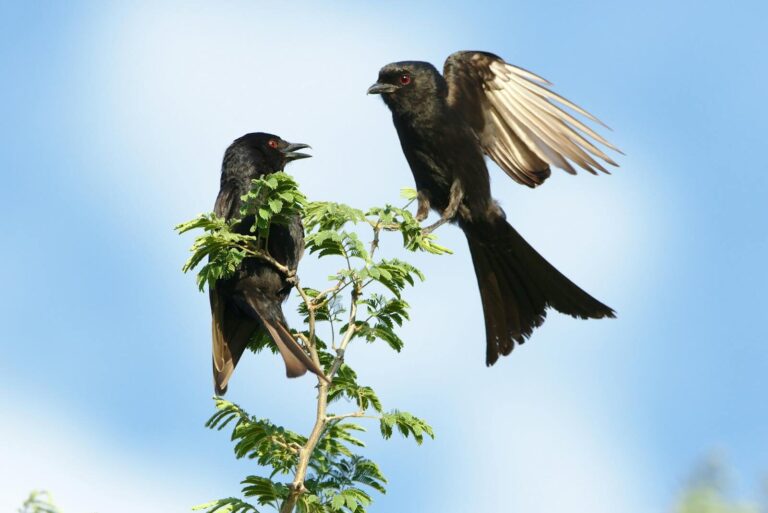
European robins fly from Scandinavia to North Africa every autumn. They make this journey at night, across thousands of miles, and they hit specific destinations with the kind of precision that requires a compass. The compass appears to be in their eyes. The mechanism appears to involve quantum entanglement. As of this writing, the field’s leading researchers will tell you that they don’t fully understand it.
The theory began as a back-of-envelope sketch in the late 1970s and has since become one of the most active areas in a young field called quantum biology. A blue-light-sensitive protein in the retina called cryptochrome briefly forms what physicists call a “radical pair” — two molecules with linked electron spins that are sensitive to extremely weak magnetic fields. The Earth’s magnetic field is one such field. The orientation of the bird’s head relative to the field appears to subtly tilt the chemical outcome of the radical pair reaction, which the bird’s brain interprets as direction.
In 2021, a team from the University of Oldenburg and Oxford published a study in Nature showing that cryptochrome 4 from the night-migratory European robin is magnetically sensitive in laboratory tests — and notably more sensitive than the same protein extracted from non-migratory chickens and pigeons. Henrik Mouritsen, the lead biologist on much of this work, has called the avian magnetic compass “the greatest holy grail in sensory biology” — a sense we know exists, can disrupt by exposing birds to weak radio noise, but cannot fully model. If the theory holds, birds are running a quantum-mechanical instrument in their eyeballs.
The Mantis Shrimp Has 16 Photoreceptors and Sees Color Wrong
Mantis shrimp are technicolor crustaceans, roughly the length of a pencil, that punch holes in aquarium walls. For decades, they were the internet’s favorite example of how limited human perception is. Humans have three types of color photoreceptor. Mantis shrimp have up to sixteen. The popular story said this meant they saw colors humans cannot imagine — a hyper-dimensional rainbow beyond our comprehension. The popular story turned out to be wrong, and the truth is stranger.
In 2014, Justin Marshall’s lab at the University of Queensland published a study in Science that tested mantis shrimp on color discrimination tasks. The animals were trained to swipe at a particular wavelength of light for a food reward, then tested on increasingly similar colors. The result: mantis shrimp are surprisingly poor at distinguishing nearby colors. When two hues were within 25 nanometers — the equivalent of telling pure yellow from orange — the shrimp started failing. Humans, with three photoreceptors, perform this task better.
So what are the other photoreceptors doing? Marshall’s team proposed that mantis shrimp don’t process color the way other animals do. Instead of comparing ratios of stimulation between a few receptors, they appear to use each of their twelve to sixteen receptors as a separate channel — essentially shunting each wavelength into a narrowly defined bin, almost like a satellite sensor or a barcode reader. The system trades fine discrimination for speed. In the violent world of a coral reef, where a mantis shrimp may need to identify food, threat, or mate in a fraction of a second, “fast and approximately correct” beats “slow and precise.” The visual system is engineered for a different problem than ours — and exactly how the brain interprets all that parallel data is still being worked out.
Electric Eels Can Reach Into Another Animal’s Nervous System
An electric eel is not really an eel. It is a six-foot South American knifefish capable of generating 600 volts of electricity through specialized cells called electrocytes that work together like stacked batteries. The shock is enough to hurt a person. For centuries, this is where the story ended: electric eel makes electricity, eel hunts with electricity, the end.
In 2014, Kenneth Catania, a biologist at Vanderbilt University, decided to actually film one hunting. He used high-speed video at 1,000 frames per second. What he saw changed the story. When an eel released a high-voltage volley, the prey fish was paralyzed within three milliseconds — faster than a fish could even initiate an escape response. Catania set up a series of experiments and discovered why. The eel’s electrical pulses precisely match the firing pattern of the prey’s own motor neurons. The shock isn’t acting on muscle directly. It’s hijacking the prey’s nervous system, causing every voluntary muscle to contract at once.
It got stranger. When a hunting eel suspects prey is hiding but cannot find it, it emits short bursts of two or three quick pulses. These “doublets” cause hidden fish to involuntarily twitch, betraying their location, at which point the eel attacks. The eel is essentially using its prey’s own nerves as a sonar system. “Apparently, eels invented the Taser long before humans,” Catania told reporters when his paper appeared in Science. The exact evolutionary path by which a fish acquired the ability to send precisely calibrated neural signals into another animal’s body is still being investigated.
Salmon Find Their Birth Stream After Years in the Open Ocean
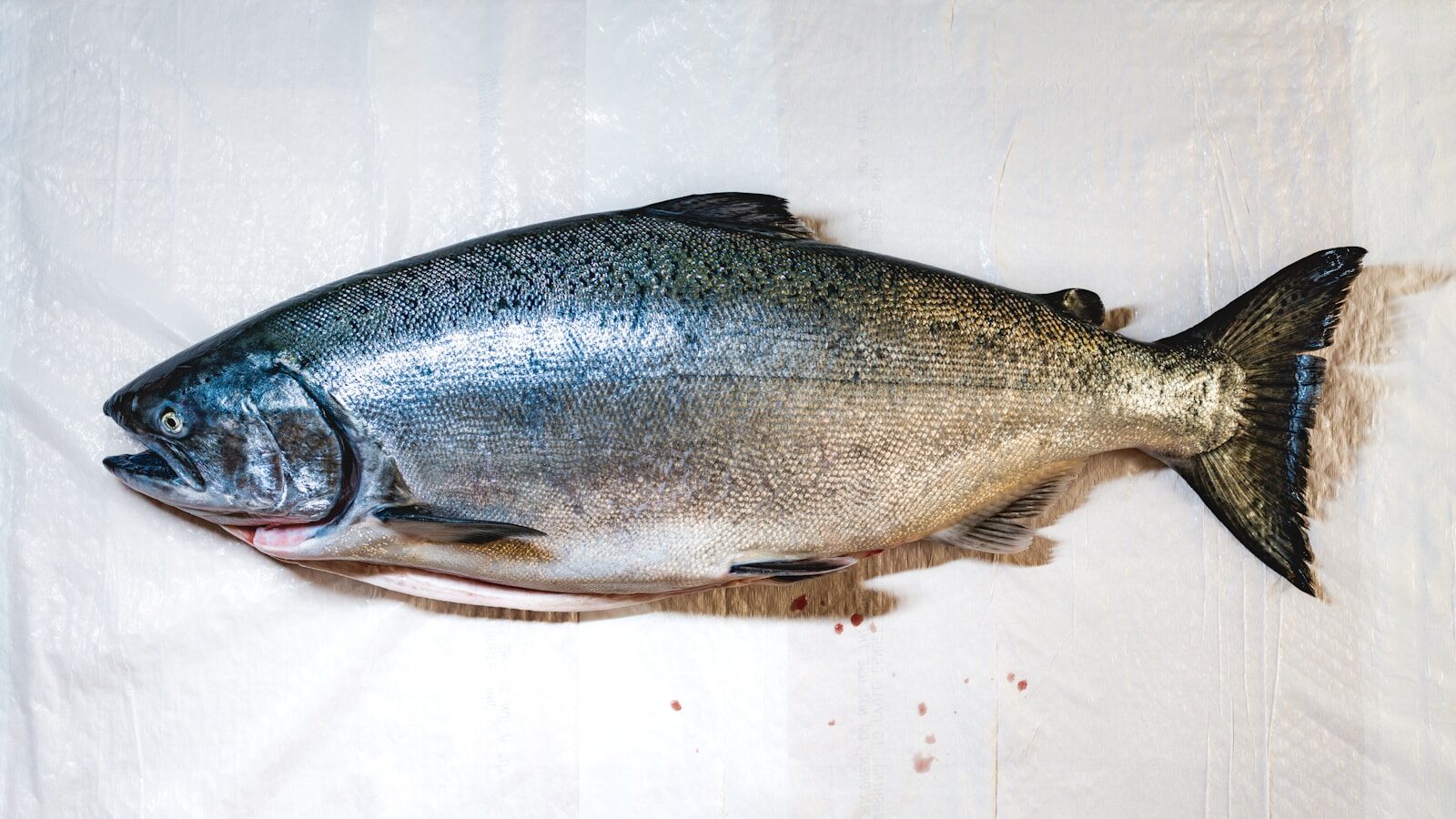
A sockeye salmon hatches in a creek somewhere in British Columbia. It swims downstream to the ocean. It spends two to four years in the open Pacific, ranging across thousands of square miles. Then, when sexual maturity arrives, it turns around and finds its way back — not just to North America, not just to its home river, but to the exact gravel bed where it hatched.
The final leg of the journey, the freshwater part, is reasonably well understood. Juvenile salmon imprint on the specific olfactory signature of their home stream — a chemical fingerprint of minerals, organic compounds, and microbial byproducts — and follow that scent backward through the river system. But this only works once the fish is near the coast. In the open ocean, hundreds of miles from any river mouth, the smell signal is gone. Something else is guiding them.
The leading hypothesis, supported by a decade of work from Nathan Putman at Oregon State University and Kenneth Lohmann at the University of North Carolina, is that salmon imprint on the magnetic signature of their natal river the same way they imprint on its smell. As juveniles enter the sea, they record the local angle and intensity of Earth’s geomagnetic field. Years later, they navigate back to that exact magnetic value, then switch to scent for the final approach. In 2014, Putman’s group showed that drift in the Earth’s magnetic field predicted variation in actual salmon migration routes across decades of data. The math worked.
What nobody can yet explain is how the magnetic information is detected and stored. There is no confirmed magnetoreceptor organ in salmon. The animal is recording GPS-grade coordinates as a juvenile, holding them in memory for years while it grows in saltwater, and then retrieving them with enough precision to reach a specific creek bed. The behavior is real. The mechanism is still being chased.