7 Science “Facts” From School That Were Oversimplified
Most of us left school with a tidy set of science facts lodged in our heads: five senses, nine planets, atoms like little billiard balls. Those shortcuts did their job at the time. But the real science behind each one is messier, more fascinating, and, in several cases, dramatically different from what the textbook said. Here are seven classroom staples that deserve a serious update, along with the research that rewrites them.
The Oversimplified “Facts”
1. You have way more than five senses
Sight, hearing, smell, taste, touch. That was the list, and it fit neatly on a poster board. But neurologists have recognized additional sensory systems for decades. Your body also detects temperature (thermoception), pain (nociception), balance and acceleration (the vestibular sense), and the position of your own limbs without looking at them (proprioception). Depending on how researchers draw the lines, the count reaches anywhere from a dozen to more than 20, according to neuroscience references such as Purves et al.’s Neuroscience, a widely used university textbook now in its sixth edition.
These aren’t obscure technicalities. Proprioception is the reason you can touch your nose with your eyes closed. Your vestibular system is why you feel dizzy after spinning in circles. The five-sense model was a useful starting point, but it left out the very systems that keep you upright and aware of your own body.
2. Pluto lost full planet status, and the debate still simmers
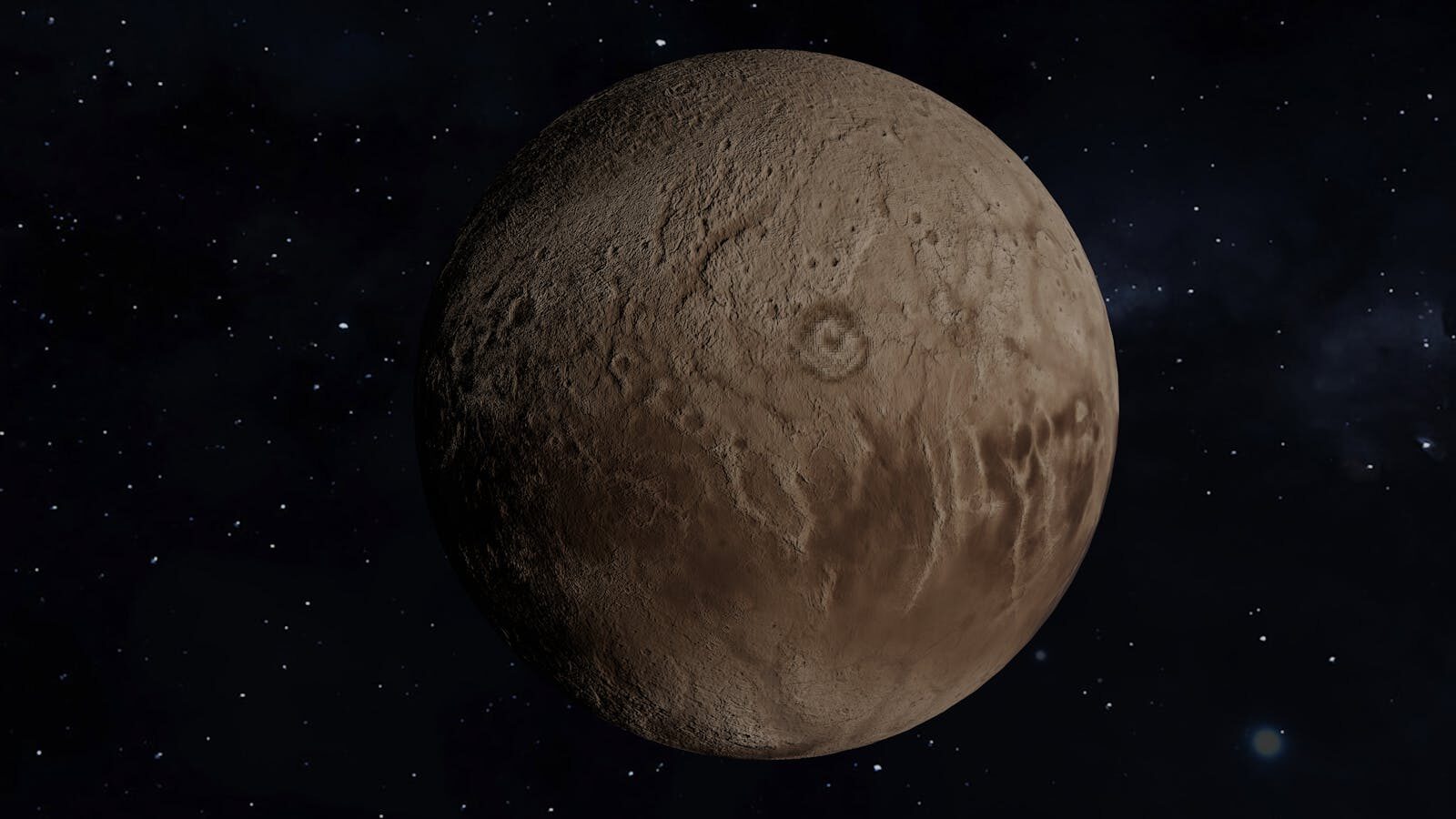
“My Very Educated Mother Just Served Us Nine Pizzas” was a beloved mnemonic until August 2006, when the International Astronomical Union (IAU) voted on Resolution 5A in Prague. The new definition required a planet to orbit the Sun, have enough mass to be roughly spherical, and have “cleared the neighborhood” around its orbit. Pluto, which shares the Kuiper Belt with thousands of other icy objects, failed that third test and was reclassified as a dwarf planet.
The vote was contentious. Only about 424 of the IAU’s roughly 10,000 members were in the room, and prominent planetary scientists, including Alan Stern, the principal investigator of NASA’s New Horizons mission, have argued ever since that the definition is flawed. The solar system didn’t change that day. Our labeling system did, and it’s still being argued over, which is a healthy reminder that scientific categories are tools, not permanent truths.
3. Atoms are mostly empty space, not tiny solid balls
Classroom diagrams love to show atoms as colorful spheres stacked together like marbles. That picture is easy to draw, but it obscures what makes atoms genuinely strange. A hydrogen atom’s nucleus is roughly 100,000 times smaller than the atom itself. The rest is occupied by electrons, which don’t orbit in neat circles the way textbook illustrations suggest. Quantum mechanics describes them as probability clouds: smeared-out regions where an electron is likely, but never guaranteed, to be found.
This isn’t just abstract physics. The quantum behavior of electrons explains why metals conduct electricity (outer electrons move freely between atoms), why LEDs emit specific colors of light (electrons drop between defined energy levels), and how MRI machines image soft tissue (hydrogen nuclei respond to magnetic fields in predictable quantum ways). The solid-ball model gets you through a middle-school quiz, but the quantum picture is what actually powers modern technology.
4. Many dinosaurs were feathered, not scaly
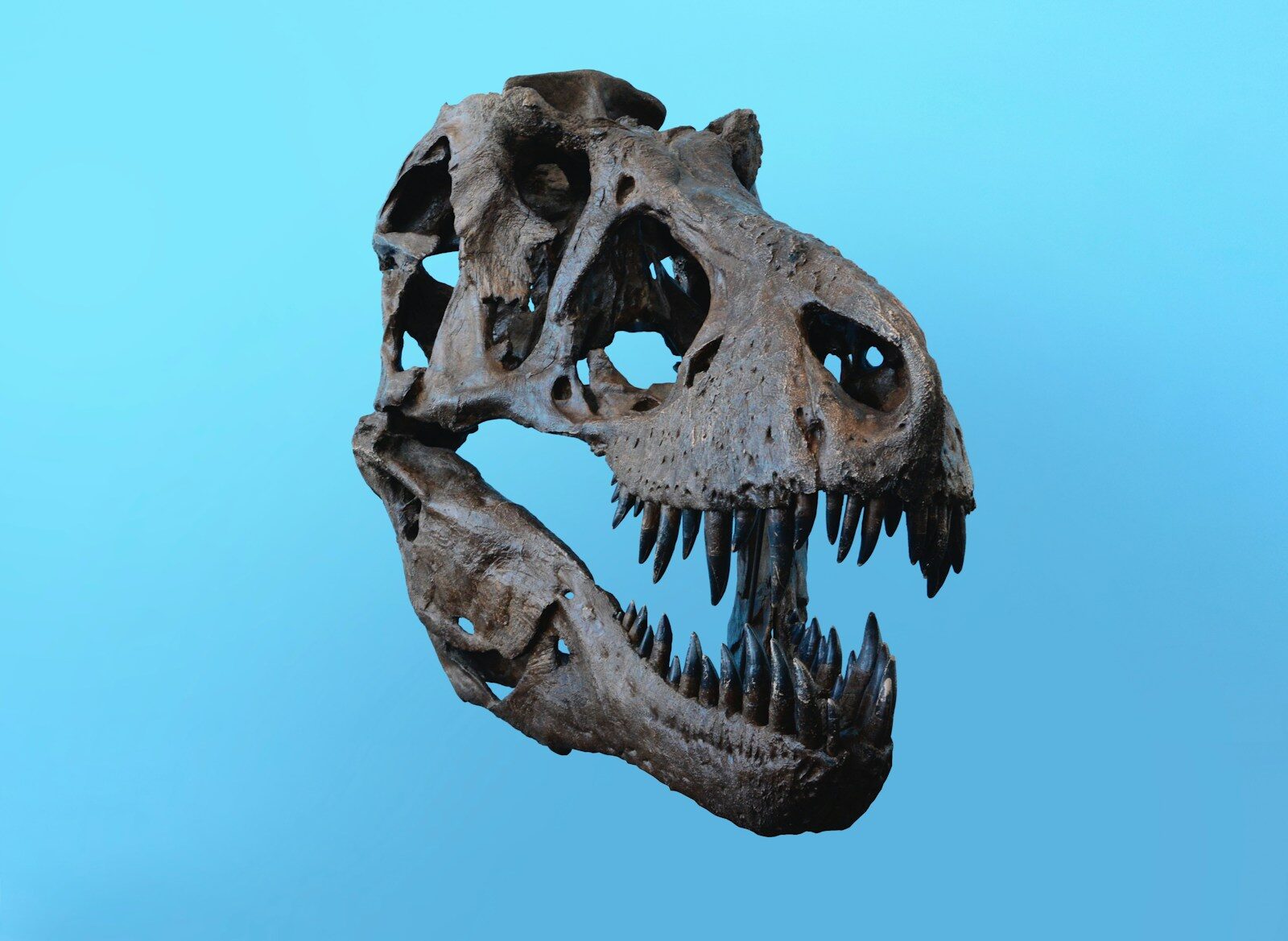
If your childhood dinosaur books showed nothing but green, leathery giants, they were already out of date. The first strong evidence arrived in 1996 with Sinosauropteryx, a small theropod fossil from China’s Liaoning Province that preserved unmistakable filamentous structures around its body. Since then, dozens of feathered species have been identified. In 2012, researchers described Yutyrannus huali, a 30-foot relative of Tyrannosaurus rex covered in long, filament-like feathers, published in the journal Nature.
Whether T. rex itself was feathered remains debated. Some skin impressions from large tyrannosaurs show scales, leading paleontologists to suspect adults may have lost most feathering as they grew, much the way some large mammals have sparse hair. But the broader point stands: birds are not merely “related to” dinosaurs. They are surviving dinosaurs, members of the theropod lineage. The crow raiding your trash can is a living dinosaur, and the old scaly stereotype hid that direct connection.
5. You use far more than 10 percent of your brain
The “10 percent” claim has been repeated in movies, self-help books, and motivational posters for over a century. Its exact origin is murky, sometimes attributed to a misquote of William James or to early neurology experiments, but no version of it holds up. Functional MRI studies show that even simple tasks activate networks spread across multiple brain regions, and over the course of a day, virtually every area plays a role. A 2014 survey published in Frontiers in Psychology found that nearly half of schoolteachers in the UK and Netherlands still believed the myth, illustrating how deeply it has embedded itself in popular culture.
The reality is that your brain is efficient, not idle. Neurons that aren’t needed for a given task stay relatively quiet to conserve energy (the brain already consumes about 20 percent of your resting calories despite being roughly 2 percent of your body weight). You absolutely have room to learn new skills and strengthen neural pathways, but you’re not sitting on a vast unused reserve. Dropping the myth shifts the focus to what actually improves cognition: practice, sleep, exercise, and environment.
6. Evolution is a branching tree, not a ladder to humans
The famous “March of Progress” image, showing a line of figures evolving from a stooped ape into an upright man, first appeared as an illustration in the 1965 Time-Life book Early Man. Its artist, Rudolph Zallinger, later said the linear layout was never meant to imply a single track, but that’s exactly how generations of students interpreted it. Modern evolutionary biology treats life as a sprawling, branching tree. Populations split, adapt to different niches, sometimes merge through hybridization, and frequently go extinct.
Humans, chimpanzees, and gorillas share common ancestors, but each lineage has followed its own path for millions of years. Bacteria that evolve antibiotic resistance are not “less evolved” than humans; they are finely tuned to their own ecological pressures. Swapping the ladder for a tree changes how you think about biodiversity and conservation. Every branch carries unique adaptations tested over deep time, and losing a branch means losing solutions that took millions of years to develop.
7. Seasons come from Earth’s tilt, not its distance from the Sun
A surprising number of adults, including graduates of top universities, attribute seasons to Earth moving closer to or farther from the Sun. A well-known 1987 Harvard commencement documentary, A Private Universe, captured this misconception among newly minted graduates and faculty. The actual driver is Earth’s axial tilt of about 23.4 degrees relative to its orbital plane, as NASA explains. When your hemisphere tilts toward the Sun, sunlight strikes at a steeper angle and daylight hours stretch longer, raising temperatures. When it tilts away, light arrives at a shallower angle for fewer hours, and temperatures drop.
If distance were the main factor, both hemispheres would experience summer at the same time. They don’t. While Chicago shivers through January, Sydney is in the middle of beach season. (Earth is actually closest to the Sun in early January, during the Northern Hemisphere’s winter.) Understanding axial tilt also clarifies why the poles experience months of continuous daylight or darkness and why equatorial regions stay warm year-round. A small geometric detail shapes the entire rhythm of life on the planet.
Why These Updates Still Matter in 2026
Simplified science facts aren’t failures. They’re scaffolding. Children need manageable hooks to hang new ideas on, and teachers face real constraints on time and complexity. The problem starts when adults carry those shortcuts into decisions about health, technology, or policy without ever revisiting them. If you think evolution is a ladder, you might misread news about emerging drug-resistant infections. If you believe you barely use your brain, you’re more vulnerable to products that promise to “activate” the rest of it.
Science doesn’t move in a straight line from wrong to right. It refines, argues, and occasionally overhauls its own categories. The seven examples above aren’t just trivia corrections. They’re a reminder that staying curious, and occasionally unlearning something you were sure about, is one of the most useful habits you can build.