5 Tech Features People Use Daily Without Understanding Them
A modern smartphone or laptop is running, at any given moment, dozens of background systems that the user has never thought about. The little padlock in the address bar. The squiggly word you type to prove you’re not a robot. The cookie that lets your shopping cart remember itself. The black-and-white square you point your camera at to read a menu.
None of these are obscure or rare features. They’re touched by virtually everyone every day. The actual origin stories behind them, however, are far stranger than the casual user might guess — most involve a single named engineer, an unrelated previous problem, and an accidental name that stuck.
Five features hiding in plain sight, with the histories behind each one.
reCAPTCHA didn’t just prove you were human — it tricked one billion users into digitizing the entire New York Times archive going back to 1851

Luis von Ahn, a Carnegie Mellon computer scientist, invented reCAPTCHA in 2007. The system showed users two distorted words: one that the underlying optical-character-recognition software had already identified, and one that had failed automatic OCR — typically from a scanned book or newspaper archive. The user solved both. The first word verified the user was human; the second word’s human-typed answer was added to the digital archive, with multiple human votes used to confirm accuracy.
By 2011, the reCAPTCHA system had transcribed the entire New York Times archive going back to 1851 — over 13 million articles — by aggregating millions of users’ answers a few words at a time. Google acquired the company in 2009 and used reCAPTCHA to digitize its massive Google Books collection on similar terms.
Later versions of reCAPTCHA — the ones that ask you to click on traffic lights, crosswalks, buses, and bicycles — were training image-recognition systems for Google’s self-driving car project. Every CAPTCHA solved between 2014 and 2019 was labor for a different machine-learning model. Von Ahn himself went on to found Duolingo, which uses a similar trick: language learners doing free translation labor while paying to study. The economics of the modern web rest, in part, on the human cycles of people typing wavy words to prove they’re not robots.
QR codes were invented to track Toyota car parts — by an engineer inspired by the patterns of the board game Go
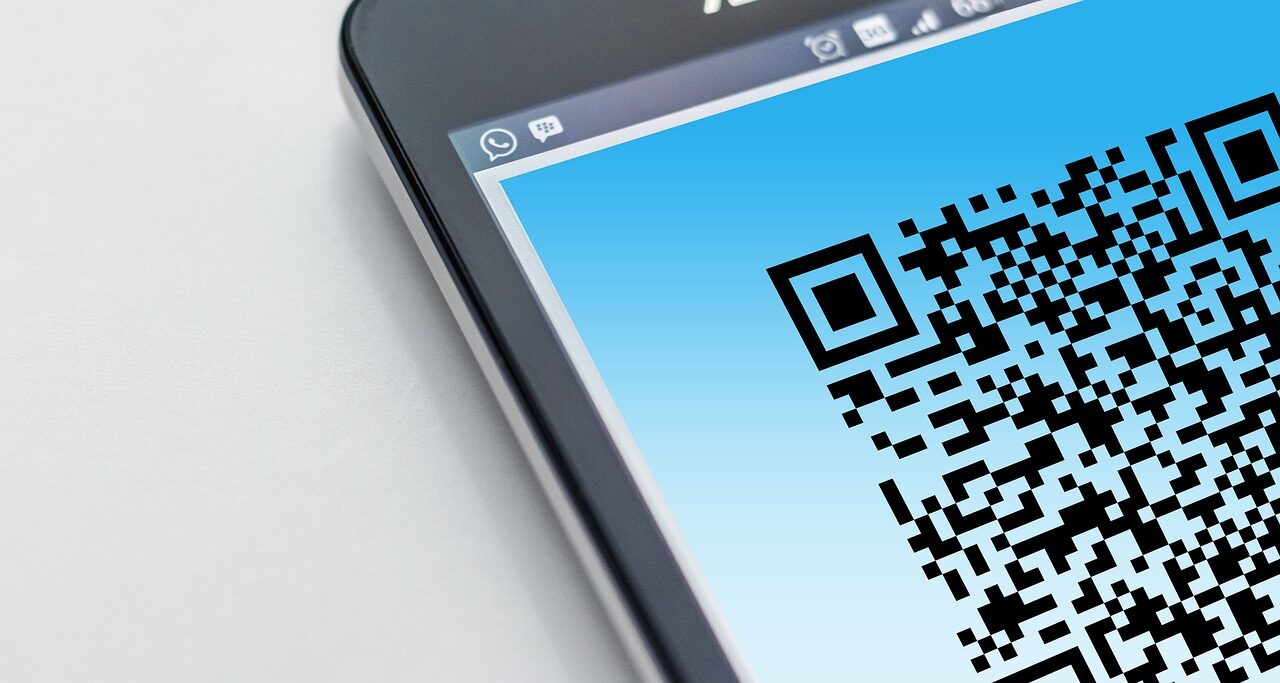
Masahiro Hara, a 35-year-old engineer at Denso Wave (a Toyota Group subsidiary), invented the QR code in 1994. Toyota’s “just-in-time” manufacturing system relied on barcodes to track components moving through the factory, and traditional 1D barcodes were limited — Toyota’s parts sometimes required up to ten separate barcodes printed on a single component.
Hara designed a 2D grid that was readable from any angle at high speed. The name “QR” stood for Quick Response. He was reportedly inspired by the black-and-white patterns of the Japanese board game Go, which he played at lunch. The three large position-detection squares at the corners of every QR code were chosen because Hara surveyed printed materials and found that pattern to be the least common — meaning it wouldn’t be confused with surrounding text on packaging. The full QR history is documented by Denso Wave’s own archives.
The most important decision Hara’s company made was not enforcing the patent. Denso Wave held the rights but allowed open use, which is the reason QR codes exploded globally during COVID-19 as menu, payment, and check-in tools. Had the patent been enforced as Toyota’s intellectual property and licensed at typical rates, the technology would have been niche. Because it was free, it became universal.
Browser cookies were named after a Unix in-joke — and were rolled out by Netscape in 1994 without telling anyone
Lou Montulli, a 23-year-old Netscape engineer in 1994, needed a way for MCI’s online shopping cart to remember which items a user had added without storing state on the server side. He borrowed a concept from Unix called “magic cookies” — opaque tokens passed between programs that meant nothing to the system relaying them — and shortened the name to “cookies.”
Cookies shipped in Netscape Navigator in 1994 without a public announcement, documentation, or user consent. The press didn’t notice until the Financial Times broke the story in 1996, by which time cookies were already universal across the early commercial web. The full HTTP cookie history traces the trajectory from one engineer’s quick fix to the foundational infrastructure of the modern internet.
The economic consequence is enormous. Third-party tracking cookies — which power the entire ad-tech industry, including most of the surveillance economy — were never an intended feature. They were an emergent side effect of how Montulli’s original design handled cross-site requests. Montulli has said in interviews that he regrets not making cookies first-party by default, which would have prevented the entire cross-site tracking economy from existing. The joke name became a planetary infrastructure decision.
Before DNS, the entire internet’s address book was a single text file maintained by one woman who took phone calls at Stanford
Paul Mockapetris invented the Domain Name System in 1983, while working at USC’s Information Sciences Institute. He published the specifications in RFC 882 and RFC 883 and wrote the first working implementation himself, naming it “Jeeves” after P.G. Wodehouse’s fictional butler — because, like Jeeves, the system existed to answer queries.
Before DNS, the entire internet’s address-to-machine mapping was contained in a single file called HOSTS.TXT, which was maintained by Elizabeth Feinler and her team at Stanford Research Institute. If you wanted your computer added to the internet, you literally called Feinler’s office during California business hours. By 1983 the file had become unmanageable — too many machines were being added too quickly — and Mockapetris’s distributed, hierarchical replacement became the new infrastructure.
The original DNS code, the protocol Mockapetris specified, and the basic architecture have been essentially unchanged for over 40 years. Every web page you load, every email you send, every app that calls a server starts with a DNS query against the system Paul Mockapetris designed in 1983. The system is also the reason DNS-based attacks remain one of the most powerful classes of internet exploit — the protocol is so foundational that disrupting it can take down large parts of the network.
Predictive text on phones was originally developed for people who couldn’t move — and the algorithm came from eye-tracking research
T9 — the predictive text system that let early cellphones suggest words as users tapped on a 9-button keypad — was developed by Cliff Kushler and Martin King at Tegic Communications in 1995. Most accounts of T9 describe it as a clever engineering hack to make phone-keypad typing tolerable, which it was. The actual origin is more specific.
Martin King had previously built an eye-tracking communication device for paralyzed patients who couldn’t use their hands or speak. The core problem was: how does a user input text using only a handful of eye positions? Kushler joined King and worked out the mathematics of disambiguating intended words from minimal keystrokes — a probability problem rooted in language statistics. Applied to the 9-button keypad of a Nokia phone, the same algorithm became T9 predictive text.
T9 shipped on Nokia phones in 1999 and was eventually licensed onto more than one billion devices before smartphone touchscreens killed the underlying need. Kushler went on to co-invent Swype (the swipe-to-type keyboard that influenced modern smartphone input methods), again rooted in accessibility research. The unbroken thread from disability-assistive technology to mass-market consumer features is older and longer than most users realize — closed captioning, voice control, screen readers, and predictive text were all designed first for users with specific needs, then absorbed into the mainstream when the value became obvious.
The common thread across all five is that none of them were designed as the universal infrastructure they became. Each started as a specific solution to a specific problem — digitizing a newspaper, tracking car parts, remembering shopping carts, replacing a maintained text file, helping paralyzed patients type. Each was then absorbed into the daily life of billions of people who never learned what it was originally for. Most foundational technology has this shape: a tool built for one purpose that turned out to be the right answer to a different one nobody had asked yet.