7 Once-Common Jobs That Have Nearly Vanished
Every technology that makes life easier also quietly erases the jobs that used to do the same work by hand. The pattern is so consistent it’s almost a law: a clever machine arrives, performs a task faster and cheaper than a person can, and within a generation an entire occupation — one that thousands of people built their lives and identities around — simply ceases to exist. The work doesn’t stop. The workers do.
What’s striking about the jobs below is how recently most of them were ordinary. These weren’t medieval trades. They were familiar fixtures of 20th-century life, occupations your grandparents or great-grandparents might have held, gone now not because they were unimportant but because something replaced them so completely that the role became unthinkable. Here are seven of them, and the precise innovations that wrote them out of existence.
The Switchboard Operator
For most of the telephone’s first century, you could not simply dial another person. You picked up the receiver, and a human being — almost always a woman — answered at a central exchange and physically connected your call by plugging a cord into the right jack on a towering board of sockets. Every call in a town passed through her hands.
The job began, oddly, with teenage boys, but they proved too impatient and unruly for live customer contact. On September 1, 1878, the Boston Telephone Dispatch company hired Emma Nutt as the first female telephone operator, and the role rapidly became one of the most common forms of employment for women in America. Operators sat erect for long shifts in front of the boards, memorizing connections and managing a constant flood of calls. In small towns they became unofficial information hubs, fielding requests for the time, the weather, the news, and the local gossip alongside the actual call connections.
The job’s fate was sealed early, though it took decades to play out. The automatic telephone exchange, invented by Almon Strowger in 1888, made it possible for callers to dial each other directly without a human intermediary. As direct-dial technology spread through the mid-20th century and digital exchanges took over after that, the manual switchboard and the operators who worked it were rendered obsolete. A profession that had employed hundreds of thousands of women dwindled to almost nothing.
The Milkman
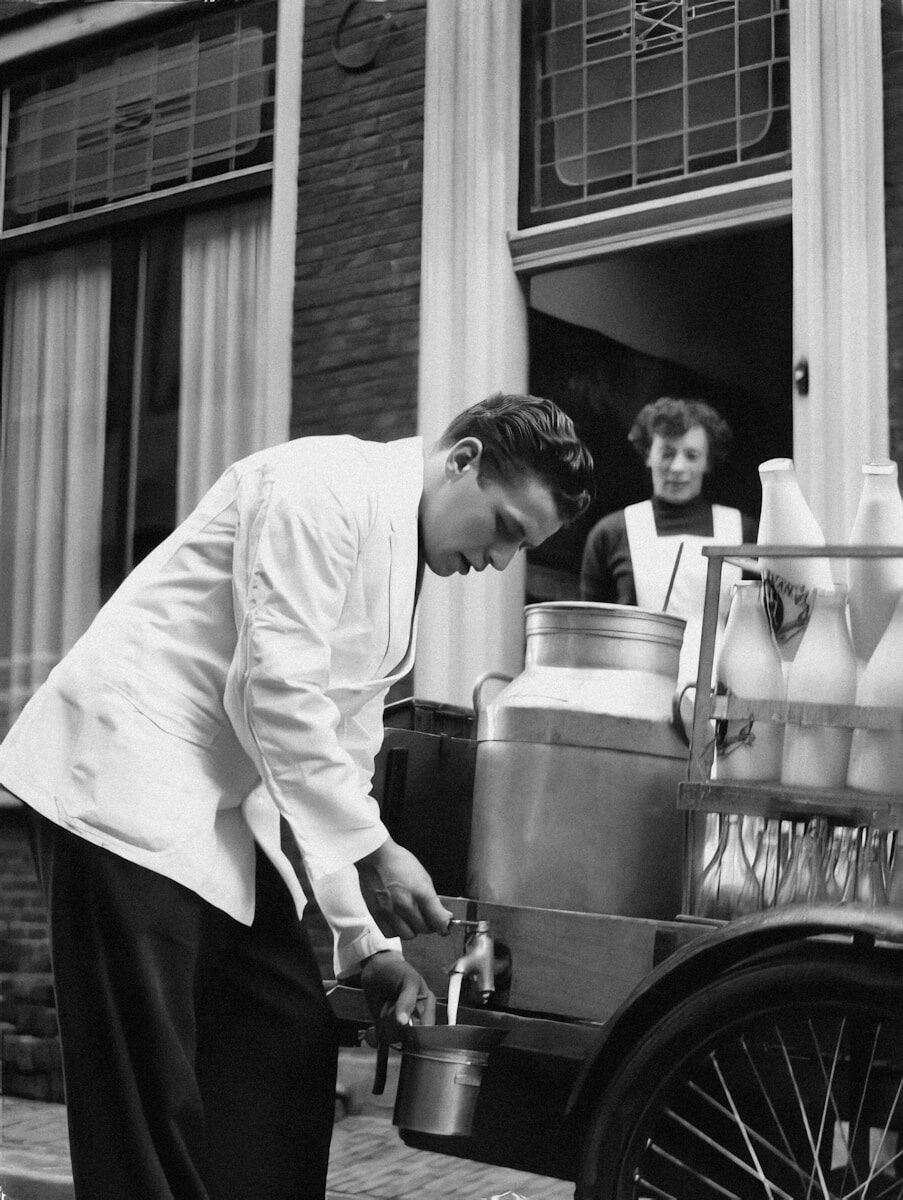
For generations, fresh milk arrived not from a store but on the doorstep, delivered before dawn by the milkman. He made his rounds in the early morning hours, leaving glass bottles of milk — and often butter, eggs, and cream — on the porch, and collecting the empty bottles from the previous delivery to be sterilized and refilled.
The daily delivery wasn’t a luxury; it was a necessity dictated by the absence of refrigeration. Before households had reliable cold storage, milk spoiled quickly, so families couldn’t stockpile it. They relied on a small, fresh supply arriving frequently, which made the milkman a fixture of daily life and a familiar, trusted presence in the neighborhood. The clink of bottles and the early-morning route were woven into the rhythm of the era.
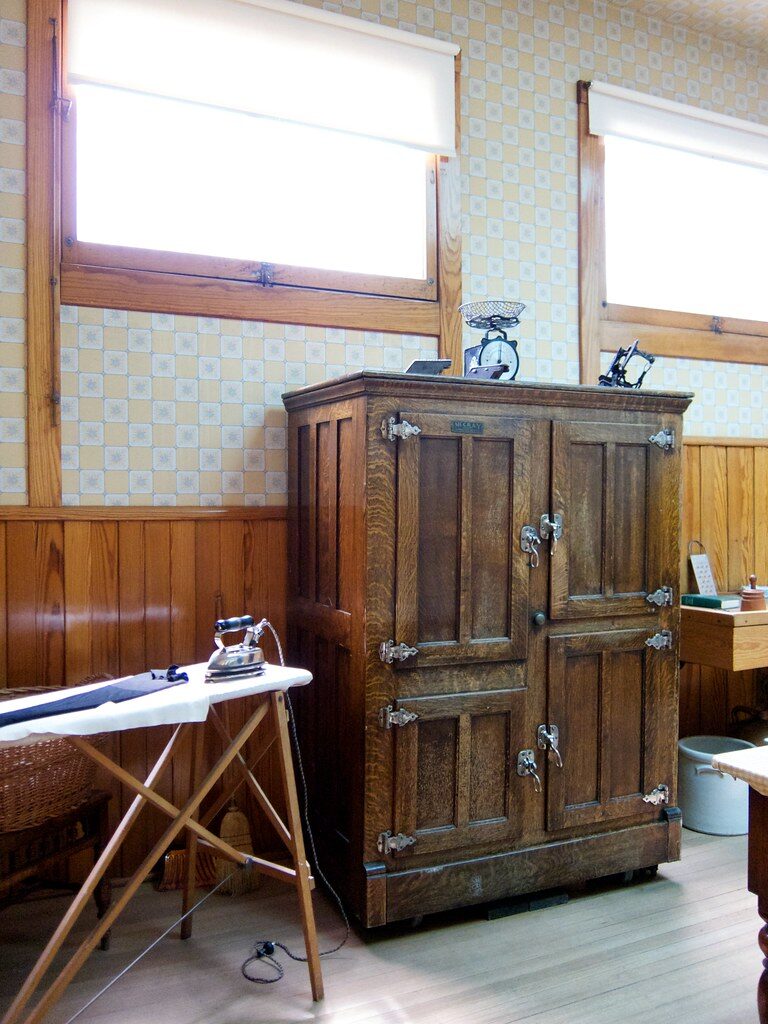
Two innovations ended the trade together. The spread of the home refrigerator meant families could finally store milk safely for days at a time, and the rise of the supermarket meant they could buy it cheaply in bulk on their own schedule. With cold storage in every kitchen and dairy on every grocery shelf, the economic logic of daily doorstep delivery collapsed. The milkman faded from a universal presence to a rare novelty service, surviving only in scattered pockets.
The Pinsetter
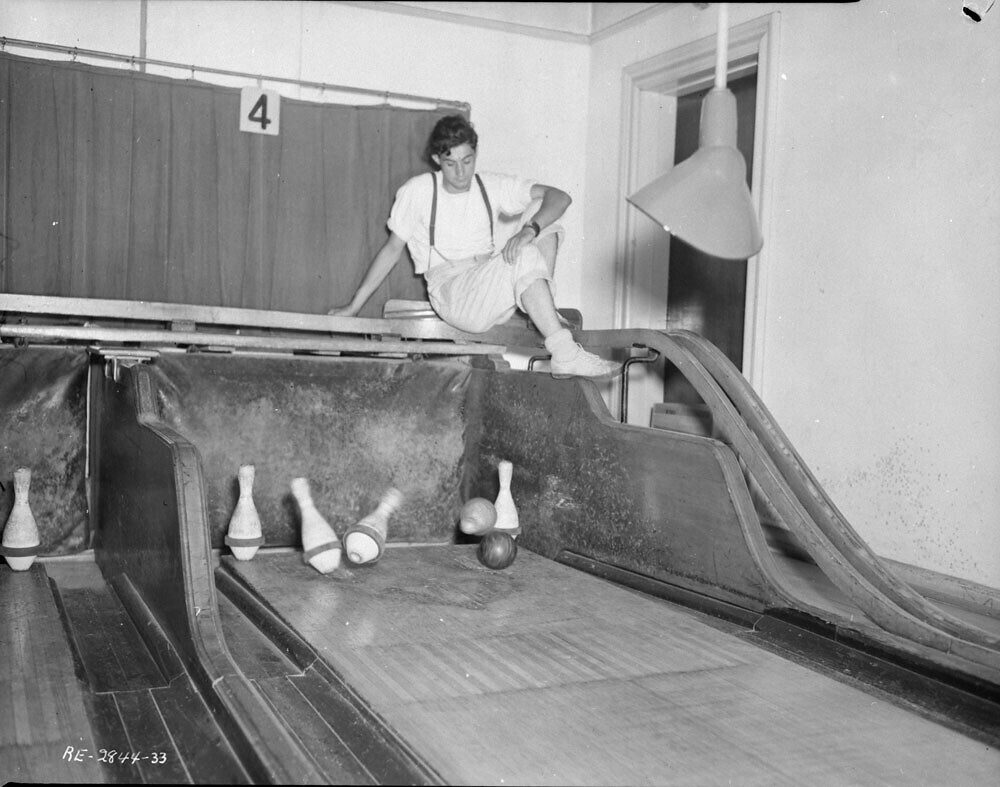
Before bowling alleys automated, the pins at the end of every lane were reset by hand — and the hands belonged to a person, usually a teenage boy, perched at the end of the lane. Known as a pinsetter or “pin boy,” this worker cleared the fallen pins after each throw, returned the ball to the bowler, and rearranged the pins in their precise triangle for the next frame.
It was fast, physical, and genuinely hazardous work. The pinsetter had to leap clear of flying pins and fast-moving balls, working at speed to keep the game moving while impatient bowlers waited. One former pin boy recalled that the role demanded constant speed, with bowlers yelling at him to get moving. The job was typically low-paid, often filled by kids working evenings in the noise and clatter of the alley, dodging hardware all night.
The automatic pinsetter machine, which spread through bowling alleys in the early 1950s, did the entire job mechanically — clearing, returning, and resetting without a human anywhere near the danger zone. The machines were faster, never tired, and never got hit. Within a few years, the pin boy had been, as one writer put it, bowled clean out of existence, surviving today only in a handful of vintage alleys that keep the old equipment running as a curiosity.
The Elevator Operator
In the early and mid-20th century, riding an elevator in a hotel, department store, or office building meant being conveyed by a uniformed professional. The elevator operator manually controlled the car — opening and closing the doors, working the lever that controlled speed and direction, leveling the car precisely with each floor, and announcing what could be found on each level.
This required real skill. Early elevators didn’t stop themselves automatically at floor level; the operator had to feather the control to bring the car to a smooth, even stop, a knack that took practice to master. Operators were also part of the building’s hospitality and security — greeting regulars, directing visitors, and keeping an eye on who came and went. For a long time, the presence of an operator was simply what made an elevator usable by the public.
Automatic elevators, with push-button controls that let any passenger select a floor and trust the car to stop itself safely, existed for years but met public resistance — people were nervous about riding in an elevator with no one in control. That resistance faded through the 1950s and 1960s as the majority of elevators transitioned to automatic systems and operator positions were phased out. Self-service became the norm so completely that today an elevator with an attendant feels like a quaint anachronism.
The Lamplighter
Before electric streetlights, the lamps that lit city streets at night burned gas, and gas lamps did not turn themselves on. Every evening at dusk, a lamplighter walked an assigned route through the streets, carrying a long pole tipped with a wick or flame, reaching up to light each lamp one by one. At dawn, he walked the route again to extinguish them.
The lamplighter was a symbol of urban safety and modernity — the human guarantor that the streets would be lit and navigable after dark. The job followed a fixed daily rhythm tied to the sun, and a lamplighter became a familiar figure on his patch, as much a part of the evening as the lamps themselves. The work required reliability above all; a missed lamp meant a dark and potentially dangerous stretch of street.
The invention of the practical electric light bulb and the spread of electrified streetlighting in the late 19th and early 20th centuries eliminated the role almost entirely. Electric streetlights could be switched on and off centrally, and eventually automatically on timers or light sensors, with no need for anyone to walk the route at all. A few lamplighters are still retained today for ceremonial or tourist purposes, tending historic gas lamps in a handful of cities, but as a real occupation it has vanished.
The Ice Cutter
Before mechanical refrigeration, the ice that kept food cold in iceboxes had to come from somewhere, and for a long time that somewhere was frozen lakes and rivers. In winter, crews of ice cutters went out onto the ice and harvested it — scoring the surface into a grid, sawing it into massive uniform blocks with long handsaws, and hauling those blocks out of the water to be stored.
It was brutal, dangerous, seasonal labor. Workers spent long hours in bitter cold on slippery, unstable surfaces, wielding heavy saws and maneuvering blocks that could weigh hundreds of pounds, with the constant risk of falling through into freezing water. The harvested ice was packed in sawdust or straw in insulated icehouses, where — remarkably — it could be stored through the warm months and distributed to homes and businesses well into summer, long after the lakes had thawed.
The entire industry, which employed thousands and supplied a basic necessity of food preservation, was wiped out by the electric refrigerator and mechanical ice-making. Once machines could manufacture ice on demand anywhere, year-round, there was no reason to harvest it from frozen lakes and store it for months. The ice-cutting trade, the icehouses, and the whole seasonal economy around them disappeared, leaving behind little more than old photographs of men with saws standing on the ice.
The Human Computer
The word “computer” originally described not a machine but a job. A computer was a person — someone employed to perform mathematical calculations by hand, for hours and days at a stretch, producing the numbers that science, engineering, navigation, and the military depended on. The work was painstaking, demanding intense focus and accuracy across enormous volumes of arithmetic.
For much of the 20th century, these human computers were overwhelmingly women, many with mathematics degrees, organized into teams that crunched numbers with pencil, paper, and mechanical adding machines. At NASA’s Jet Propulsion Laboratory, a team of women known as computers had been doing this work since JPL’s beginnings in 1936, calculating launch windows, trajectories, and fuel consumption for the early rocket experiments and later the missions to the Moon. A single complex calculation could take more than a week and fill multiple notebooks with figures. These women’s contributions, long overlooked, became widely known through the book and film Hidden Figures, which told the story of the Black women mathematicians who helped win the space race.
The irony of the job’s disappearance is built into its name. As electronic computing machines grew powerful enough to do the same arithmetic in seconds, the human computers were replaced by the devices that took their title. Many of the women made the transition themselves, becoming some of the first electronic-computer programmers at NASA — teaching the machines to do the work they had been doing by hand. The occupation vanished, but the people who held it, in many cases, simply moved up to run the very technology that replaced them.
The thread connecting all seven of these jobs is the steady, impersonal logic of automation: a task that once required human hands, human judgment, or human presence got handed to a machine that did it faster, cheaper, and tirelessly. There’s a tendency to tell this story as pure progress, and in most respects it is — few would trade the refrigerator for the ice cutter or direct dial for the switchboard. But it’s worth remembering that each of these vanished jobs was once someone’s livelihood and skill, a thing they did well and took pride in. The machines didn’t just replace tasks. They closed entire chapters of working life, and the people in them had to find another. That pattern hasn’t stopped. It’s worth wondering which of today’s familiar jobs will read, fifty years from now, like a list of curiosities from a vanished world.