
5 Science “Facts” From School That Were Oversimplified
Somewhere between the chalkboard and the test, a few science lessons got flattened into slogans. You memorized them, aced the quiz, and carried them into adulthood as settled knowledge. But research kept moving after the bell rang. By May 2026, neuroscientists, geneticists, and physicists have refined or outright rejected several of those tidy classroom claims.
Here are five familiar “facts” that were trimmed to fit a textbook page, and what the fuller picture actually looks like.
1. “Humans Only Use 10 Percent of Their Brains”
The pitch was irresistible: 90 percent of your brain is just sitting there, waiting for you to unlock it. Self-help authors loved it. Neuroscientists never did. The late neuropsychologist Barry Beyerstein at Simon Fraser University spent years dismantling the claim, pointing out that brain-damage studies alone disprove it: if 90 percent of the organ were expendable, losing a chunk to injury or surgery would rarely matter. It almost always does.
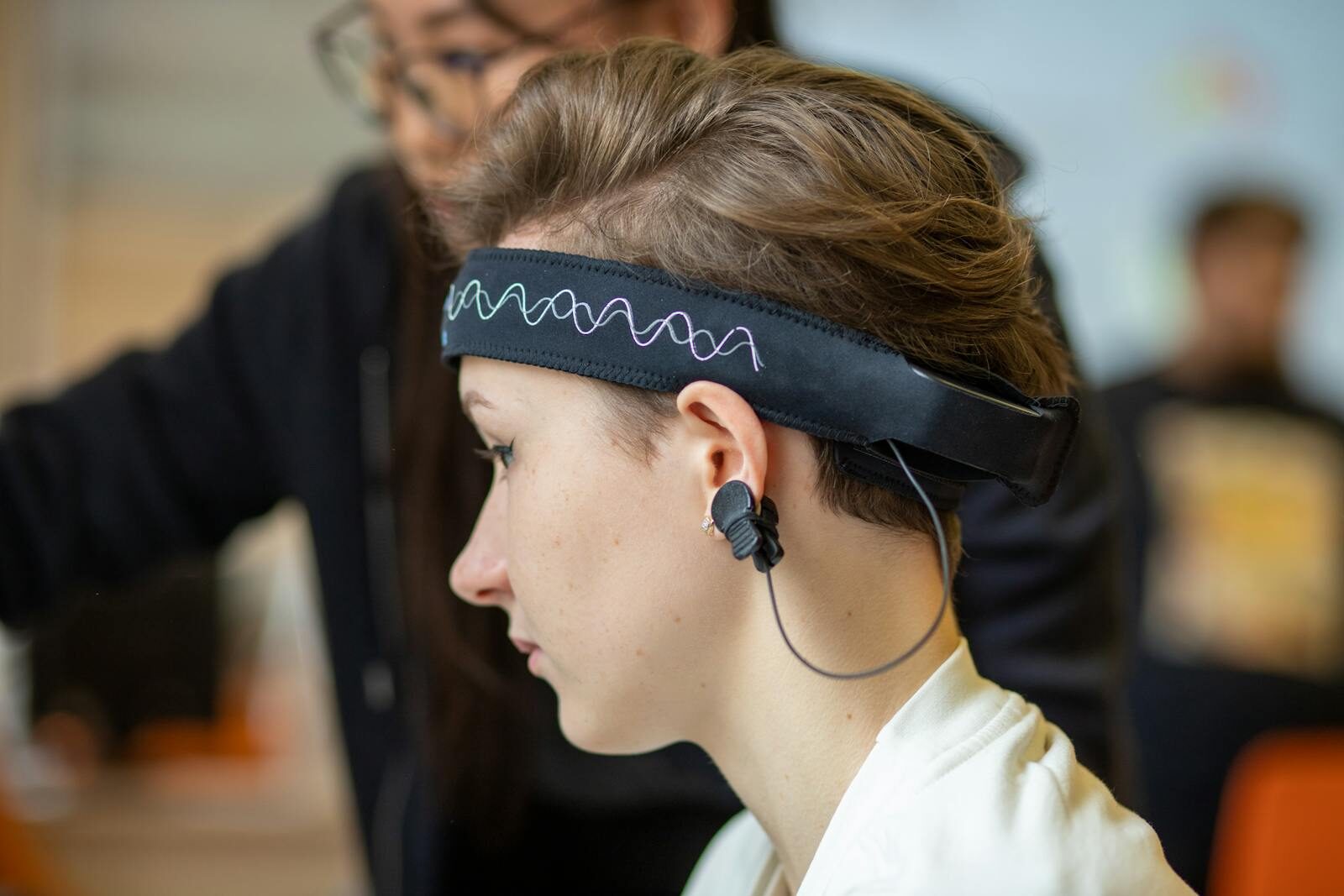
Functional MRI and PET scans have since confirmed what Beyerstein argued. Over the course of a single day, virtually every region of the brain shows activity. Reading a sentence recruits vision, language, and memory circuits. Riding a bike fires up balance, motor coordination, and spatial processing. Even during rest, the brain’s “default mode network,” identified by neurologist Marcus Raichle at Washington University in St. Louis, stays busy processing internal thoughts and consolidating memories.
The real story is not that your brain has untapped reserves. It is that the organ is highly specialized, with different circuits taking the lead for different tasks. Damage to even a small area, like Broca’s region for speech production, can have outsized consequences. Forget the 90-percent fantasy. The genuinely powerful levers for brain performance are sleep, sustained learning, and mental health support, none of which require a miracle pill.
2. “You Taste Different Flavors on Different Parts of Your Tongue”
If you went to school in the English-speaking world, you almost certainly saw the tongue map: sweet at the tip, bitter at the back, salty and sour on the sides, each flavor neatly fenced into its own zone. That diagram traces back to a 1901 paper by German researcher D.P. Hanig, who measured small differences in taste sensitivity across the tongue. In 1942, Harvard psychologist Edwin Boring replotted Hanig’s data in a way that exaggerated those differences, and textbook illustrators ran with it for decades.
Modern taste science tells a different story. Receptors for sweet, salty, sour, bitter, and umami are distributed across the tongue and extend into the soft palate. A 2006 review in Nature confirmed that individual taste cells can respond to multiple taste qualities. You can taste sugar on the back of your tongue and detect bitterness at the tip. The “zones” were never walls; at most, they were slight statistical gradients.
Drop the map and flavor gets far more interesting. What you experience as “taste” is really a fusion of gustatory receptors, olfactory input, texture, temperature, and even sound. That is why a strawberry yogurt tastes flat when your nose is stuffed, and why the crunch of a fresh apple shapes how sweet it seems. Your mouth is not running a five-zone switchboard. It is orchestrating a full sensory ensemble.
3. “Tongue Rolling Is a Simple Genetic Trait”
For generations, biology teachers used tongue rolling as the go-to classroom demo for Mendelian genetics. Roll your tongue into a tube and you carry at least one dominant allele. Cannot do it? Two recessive copies. The lesson was quick, visual, and satisfying. It was also wrong.
The idea originated with geneticist Alfred Sturtevant, who proposed single-gene control in a 1940 paper. By 1965, Sturtevant himself acknowledged the claim was flawed. Twin studies, including work by Philip Matlock in the 1950s, showed that identical twins do not always match on tongue rolling, a result that is impossible if a single gene dictates the trait. Some people even learn to roll their tongues over time, which no simple dominant-recessive model can explain.
The same problem applies to other “simple” genetic examples from class, like attached earlobes or widow’s peaks. These traits involve multiple genes plus developmental and environmental influences. Stick with the one-gene model and you train yourself to think of heredity as a bank of on-off switches. In reality, most traits that matter, from height to disease risk, are polygenic: shaped by dozens or hundreds of genes, each nudging the outcome a little. Genetics is less like flipping a light switch and more like adjusting a mixing board with hundreds of sliders.
4. “There Are Only Three States of Matter”
Solid, liquid, gas. The trio works beautifully for ice, water, and steam, and it gives young students a first framework for sorting the physical world. The trouble is that the universe does not stop at three.
Plasma, a state in which gas becomes so energetic that electrons separate from their atoms, is by far the most common form of visible matter in the universe, making up an estimated 99 percent of it, according to the U.S. Department of Energy. You encounter plasma in fluorescent lamps, neon signs, and lightning bolts. Beyond plasma, physicists have documented Bose-Einstein condensates (first created in a lab in 1995 by Eric Cornell and Carl Wieman), supercritical fluids used in industrial decaffeination, and fermionic condensates, among others.
For everyday cooking and weather, solid-liquid-gas still serves you well. But treating those three as the complete list can make advanced science stories feel alien when they do not need to be. Fusion reactor research, neutron star physics, and superconductor development all involve states of matter that the schoolbook trio never mentioned. Knowing that the list is longer does not complicate your life; it just keeps the door open for the next headline about plasma-based energy or exotic quantum materials.
5. “Evolution Is a Ladder From Simple to Complex”
The image is iconic: a hunched ape on the left, a series of increasingly upright figures in the middle, and a modern human striding confidently on the right. That “March of Progress” illustration, drawn by artist Rudolph Zallinger for F. Clark Howell’s 1965 book Early Man, became one of the most reproduced images in science education. It also planted a deeply misleading idea: that evolution is a straight line heading toward us.
Evolutionary biology describes something very different. Evolution is a branching tree, not a ladder, and it has no destination. When a population changes over generations, it does so because certain traits help individuals survive and reproduce in a specific environment. Bacteria that evolve antibiotic resistance are not climbing “upward”; they are adapting to a world where that drug exists. Some lineages actually become simpler over time. Parasitic tapeworms, for example, have lost their digestive systems entirely because they absorb nutrients directly from their hosts. Paleontologist Stephen Jay Gould spent much of his career arguing against the ladder metaphor, emphasizing that complexity is one possible outcome of evolution, not its goal.
Cling to the ladder and you might unconsciously rank living species as “more” or “less” advanced. Switch to the branching tree and the picture shifts: every species alive in 2026 has survived the same roughly 3.8 billion years of evolutionary time. A mushroom, a blue whale, and a house cat are all finely tuned solutions to different ecological problems. Humans are not the finish line. We are one twig among millions on a very old, very crowded tree.
The Pattern Behind the Oversimplifications
Across all five examples, the same dynamic plays out. Teachers and textbook authors reached for clean, memorable stories that fit on a chalkboard and stayed inside a 45-minute class period. The 10-percent brain myth, the tongue map, single-gene traits, three states of matter, and the evolution ladder all worked as quick teaching tools. As research accumulated better data, scientists refined or discarded those shortcuts, but the classroom versions lingered in public memory.
That gap is not a sign that school failed you. It reflects how rapidly scientific knowledge grows and how slowly curricula catch up. The Next Generation Science Standards, adopted in various forms by most U.S. states, have started to address some of these oversimplifications, but textbooks cycle slowly and teacher training takes time.