5 Creatures With Survival Tricks That Sound Impossible
5 Creatures With Survival Tricks That Sound Impossible
In 2007, a team of European scientists strapped a tray of tardigrades to the outside of a rocket and shot them into low Earth orbit. For ten days, the microscopic animals floated in the vacuum of space, blasted by solar radiation strong enough to sterilize a planet. When the capsule returned, the researchers expected to find a tray of corpses. Instead, they found tardigrades that were not only alive but laying eggs.
This is what survival looks like at the engineering edge. Across the natural world, there are creatures whose abilities sound borrowed from comic books — animals built to endure conditions that should be instantly lethal, equipped with chemistry and structures so improbable that researchers spent decades just trying to confirm what they were seeing. Here are five of them, and the specific tricks that make them possible.
Tardigrades Carry a Protein That Shields Their DNA from Radiation
Tardigrades are roughly half a millimeter long, look vaguely like gummy bears, and live in places ranging from Himalayan glaciers to the moss on your sidewalk. When their environment becomes hostile, they curl into a desiccated state called a “tun” — losing nearly all their body water and essentially pausing biology. In this state, they have been shown to survive temperatures near absolute zero, pressures six times greater than the deepest ocean trench, and direct exposure to the vacuum of space.
For a long time, the “how” was a mystery. Then in 2016, researchers sequencing the genome of Ramazzottius varieornatus identified a protein found nowhere else in nature. They named it Dsup, short for “damage suppressor.” Dsup binds directly to the tardigrade’s chromosomes and coats the DNA like a molecular flak jacket, intercepting the hydroxyl radicals that radiation generates before they can shred the genetic code.
The strangest part of the story came next. When researchers inserted the Dsup gene into human cells in a laboratory dish and exposed them to X-rays, the human cells survived radiation doses that would have killed them. A protein designed for an animal smaller than a grain of sand had just been demonstrated to protect human DNA. The implications for cancer treatment, space travel, and aging research are still being worked out.
Wood Frogs Survive Winter by Freezing Solid — and Then Thawing Back to Life
Every winter in Alaska, the wood frog (Rana sylvatica) does something no mammal can do. As temperatures drop below freezing, ice crystals begin forming in the spaces between its cells. Its heart stops. Its blood stops circulating. By any conventional definition, the frog is dead. Then, in spring, it thaws out and hops away.
Kenneth Storey, a biochemist at Carleton University in Ottawa, has spent four decades figuring out how. The answer, it turns out, is sugar. When freezing begins, the wood frog’s liver dumps massive amounts of glucose into the bloodstream — concentrations in Alaskan populations have been recorded above 200 micromoles per milliliter of blood, levels that would put a human in a fatal diabetic coma. The glucose acts as a cryoprotectant, flooding the inside of each cell and preventing the lethal ice crystals from forming there.
The ice forms only in the spaces between cells, where it can’t tear them apart from inside. Meanwhile, the frog’s body produces specialized antifreeze proteins that control the size and shape of those external ice crystals, keeping them small and blunt instead of letting them grow into cellular daggers. Storey’s team has documented the frog’s blood freezing within five minutes of the first ice crystal appearing — a 2.5-fold increase in glucose-6-phosphate in the first five minutes alone. Roughly 65 to 70 percent of the frog’s total body water turns to ice. The animal is engineered for this. Cryobiologists studying organ transplantation now look to the wood frog as a model for how to preserve human tissue.
The Immortal Jellyfish Can Reverse Its Life Cycle When Threatened
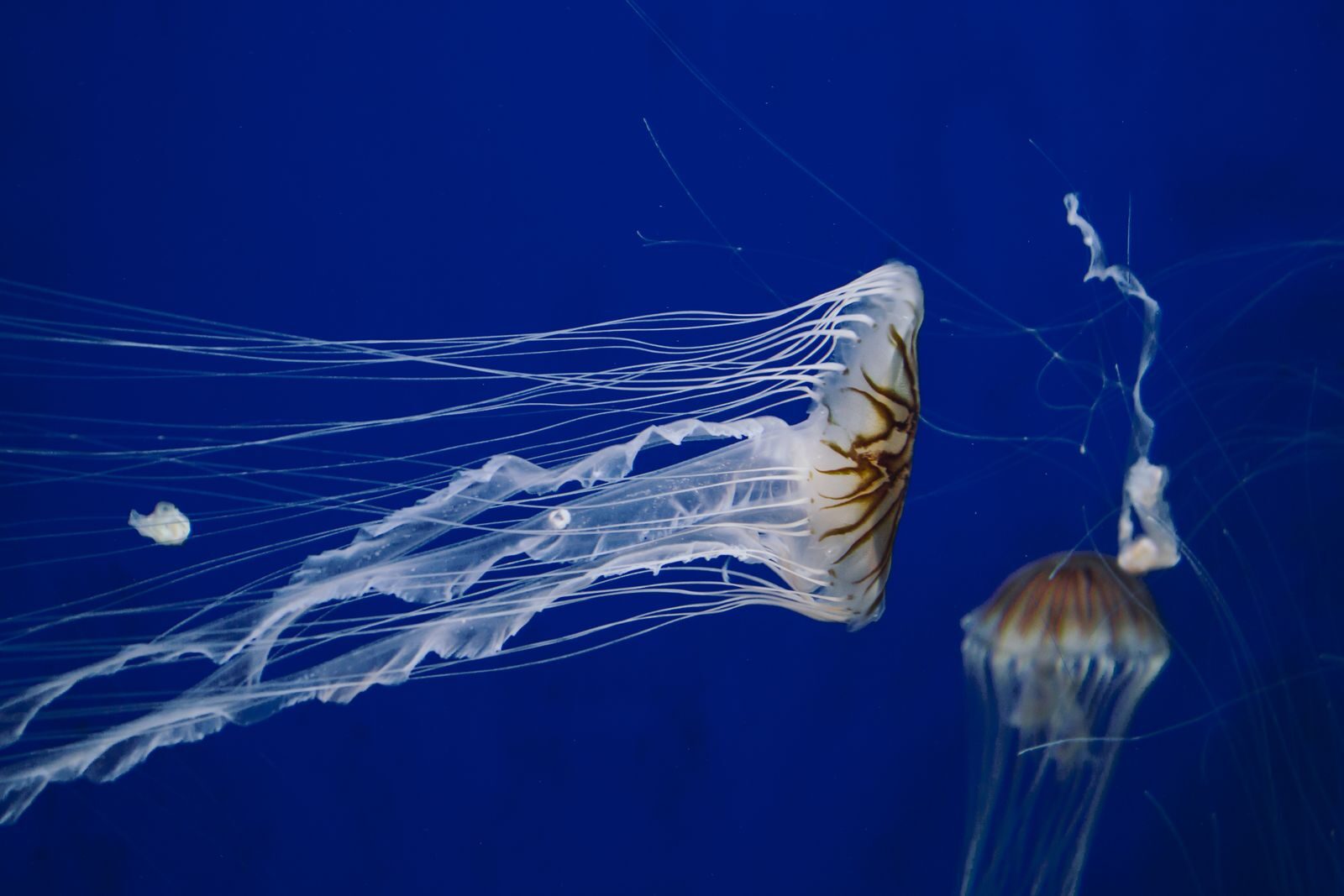
In the early 1990s, an Italian graduate student named Christian Sommer was collecting specimens of Turritopsis dohrnii, a jellyfish smaller than a fingernail, in the Mediterranean. He kept them in a jar and went home. When he checked the jar later, the adult medusae were gone — but the bottom of the jar was covered in baby polyps. Sommer initially assumed contamination. He’d had jellyfish in the jar. Now he had their evolutionary predecessors.
What he had actually witnessed was the only known animal capable of reversing its own life cycle. When T. dohrnii is stressed — by starvation, injury, or aging — it sinks to the seafloor and undergoes a process called transdifferentiation. Its adult cells dedifferentiate and reorganize into a juvenile polyp. From that polyp, new medusae bud off, genetically identical to the original. In effect, the jellyfish has become its own offspring.
The species has captured the attention of researchers studying aging because no other animal can do this. Shin Kubota, a marine biologist at Kyoto University, has been the primary researcher in this field for over thirty years. He has documented a single colony reversing its life cycle ten times in his laboratory. In 2022, Japanese researchers published a complete genome sequence of T. dohrnii, beginning the work of identifying which genes orchestrate the rewinding of an adult animal back into a juvenile. The jellyfish doesn’t escape death — it can still be eaten by fish — but it doesn’t seem to die from aging.
The Pompeii Worm Lives on the Walls of Underwater Volcanoes
Two thousand meters beneath the Pacific Ocean, along volcanic ridges where the seafloor cracks open and superheated water shoots up at 300°C, there are colonies of worms living on the chimney walls. They were discovered in 1980 by French marine biologists Daniel Desbruyères and Lucien Laubier, who named them Alvinella pompejana — Pompeii worms — after the Roman city buried by Vesuvius.
The Pompeii worm pulls off a feat of thermal engineering that scientists are still arguing about. University of Delaware marine biologist Craig Cary’s team has recorded the worms thriving at sustained temperatures around 149°F, with brief spikes well above 175°F. More remarkably, the worms can withstand the steepest thermal gradient on Earth: the head of the worm sits in cool water around 72°F while the tail can be submerged in water 140°F hotter at the same moment. No other animal is known to tolerate this kind of split.
The worm’s secret involves engineered partnerships. Its back is coated in a fleece-like layer of bacteria that some researchers believe acts as living insulation, while the worm’s own collagen has been shown to remain stable at temperatures that destroy the collagen of every other known animal. A 2013 study of live Pompeii worms — the first ever conducted under pressurized lab conditions — confirmed their thermal optimum lies beyond 42°C, an upper limit that exceeds nearly every other multicellular animal on the planet.
Bombardier Beetles Fire Boiling Chemical Explosions From Their Abdomens
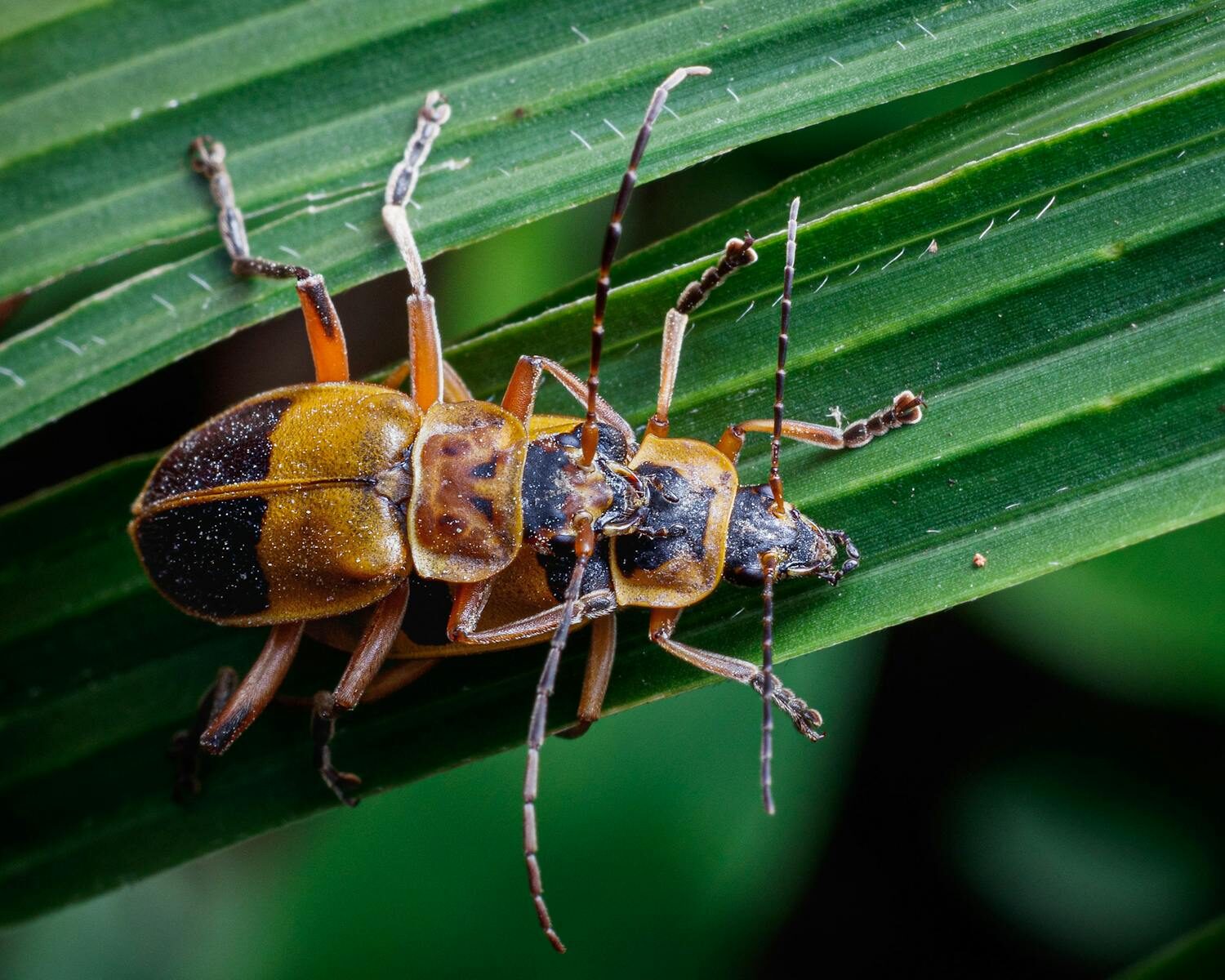
The half-inch bombardier beetle, found on every continent except Antarctica, has one of the most precisely engineered weapons in the animal kingdom. When threatened, it produces an internal chemical explosion in its abdomen and fires a jet of boiling, caustic liquid at its attacker. The spray reaches 100°C — the boiling point of water — and emerges with such force that it can kill an ant or send a frog vomiting away from the beetle in retreat.
The mechanism puzzled researchers for decades. How does a beetle generate boiling explosions inside its own body without rupturing itself? In 2015, a team at MIT led by materials scientist Christine Ortiz finally answered the question by aiming high-speed synchrotron X-rays at living beetles at Argonne National Laboratory, recording the explosions at 2,000 frames per second.
The images revealed a chamber design that any combustion engineer would recognize. The beetle stores two chemicals — hydrogen peroxide and hydroquinones — in separate reservoirs. When attacked, it forces them into a third reinforced reaction chamber containing catalytic enzymes. The mixture detonates, then exits through a flexible valve in a pulsed jet firing at roughly 700 pulses per second. The pulsing isn’t decorative — it allows the chamber walls to cool slightly between blasts, preventing the beetle from cooking itself. The geometry is so refined that the team’s findings have been cited in research on blast-protection design and propulsion systems.
Each of these creatures sits at the edge of what biology can accomplish. The tardigrade survives a journey no spacecraft could withstand unshielded. The wood frog freezes and thaws like a piece of meat. The jellyfish reverses time. The worm laughs at temperatures that kill thermometers. The beetle carries a controlled detonation system in its own gut. None of these are accidents. They are blueprints, fully assembled, hiding in plain sight.