6 Everyday Technologies That Feel Normal but Are Actually Wild
The strangest thing about living in the future is how quickly the future stops feeling strange. A technology that would have been indistinguishable from sorcery to someone in 1975 — or 1995, or sometimes even 2010 — becomes, within a few years of its arrival, a thing we sigh at when it takes an extra second to load. The marvel curdles into expectation almost instantly. We carry devices that perform genuine miracles of physics and engineering, and we mostly use them to feel mildly annoyed.
It’s worth occasionally stopping to look at the things we’ve stopped seeing. The technologies below are so thoroughly woven into ordinary life that nobody gives them a second thought — and every one of them, looked at clearly, is doing something genuinely astonishing. Here are six everyday tools that deserve a fresh moment of disbelief.
The Blue Dot That Knows Exactly Where You Are
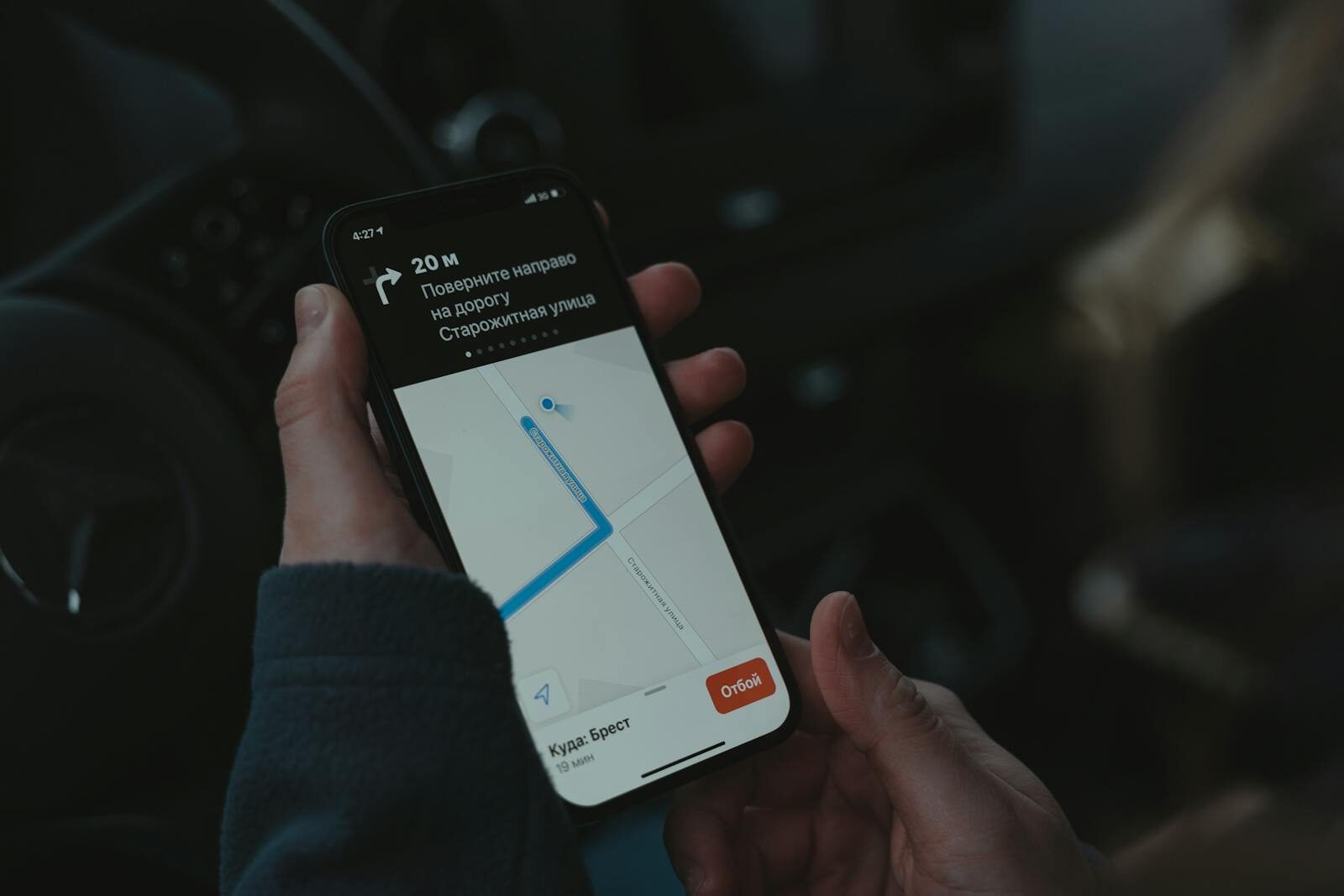
You open a map on your phone, and a blue dot appears showing your location within a few meters, anywhere on the surface of the Earth, in a couple of seconds. This feels utterly mundane. It is, in fact, one of the most extraordinary practical achievements in the history of physics — and it literally would not work without Einstein.
Here’s what’s actually happening. Your phone is listening to radio signals from a constellation of satellites orbiting about 20,000 kilometers up, each carrying an atomic clock accurate to within a billionth of a second. Your receiver compares the time signals from several visible satellites and triangulates your position from their known locations. Because the signals travel at the speed of light, even a tiny timing error translates into a huge position error — which is why the clocks have to be perfect.
And this is where it gets wild. The satellites are moving fast and sitting in weaker gravity than we experience on the ground, and both of those facts alter how their clocks tick relative to ours, exactly as Einstein’s theories of relativity predict. If these relativistic effects were ignored, GPS timing would drift by about 38 microseconds per day — enough to make your position calculation wrong by miles within hours, and to render the entire system useless almost immediately. The engineers who built GPS had to bake corrections for the curvature of spacetime directly into the system. Every time you check a map, your phone is silently relying on the confirmed reality that time itself flows differently in orbit. It’s general relativity, running in your pocket, to help you find a coffee shop.
The Phone That Recognizes Your Face in the Dark
You glance at your phone and it unlocks. It does this in a fraction of a second, in total darkness, whether or not you’re wearing glasses, have grown a beard, or are making a strange face. This casual little interaction is built on a startlingly sophisticated piece of 3D sensing.
When you look at a phone with this kind of facial recognition, a component called a dot projector fires tens of thousands of invisible infrared dots onto your face — over 30,000 of them — in a structured pattern. An infrared camera reads how that grid of dots distorts as it lands on the contours of your face, and from those distortions the device builds a precise three-dimensional depth map of your features. Because it uses infrared light, the whole process works perfectly in complete darkness, when an ordinary camera would see nothing at all.
That depth map and an infrared image are then fed through a neural network that converts your face into a mathematical representation — a string of numbers, not a stored picture — which is checked against the encrypted model created when you set the system up. All of this happens on the device, in well under a second, every single time you glance at it. A decade ago, scanning a face into a 3D model was specialized laboratory work. Now it’s the thing that mildly inconveniences you when it fails on the first try and you have to look again.
The Glass Rectangle You Control by Touching Light
The touchscreen is so completely naturalized that small children intuitively swipe at it before they can talk — and have been known to try swiping at paper magazines, baffled that the picture won’t move. We’ve forgotten how genuinely odd it is to control a sophisticated computer by smearing a finger across a sheet of glass.
The most common type of touchscreen works through a property called capacitance. The screen is coated with a transparent, electrically conductive layer holding a uniform electrostatic field. The human body is also electrically conductive, so when your fingertip approaches the glass, it draws a tiny amount of charge and distorts that field at the point of contact. Sensors at the corners of the screen detect exactly where the disturbance occurred, and the device translates that location into a command — many times per second, tracking multiple fingers at once for pinching and zooming.
This is why a capacitive touchscreen ignores a gloved finger or the tap of a pen but responds instantly to skin: it isn’t sensing pressure at all, but the electrical conductivity of your body interacting with an invisible field laid across the glass. You are, in a real sense, controlling the device with the faint electrical properties of your own flesh. The screen is reading the way your body bends an electric field, and turning that into the photo you just opened. We call it “tapping,” and we do it ten thousand times a day without a flicker of wonder.
The Information That Arrives Through Empty Air
Right now, invisibly passing through your body and the walls around you, are streams of data carrying video, voice, photographs, and text — pulled out of the air by the device in your hand and reassembled into a movie, a conversation, a map. We call it Wi-Fi, or cellular data, and we get irritated when it’s slow. It is, in plain terms, the transmission of detailed information through apparently empty space, and it is everywhere all the time.
The mechanism is radio waves — the same fundamental phenomenon as broadcast radio, but used with extraordinary sophistication. Your device and the router or cell tower encode digital information, the ones and zeros of everything you do online, into precisely modulated electromagnetic waves oscillating millions or billions of times per second. Those waves radiate outward at the speed of light, pass through walls and people, and are caught by a tiny antenna in the receiving device, which decodes the modulation back into the original data. The air around you is saturated with these overlapping signals, sorted out by frequency and clever encoding so they don’t turn into noise.
What makes it genuinely wild is the density and reliability of it. In a single room, a phone, a laptop, a tablet, a TV, and a smart speaker can all be pulling different high-bandwidth streams out of the same shared air simultaneously, each one correctly receiving its own data without interference scrambling everything into static. A century ago, transmitting a faint voice across a room by radio was a triumph. Now an apartment building’s worth of invisible video streams cross paths in the air over your head, constantly, and the only time you notice is when the buffering wheel appears.
The Machine That Listens and Answers
You say a name into the air, and a small device across the room wakes up, understands a spoken question in ordinary conversational language, and answers it out loud. Talking to machines was the stuff of science fiction for the entire 20th century. Now it’s how people set kitchen timers, and they grumble when it mishears.
The chain of events behind a single spoken request is remarkable. First, the device has to constantly monitor ambient sound for its wake word without recording everything, then capture your speech and convert the messy analog waveform of your voice — full of accents, background noise, and slurred words — into text, a problem that defeated computer scientists for decades. Then it has to parse what that text actually means, figure out your intent from casual phrasing, retrieve or compute an answer, and finally generate spoken audio in a natural-sounding voice to reply. Each of those steps is a hard problem that was the subject of entire research careers.
The part we take most for granted is the understanding. Human language is staggeringly ambiguous — full of context, idiom, and implication that we navigate effortlessly and that machines found nearly impossible for generations. The fact that you can mumble a half-formed question from across the kitchen, with the faucet running, and get a sensible answer represents the partial solution of one of the oldest hard problems in artificial intelligence. We reward this achievement by getting annoyed when it plays the wrong song.
The Tap That Moves Money Through Thin Air
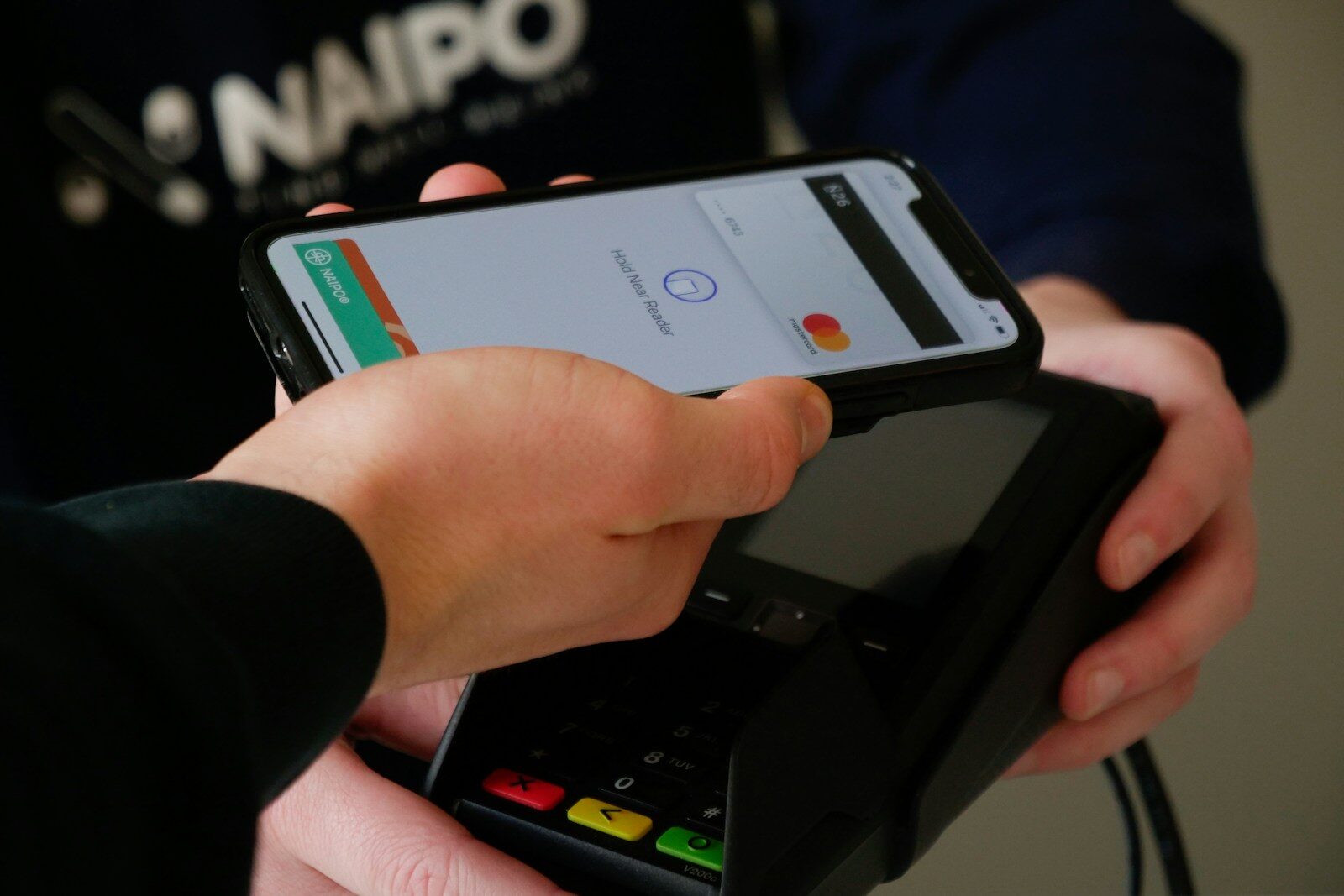
You hold your phone or card near a terminal, it beeps, and money moves from your account to a merchant’s. No signature, no cash, no swipe, often no contact at all. The whole transaction takes under a second and feels like nothing. It is, underneath, a small secure conversation conducted through a magnetic field.
Contactless payment works through near-field communication, a short-range wireless technology. When you bring your card or phone within a couple of centimeters of the terminal, the terminal generates a small electromagnetic field. In the case of a contactless card, that field actually powers the chip inside it — the card has no battery, drawing the energy it needs to operate directly from the terminal’s field through induction. The chip and terminal then exchange encrypted data, and crucially, the card or phone transmits a one-time code rather than your actual account number, so the real data is never exposed in the exchange.
The wild part is the compression of so much into so little. In under a second, across a gap of air, two devices establish a connection, authenticate each other, generate and verify a unique cryptographic token, and authorize the movement of real money — one of them possibly running on power it’s harvesting from the other’s magnetic field in real time. Centuries of commerce ran on physical coins, paper, and signatures precisely because verifying a payment was hard. Now we do it by waving plastic near a box, and we’re impatient if it takes two tries.
What all six of these have in common is that the engineering is invisible by design — the entire point was to make something miraculous feel effortless, and the effort succeeded so completely that the miracle vanished into the background of ordinary life. There’s nothing wrong with that; we can’t walk around in a constant state of awe at our own pockets. But it’s a strange and slightly wonderful fact that the most routine moments of a modern day — checking a map, unlocking a phone, tapping to pay — quietly depend on relativity, 3D infrared mapping, the electrical properties of your skin, and cryptography conducted through thin air. The future arrived. It just disguised itself as the mundane.