6 Things Smartphones Changed Without Anyone Noticing
When a technology arrives loudly, we notice the obvious things it replaces. Everyone knows the smartphone absorbed the camera, the music player, the paper map, and the alarm clock — those changes were visible, and we talked about them. But the deepest changes a technology makes are usually the quiet ones: the shifts in habit, expectation, and capability that happen so gradually, and feel so natural, that nobody registers them as changes at all. One day you simply live differently than you did before, and you can’t quite say when it happened.
The smartphone has rewired a surprising number of everyday human behaviors in exactly this silent way — not the headline features, but the small background operations of ordinary life. Here are six things it changed so smoothly that most people never noticed they’d changed at all.
Getting Lost Stopped Being Possible
Within living memory, getting lost was a normal, expected part of going somewhere new. You misjudged a turn, ended up in an unfamiliar place, and had to work your way back — by reading a map, asking a stranger, or simply driving until something looked familiar. The experience of being genuinely, temporarily lost was a routine feature of travel that everyone shared.
It has quietly vanished. With a mapping app and a glowing blue dot in everyone’s pocket, the state of not knowing where you are — and not being able to instantly fix it — has essentially disappeared from daily life. You can be dropped in an unfamiliar city in a foreign country and navigate to a specific address with total confidence, never once experiencing the disorientation that defined unfamiliar travel for all of human history before about fifteen years ago.
Nobody mourned this, because the loss was disguised as a pure gain — and in most ways it is one. But something genuine went with it. The skill of building a mental map of a place, of orienting yourself by landmarks, of paying close attention to your surroundings because you had to, has quietly atrophied. People now follow turn-by-turn directions through cities they’ve lived in for years without ever forming a real picture of how those cities fit together. The anxiety of being lost is gone, and so is the particular kind of spatial knowledge that the threat of being lost used to force us to develop.
We Stopped Memorizing Phone Numbers
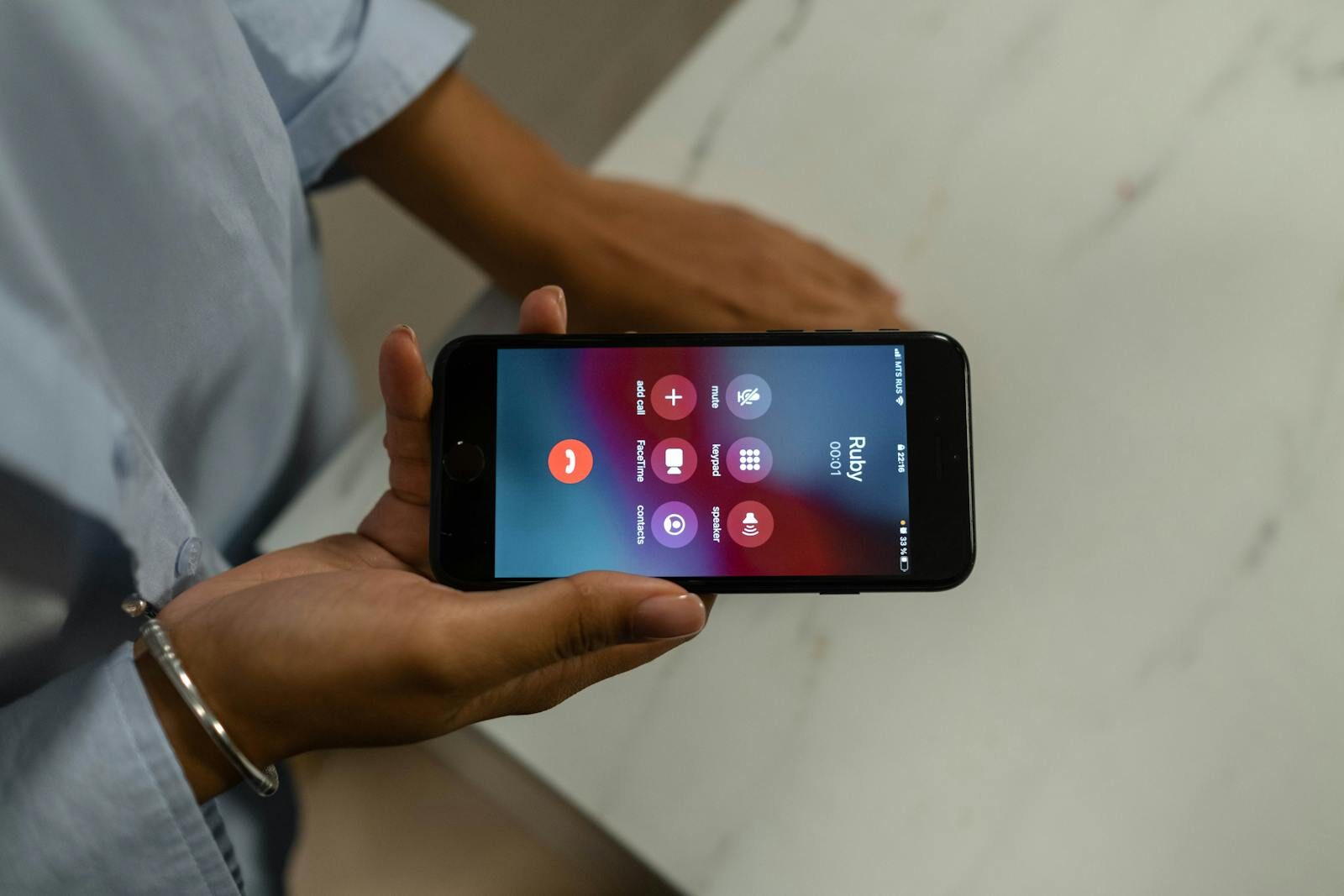
There was a time, not long ago, when every person walked around with a small directory of phone numbers stored in their head — their home, their friends, their relatives, their workplace, the pizza place. Knowing a dozen or more numbers by heart was completely ordinary, because there was no alternative: if you wanted to call someone, you had to know, or look up, their number.
The smartphone eliminated this without anyone deciding to let it go. Once the device remembered every number for you, accessible by tapping a name, the daily act of recalling and dialing digits simply stopped. Most people today would struggle to recite the phone numbers of even their closest friends and family from memory, and many couldn’t manage their own. The mental directory that everyone used to maintain has been quietly emptied out.
This points at something larger and subtler. The numbers are just the visible example of a broader shift: we’ve offloaded a great deal of routine remembering onto our devices, from numbers to addresses to appointments to facts. The instinct, when faced with anything we’d previously have committed to memory, is now to let the phone hold it — “I’ll just look it up.” Psychologists who study this note that the mental muscle of holding information in mind, the everyday working memory we used to exercise constantly, now gets used far less, because the device has made the effort optional. We didn’t decide to stop remembering. We just stopped needing to, and the capacity quietly receded.
Boredom Disappeared
Consider the ordinary empty moments that used to fill a day: waiting in line, riding an elevator, sitting on a bus, standing around before a meeting started, killing ten minutes before an appointment. For all of history, these little gaps were simply dead time — moments of mild boredom that you endured, or filled by looking around, thinking, or talking to whoever was nearby.
Those moments are gone now, and their disappearance was so frictionless that almost no one noticed it happening. The instant a gap opens in the day — even a gap of a few seconds — the phone comes out, and the boredom is filled with a feed, a game, a message, a video. The reflex is now so deeply ingrained that people reach for their phones in the brief pause while a webpage loads. The experience of simply having nothing to do, and sitting with that, has become genuinely rare.
This sounds trivial, and the change felt like pure convenience — who misses being bored? But researchers who study attention and creativity point out that those empty moments were doing quiet work. Boredom is when the mind wanders, makes unexpected connections, processes the day, and generates its own ideas; it’s a kind of mental open space. By eliminating boredom so completely, the smartphone may have eliminated something the brain was using. We filled every gap, and in doing so quietly removed the daily stretches of unstructured mental downtime that humans had always had, without ever noticing they were valuable.
Making Plans Became Endlessly Negotiable
Before everyone carried a phone, making plans with someone was a firm, finished act. You agreed on a time and a place in advance — “Saturday, noon, in front of the theater” — and then you both simply showed up, because once you’d parted ways there was no way to reach each other. The plan was locked. If someone was late, you waited; if they didn’t come, you went home. The commitment was real because it had to be.
The smartphone dissolved this completely, replacing the firm plan with something researchers have called “micro-coordination” — the continuous, fluid adjustment of arrangements in real time. Mobile phones let people coordinate their schedules and meeting places and then iteratively work out a rendezvous on the fly, adjusting as they go. You no longer need to nail down the details in advance, because you can text “running 10 late” or “let’s just meet inside” from the road.
The quiet consequence is that plans stopped being binding and became perpetually provisional. Arrangements now float in a soft, editable state until the last possible moment, and being late has become widely accepted because it’s always announceable. The firm commitment — the social contract of agreeing to be somewhere and simply honoring it — has loosened into something far more casual and cancelable. Nobody announced this change to social norms; it just seeped in, one “otw, almost there” text at a time, until the very meaning of making a plan had shifted.
The Phone Call Became Rude
Here is a genuinely strange reversal that happened almost entirely beneath notice: the phone, a device originally built for voice calls, became a thing on which an unannounced voice call is now considered mildly intrusive. For most of the telephone’s existence, calling someone was the normal, expected way to reach them. You simply called, and they answered.
That norm has quietly inverted. An emerging set of modern phone etiquette now includes rules like sending a text before calling, and not calling again if someone didn’t pick up. For a large share of people, an unexpected phone call now reads as an imposition at best and a sign of bad news or a scam at worst — something that demands your immediate, synchronous attention without warning, which texting politely does not. The expected courtesy is now to text first and ask whether a call is okay.
The shift is remarkable precisely because no one announced it. There was no moment when society collectively decided that ringing someone’s phone had become impolite; the norm simply migrated, gradually, as texting and asynchronous messaging became the default and the synchronous demand of a live call started to feel jarring against it. A behavior that was perfectly normal and even warm — picking up the phone to call a friend out of the blue — quietly became something many people now find slightly stressful, on both ends of the line.
Every Moment Became Potentially Recorded
For all of history until very recently, the default state of any moment was that it went unrecorded. Capturing an image required deliberately bringing a camera, and capturing video was rarer still. The overwhelming majority of life — conversations, mishaps, ordinary scenes, public behavior — simply happened and then existed only in the memories of those present. Being unobserved and unrecorded was the normal condition of being out in the world.
The smartphone reversed the default without fanfare. Now nearly every person in any given space is carrying a high-quality camera, ready in seconds, and the assumption has quietly flipped: any moment might be photographed or filmed, by anyone, at any time. A public argument, a funny incident, an embarrassing stumble, a kind gesture, a confrontation — all of it now happens under the constant, ambient possibility of being captured and potentially shared with the world.
This changed how people behave in public in ways that are hard to see precisely because they’re now universal. There’s a low-grade awareness, mostly unconscious, that one is always potentially on camera, and it subtly shapes conduct — the knowledge that a bad moment could become a permanent, shareable record. The casual freedom of acting in public with the reasonable certainty that the moment would simply pass and be forgotten is gone. We didn’t vote to put a camera in every hand and reverse the ancient default of the unrecorded moment. It just happened, quietly, and now it’s simply the air we move through.
What these six changes share is that none of them was the point. Nobody bought a smartphone in order to stop memorizing numbers, abolish boredom, or make phone calls feel rude — those were side effects, downstream consequences that rippled out from a device sold on its obvious features. And that’s exactly why they slipped past unnoticed: we were watching the camera and the maps and the apps, while underneath, the smartphone was quietly rewiring how we navigate, remember, wait, plan, call, and behave in public. The loud changes got the attention. The quiet ones changed our lives.