6 Old-Fashioned Habits That Actually Made Life Easier
There’s a particular kind of condescension that modern life directs at the past. We assume that the way our grandparents did things was slower, harder, and more tedious — that every old habit was a burden we’ve since been liberated from by technology and convenience. And sometimes that’s true. Nobody is nostalgic for scrubbing laundry on a washboard. But a surprising number of the habits we’ve abandoned weren’t actually burdens at all. They were efficient, durable solutions that quietly made daily life run more smoothly, and we gave them up not because they stopped working but because something flashier came along.
Some of these old habits, it turns out, were doing more for the people who practiced them than anyone realized at the time. Here are six that were genuinely easier — or at least better — than the modern replacements we’ve swapped in.
Keeping a Deep Pantry
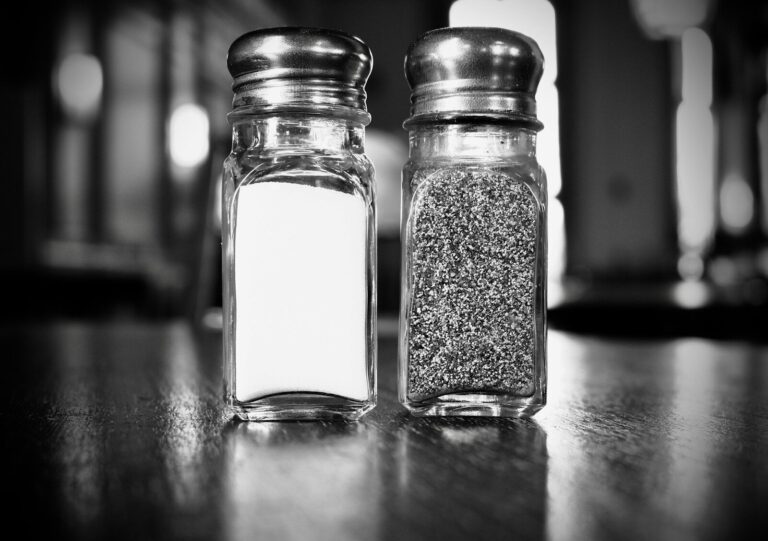
Our grandparents kept what was sometimes called a “just in case” shelf — a pantry stocked deep with staples that didn’t spoil: flour, rice, dried beans, oats, pasta, canned tomatoes, sugar, salt, basic spices. This wasn’t hoarding, and it wasn’t paranoia. It was a system, and the system solved a problem we’ve reintroduced into our own lives without noticing.
The deep pantry meant you could always make a meal. There was no such thing as standing in front of empty cabinets at 6 p.m. deciding whether to order delivery, because the raw materials of a dozen meals were always on hand. A well-stocked pantry absorbs the small daily emergencies of feeding a household — the unexpected guest, the night you forgot to shop, the storm that keeps you home — without any of them becoming a crisis or an expense.
The modern habit of buying only what you need for the next day or two, often supplemented by takeout when the plan falls through, is both more expensive and more stressful than the system it replaced. Every empty-fridge night becomes a decision and a delivery fee. The deep pantry front-loaded a little bit of planning and bulk buying in exchange for never having to think about it again. It was the original version of not running out of things, and it cost a fraction of what we now spend reacting to the same problem one meal at a time.
Cooking in Batches
The old habit wasn’t to bake one loaf of bread. It was to bake several, because the oven was already hot. The same logic applied to soups, stews, casseroles, and sauces: if you were going to the trouble of making a dish, you made a lot of it, and you ate it across several days or stored it for later. This wasn’t a special “meal prep” project with its own dedicated Sunday. It was just how cooking worked.
The efficiency here is partly thermodynamic and partly about labor. An oven heated to bake one thing can bake three or four with almost no additional energy, since the bulk of the cost is in heating the empty space in the first place. And the work of cooking — the chopping, the cleanup, the active attention — doesn’t scale up nearly as fast as the quantity does. Doubling a soup recipe takes maybe ten percent more effort and produces a hundred percent more soup. The marginal meal is nearly free.
We’ve reframed this as “batch cooking,” a trendy time-saver people have to be talked into, when it used to be the ordinary baseline of running a kitchen. A freezer with a few homemade meals in it does exactly what the deep pantry does for ingredients: it absorbs the bad nights, the late nights, and the too-tired-to-cook nights without a delivery app. Our grandparents weren’t doing extra work. They were doing less of it, spread more intelligently across time.
Line-Drying Laundry
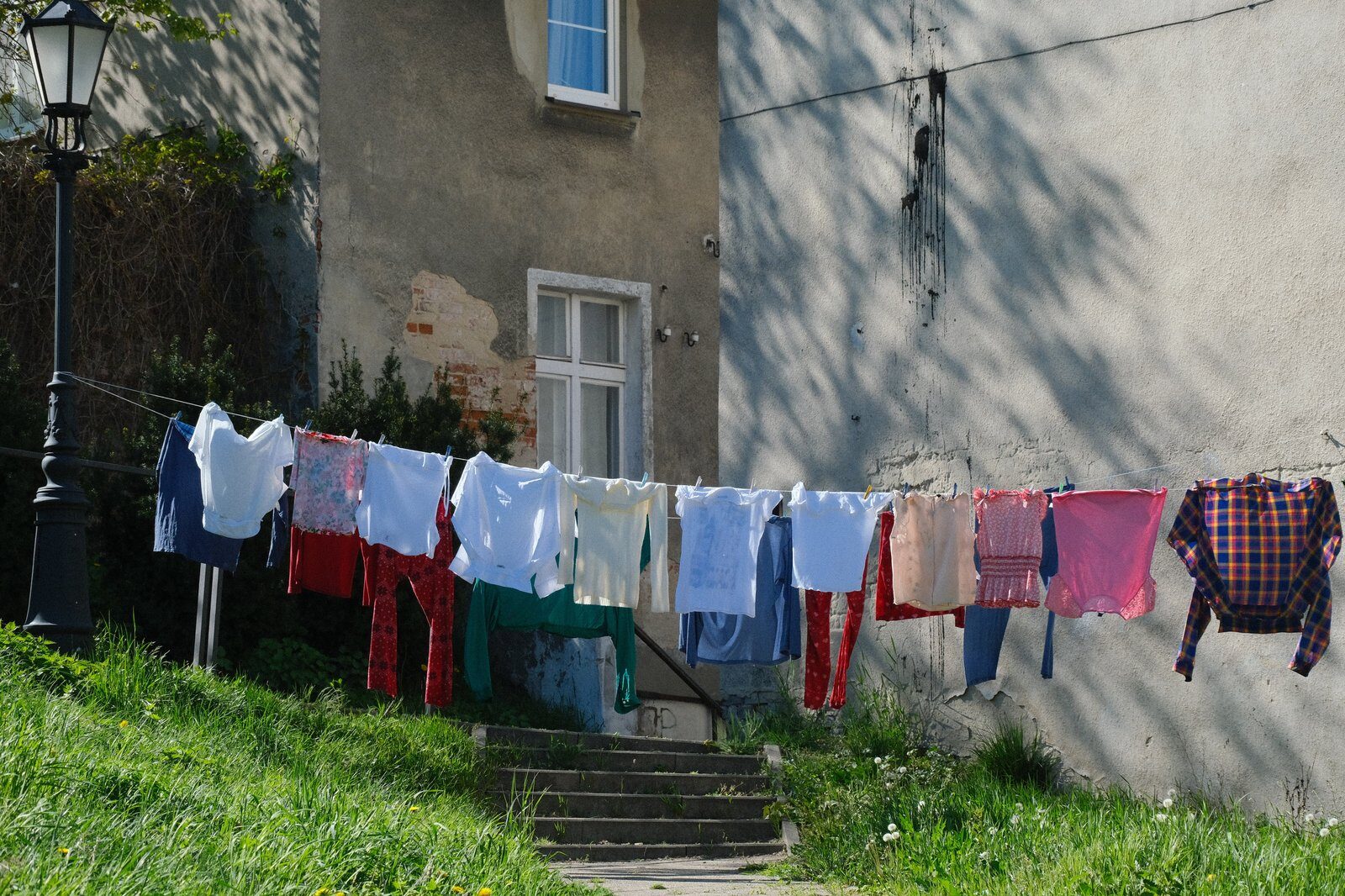
Hanging laundry on a line to dry sounds, to modern ears, like a chore — a slower, more laborious version of pressing a button on a machine. But the clothesline had real advantages that the dryer simply cannot replicate, and some of them are measurable.
Start with the clothes themselves. The tumbling and high heat of a mechanical dryer is what produces lint — and lint is your clothing, slowly disintegrating. That fuzz in the lint trap used to be your towels and T-shirts. Line-drying eliminates that heat damage and mechanical wear entirely, which is why air-dried garments last dramatically longer. Sunlight also acts as a natural disinfectant and whitener, with the sun’s ultraviolet light killing bacteria and brightening whites without bleach. And it costs nothing to run, where a dryer is often one of the most energy-hungry appliances in the house.
There’s a sensory dimension too — the specific fresh smell of sun-dried sheets is something no dryer sheet has ever successfully bottled, though many have tried. The trade-off is real: line-drying takes longer and depends on weather. But the habit wasn’t pure drudgery. It produced better-smelling, longer-lasting clothes for free, and many people who return to it report that pinning laundry to a line on a nice day is one of the more pleasant household tasks rather than one of the worst.
Mending Instead of Replacing
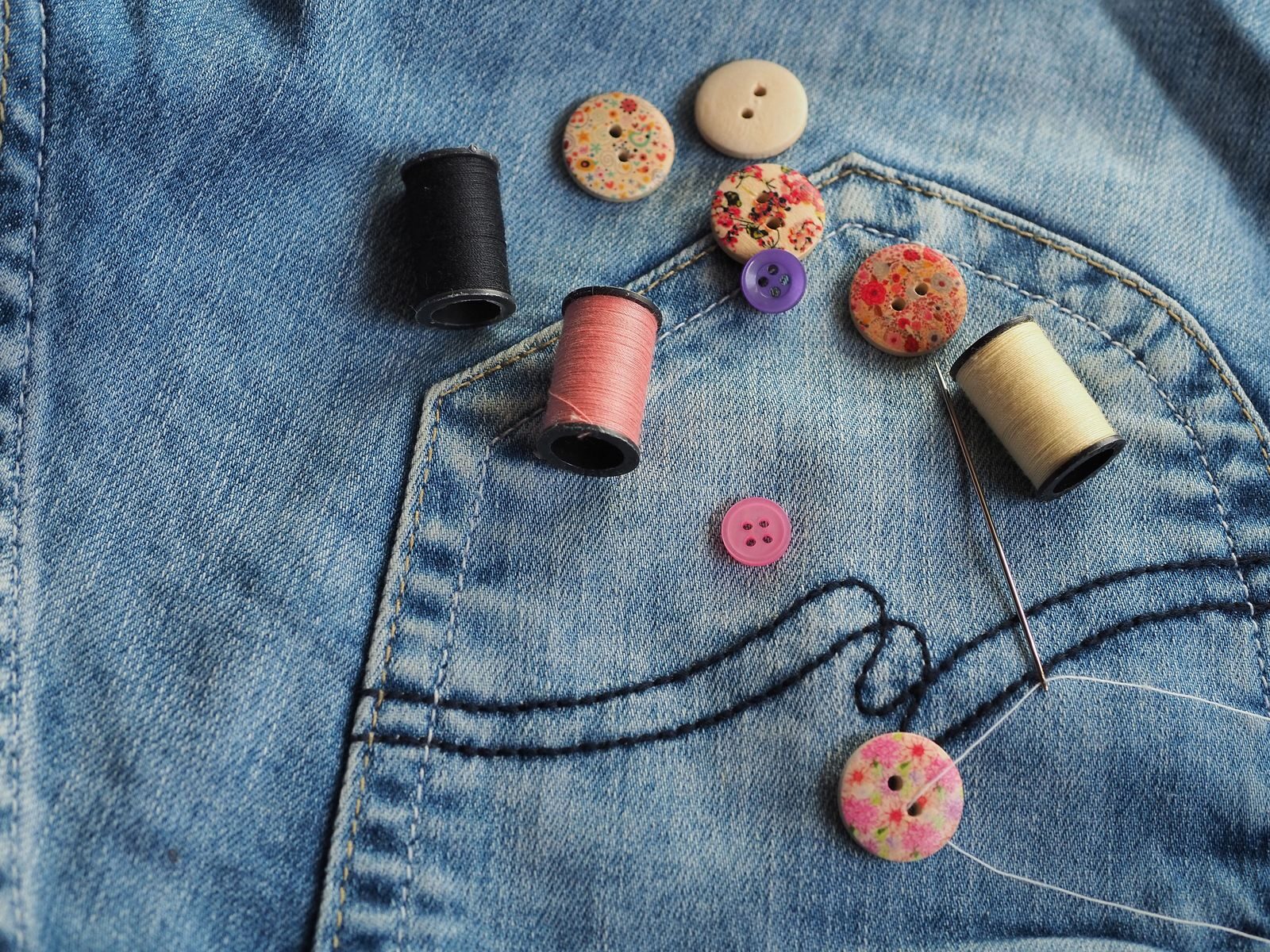
There was a time when a hole in a sock or a missing button didn’t trigger a trip to the store — it triggered ten minutes with a needle and thread. People knew how to sew on a button, patch a knee, darn a sock, and take in a seam, and the tools to do it lived in a tin or basket somewhere in every home. A garment that failed in one small way got repaired and went back into rotation.
The skill itself was modest. Darning a sock or reattaching a button is genuinely easy to learn — easier, arguably, than navigating a return, driving to a store, or comparison-shopping for a replacement online. A traditional darning technique uses a small rounded object (the classic tool is a wooden “darning mushroom”) held under the hole to keep the fabric in shape while you weave thread across the gap. The whole repair takes minutes and extends the life of the item by years.
We’ve largely lost this in the age of fast fashion, where clothing is cheap enough that throwing it away feels rational. But the mending habit wasn’t just about thrift. It meant your favorite things stayed in your life instead of being discarded the first time they failed. It meant fewer shopping trips, less waste, and a household where small breakdowns got fixed on the spot rather than accumulating into errands. The needle and thread in the drawer was, in its quiet way, one of the most efficient problem-solving tools in the house.
Writing Things Down by Hand
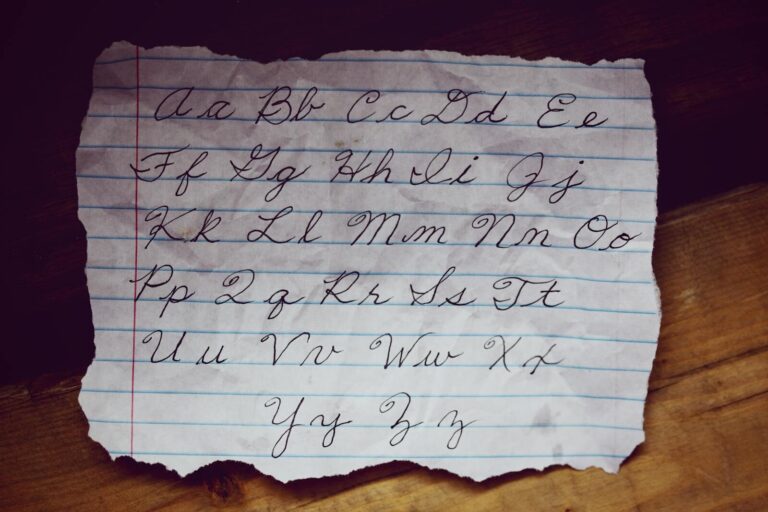
Before the phone absorbed every note, list, reminder, and appointment, people wrote things down — on paper, by hand, in notebooks and on pads and on the backs of envelopes. This looks, from here, like a primitive precursor to the digital tools that replaced it. But there’s a growing body of research suggesting the old way had a cognitive advantage we traded away without knowing it.
In a landmark 2014 study published in Psychological Science, psychologists Pam Mueller and Daniel Oppenheimer compared students who took lecture notes by hand against those who typed them on laptops. The longhand note-takers performed significantly better on conceptual questions, and the reason was revealing: typists tended to transcribe lectures word-for-word, while handwriters, unable to keep up verbatim, were forced to listen, filter, and reframe the material in their own words — a deeper kind of processing that locked the information into memory. The slowness of handwriting wasn’t a bug. It was the entire mechanism.
Later neuroscience has reinforced the point. A 2023 EEG study at the Norwegian University of Science and Technology found that handwriting produced widespread connectivity across brain regions associated with memory and learning — patterns that typing did not generate. Writing by hand engages fine motor control, language, and visual-spatial systems all at once, in a way that strengthens the trace left behind. The handwritten grocery list or to-do list our grandparents kept wasn’t just a record. The act of writing it was helping them remember it, which is something a typed note does far less effectively.
Sitting Down to Meals Together
The shared family meal — everyone at the table at the same time, no screens, eating the same food and talking — was for generations simply the default structure of the day. It has eroded steadily under the pressure of busy schedules, individual devices, and the ease of everyone grabbing something different whenever they’re hungry. And while it can look like a sentimental relic, the regular shared meal was doing a remarkable amount of practical work.
Logistically, it concentrated the household’s eating into one event, which meant one round of cooking and one round of cleanup instead of several scattered across the evening. It created a natural, reliable point of contact — a built-in time when a family actually saw one another and exchanged the small information that keeps a household coordinated: who needs what, what’s happening tomorrow, what went wrong today. Without it, that coordination has to happen through scattered texts and hurried hallway exchanges, or it doesn’t happen at all.
There’s also a substantial research literature linking regular family meals to better outcomes for children — from vocabulary development in young kids to lower rates of risky behavior in teenagers — though the mechanisms are tangled up with everything else a stable mealtime tends to signal about a household. Setting the research aside, the simple version is this: the shared meal was an efficient piece of social infrastructure. It bundled feeding, communication, and connection into a single recurring event that ran on autopilot. We didn’t replace it with something better. We mostly just stopped, and now pay for the same functions piecemeal, scattered across the day.
The thread running through all six of these habits is that they front-loaded a small, regular effort in exchange for a smoother life downstream. A stocked pantry, a full freezer, a mended wardrobe, a written list, a hot oven used to capacity, a table everyone gathered around — none of these were the drudgery we sometimes imagine the past to have been. They were systems, refined over generations, for making daily life require less frantic improvisation. We let most of them go in exchange for convenience, and got something real in the bargain. But it’s worth asking, now and then, whether some of what we called progress was actually just a trade — and whether a few of these old habits might be worth picking back up.