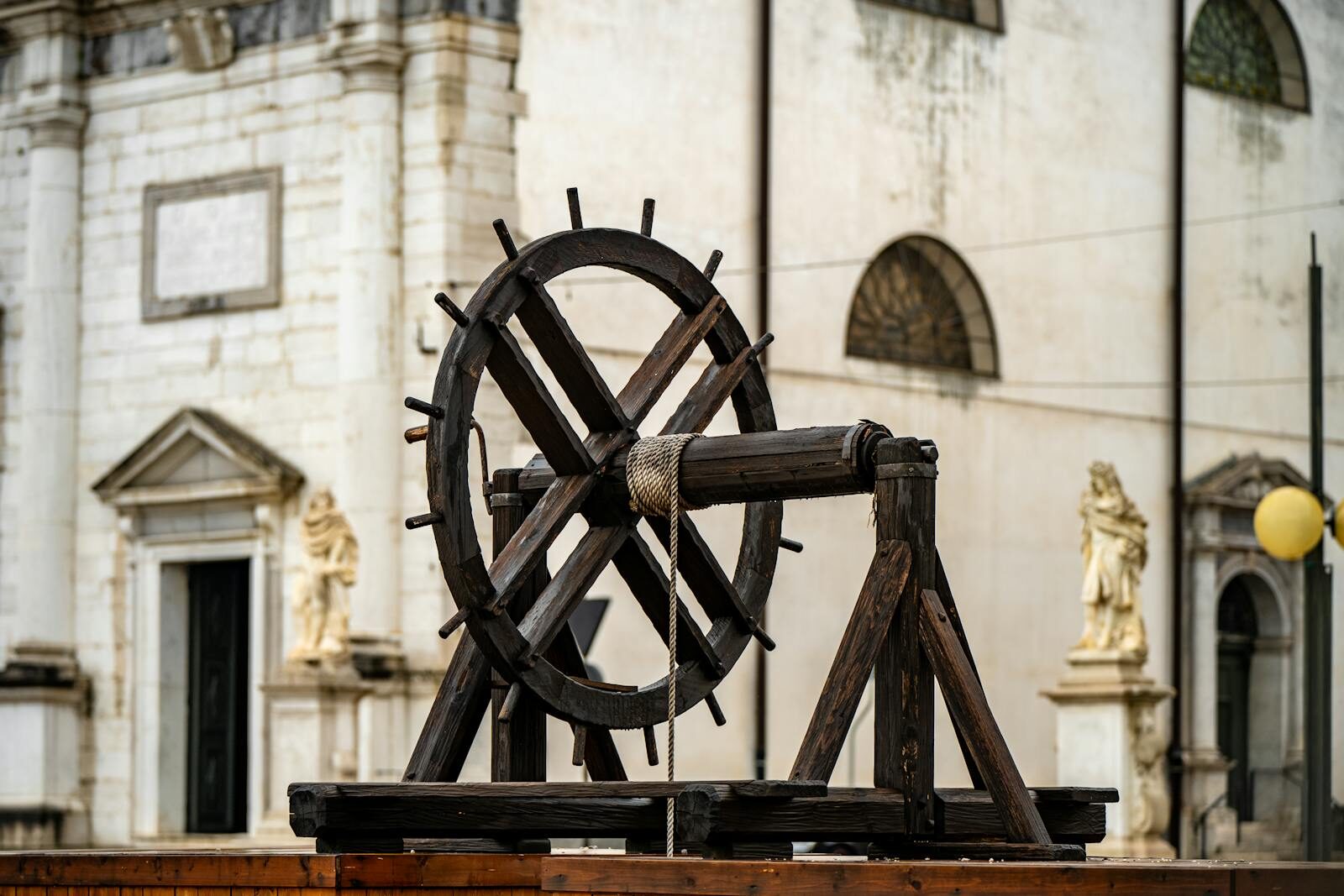
6 Ancient Inventions That Were Shockingly Ahead of Their Time
A bronze lump pulled from a Mediterranean shipwreck turns out to be a mechanical computer. A 2,000-year-old harbor wall shrugs off waves that crumble modern concrete in decades. A surgical text from ancient India describes nose reconstruction techniques still recognizable in today’s operating rooms.
These are not plot points from a time-travel novel. They are real artifacts and documents, studied by archaeologists, engineers, and historians, that force a simple question: how did ancient cultures solve problems so well that modern science is still catching up?
Here are six inventions from the ancient world that were staggeringly ahead of their era, and what they reveal about the nature of human ingenuity.
1. The Antikythera Mechanism: A Mechanical Computer From Ancient Greece
In 1901, sponge divers off the Greek island of Antikythera hauled up corroded bronze fragments from a Roman-era shipwreck dating to roughly 70-60 BCE. For decades, no one fully understood what the pieces were. It took X-ray imaging and painstaking reconstruction across the 20th century to reveal the truth: the fragments formed a hand-cranked device that modeled the movements of the Sun, Moon, and five known planets using at least 30 interlocking bronze gears.
Turn the crank, and pointers swept across dials tracking lunar phases, predicting solar and lunar eclipses, and even marking the timing of Panhellenic athletic competitions like the ancient Olympics. The gear teeth were cut with a precision that would not appear again in the European historical record for over a thousand years.
In 2021, a research team at University College London published a digital reconstruction in Scientific Reports that demonstrated how the mechanism’s front display could have worked as a complete model of the ancient Greek cosmos. The team called it “an ancient Greek genius creation that combined cycles from Babylonian astronomy, mathematics from Plato’s Academy, and ancient Greek astronomical theories.”
What makes the Antikythera mechanism so striking is not just its complexity but its isolation. No comparable device appears in the archaeological record for centuries afterward, raising an uncomfortable question: how much knowledge was lost when the intellectual traditions that produced it collapsed?
2. Roman Concrete: The Building Material That Heals Itself
The Pantheon in Rome, completed around 125 CE, still holds the record for the world’s largest unreinforced concrete dome. Roman harbor structures at Caesarea and along the Italian coast have withstood nearly two millennia of saltwater assault. Meanwhile, modern Portland cement structures in marine environments often begin deteriorating within 50 years.
The secret was hiding in the recipe. Roman builders mixed volcanic ash (pozzolana), lime, and seawater with chunks of volcanic rock. For years, researchers knew the chemistry was different from modern concrete but could not fully explain why it kept getting stronger.
A breakthrough came in January 2023, when a team led by MIT professor Admir Masic published findings in Science Advances showing that small white chunks of lime in Roman concrete, previously dismissed as sloppy mixing, were actually the key. These “lime clasts” dissolve when cracks form and water seeps in, recrystallizing to fill the gaps. The concrete, in effect, heals itself.
The implications go beyond historical curiosity. Modern cement production accounts for roughly 8% of global carbon dioxide emissions, according to the International Energy Agency. Roman-style mixes relied on lower kiln temperatures and naturally occurring volcanic materials. Researchers studying these ancient formulas see a potential roadmap for longer-lasting, lower-carbon infrastructure, a goal that feels urgent as of June 2026, with global construction demand still climbing.
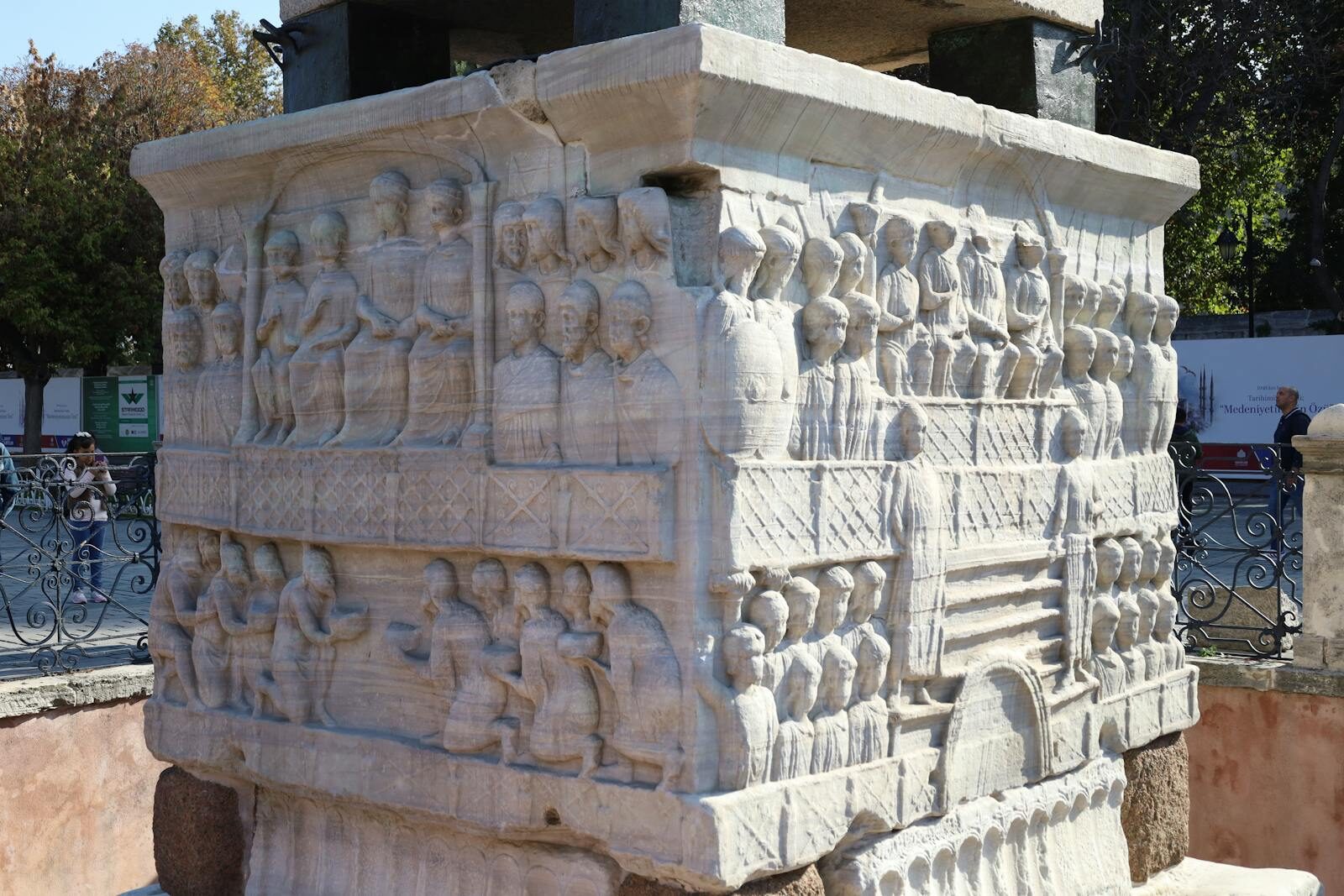
3. Ancient Indian Surgical Tools and Techniques
The Sushruta Samhita, a Sanskrit medical text compiled between roughly 600 BCE and the early centuries CE in the Indian subcontinent, contains what many medical historians consider the earliest systematic description of surgical procedures. The text is attributed to the physician Sushruta, sometimes called the “father of surgery” in Indian tradition, and it catalogs more than 120 surgical instruments and over 300 procedures.
Among the most remarkable: a method for reconstructing a damaged nose using a flap of skin from the cheek or forehead, rotated and sutured into place. This technique, known as the “Indian method” of rhinoplasty, was documented by British surgeons in the Gentleman’s Magazine in 1794 after they observed it being practiced in India, and it directly influenced the development of modern plastic surgery in Europe.
The text also describes cataract surgery (couching the lens with a curved needle), the removal of bladder stones, and protocols for wound management that emphasize cleanliness, proper lighting, and careful post-operative observation. Instruments are described with specific shapes and functions: scalpels, forceps, trocars, probes, and different types of needles for different tissues.
What stands out is the empirical mindset. The Sushruta Samhita instructs students to practice incisions on melons, leather bags, and animal bladders before operating on patients. That emphasis on hands-on training and anatomical knowledge places the text closer to a modern surgical residency manual than to the mystical healing traditions often associated with ancient medicine.
4. Heron’s Coin-Operated Holy Water Dispenser
Long before anyone tapped a contactless card at a vending machine, a Greek engineer in Roman-era Egypt built a device that dispensed a measured portion of holy water in exchange for a coin. Heron of Alexandria, who lived around 10-70 CE, described the mechanism in his treatise Pneumatica, a collection of designs for devices powered by air, water, and steam.
The design was elegantly simple. A worshiper dropped a bronze coin onto a small pan inside the machine. The coin’s weight tipped a lever, which briefly opened a valve and released a fixed amount of water. As the coin slid off the pan, the lever returned to its resting position and the valve closed. No attendant needed. No overpour. No underpour.
The logic is identical to what drives modern vending machines and transit turnstiles: a token or payment triggers a controlled, single-serving release. The difference is scale and materials, not concept. Heron’s device is often cited as the earliest known vending machine, and it reveals something important about the ancient world: where there was commerce and crowds, there was demand for automation.
5. The Baghdad “Battery”: An Electrochemical Puzzle
In 1938, German archaeologist Wilhelm König described a set of clay jars found near Baghdad, dating to the Parthian or Sassanid period (roughly 250 BCE to 650 CE). Each jar contained a copper cylinder surrounding an iron rod, sealed with an asphalt plug. König proposed that the jars, when filled with an acidic liquid like vinegar or citrus juice, could generate a small electric voltage.
Replicas have confirmed that the basic setup does produce a low current, typically around 0.5 to 1 volt. But what the devices were actually used for remains one of archaeology’s more entertaining debates. Some researchers have suggested electroplating, pointing to thin gold coatings found on certain Mesopotamian artifacts. Others argue the jars were simply storage vessels for sacred scrolls, with the metal components serving a structural rather than electrical purpose.
No ancient text describes the jars’ function, and no workshop context has been found alongside them. The honest answer, as of May 2026, is that nobody knows for certain. But the artifacts remain fascinating precisely because they sit at the boundary between accident and intention. If Parthian-era craftspeople did stumble onto electrochemistry, they did so roughly 1,800 years before Alessandro Volta built his famous pile in 1800.
6. Heron’s Steam Engine and Automated Theater
Heron of Alexandria appears twice on this list for good reason: the man was a prolific inventor whose designs spanned pneumatics, mechanics, and theatrical engineering. His most famous device, the aeolipile, was a hollow metal sphere mounted on a boiler. When water inside the boiler was heated, steam escaped through two bent nozzles on the sphere, causing it to spin rapidly.
The aeolipile was not a practical engine. It produced no useful work in the industrial sense, and Heron likely built it as a demonstration or novelty. But the underlying principle, using the reactive force of escaping steam to create rotary motion, is the same principle that powers modern rocket nozzles and jet turbines. The physics was sound. What was missing was the metallurgy and fuel infrastructure to scale it up.
Perhaps more impressive were Heron’s automated theater systems. Using a network of ropes, pulleys, counterweights, and falling sand or grain as a timing mechanism, he built miniature stages where figures moved, doors opened, and scenes changed in a pre-programmed sequence. Once set in motion, the performance ran without human intervention. It was, in a meaningful sense, an early form of programmable automation, closer in spirit to a modern assembly line or robotic sequence than to a simple puppet show.
These devices remind us that the gap between concept and widespread adoption can stretch across millennia. The ideas were there. The materials and economic incentives were not.
Why Ancient Ingenuity Still Matters
Taken together, these six inventions challenge a comfortable assumption: that technological progress moves in a clean, upward line from primitive to advanced. The historical record tells a messier story. Breakthroughs arrive early, flourish briefly, and vanish when the civilizations that produced them decline, lose funding, or face conquest. The Antikythera mechanism had no known successor for over a thousand years. Roman concrete’s self-healing secret was only decoded in 2023. Sushruta’s rhinoplasty technique had to be “rediscovered” by European surgeons in the 18th century.
That pattern carries a practical lesson. History is not just a museum of obsolete curiosities. It is a library of prototypes, many of them still relevant. Engineers studying Roman concrete are actively working to reduce carbon emissions from modern construction. Surgeons still use flap techniques that trace their lineage to ancient India. The concept behind Heron’s vending machine is embedded in every transit gate and snack dispenser on the planet.
The next time a new technology feels like it appeared out of nowhere, it is worth asking: did someone, somewhere, try this before? The answer, more often than most people expect, is yes.