5 Famous History Stories That Didn’t Happen the Way People Think
Napoleon was tiny. Marie Antoinette sneered at starving peasants. Vikings charged into battle wearing horned helmets. These “facts” feel as solid as stone, repeated in classrooms, movies, and dinner-table arguments for generations. But pull at the threads, and most of them unravel fast.
What follows are five of the most persistent historical stories that people accept without question. Each one has been reshaped by myth, propaganda, or simple repetition until the popular version barely resembles the documented record. As of June 2026, historians and researchers continue to push back on these narratives, and the corrections matter more than you might expect.
1. Marie Antoinette Never Said “Let Them Eat Cake”
The line is irresistible: a queen so detached from ordinary suffering that she responds to a bread shortage by suggesting the poor eat cake instead. It has become the go-to shorthand for aristocratic cluelessness. There is just one problem. No credible evidence ties the quote to Marie Antoinette.
The phrase first appears in Jean-Jacques Rousseau’s Confessions, written around 1765 and published in 1782. Rousseau attributed it to “a great princess,” but Marie Antoinette was roughly 10 years old and living in Austria when he wrote those words. She had not yet set foot in France.
By the time revolution swept Paris in 1789, pamphleteers were recycling old anecdotes about careless royals and pinning them on the queen. The quote stuck because it matched the caricature they were building, not because anyone recorded her saying it. As historian Antonia Fraser documented in her 2001 biography Marie Antoinette: The Journey, the real woman was far more complicated than the cartoon villain. She worried about her children, attempted to navigate a collapsing court, and faced genuine dangers that the single famous sentence erases entirely.
Repeating “Let them eat cake” as fact means repeating revolutionary propaganda that hardened into history over two centuries of retelling.
2. The “Lost Generation” Was Not a Parisian Literary Club
Say “Lost Generation” and most people picture Ernest Hemingway nursing a drink at a Left Bank café, trading barbs with F. Scott Fitzgerald while Gertrude Stein holds court nearby. The phrase has become a brand for a small circle of glamorous American expatriates. The actual story is far bigger and far less romantic.
Stein reportedly told Hemingway, “You are all a lost generation,” a remark he later used as the epigraph to The Sun Also Rises (1926). But the sentiment she captured was not about novelists. Contemporaries across Europe and the United States used similar language to describe an entire cohort of young people who came of age during the First World War and found that the world they had been promised no longer existed.
That cohort included factory workers returning to economies gutted by wartime debt, demobilized soldiers struggling with what doctors were only beginning to call shell shock, and students who watched inflation destroy their families’ savings. When you read deeper into the period, as historians like Robert Wohl explored in The Generation of 1914, the Lost Generation label describes a continental crisis of meaning, not a literary aesthetic.
Narrowing the term to a handful of famous authors makes the 1920s easier to package. It also hides the scale of the damage. Millions of ordinary people felt just as unmoored as Hemingway’s characters. Treating their disorientation as someone else’s novel is a way of forgetting them twice.
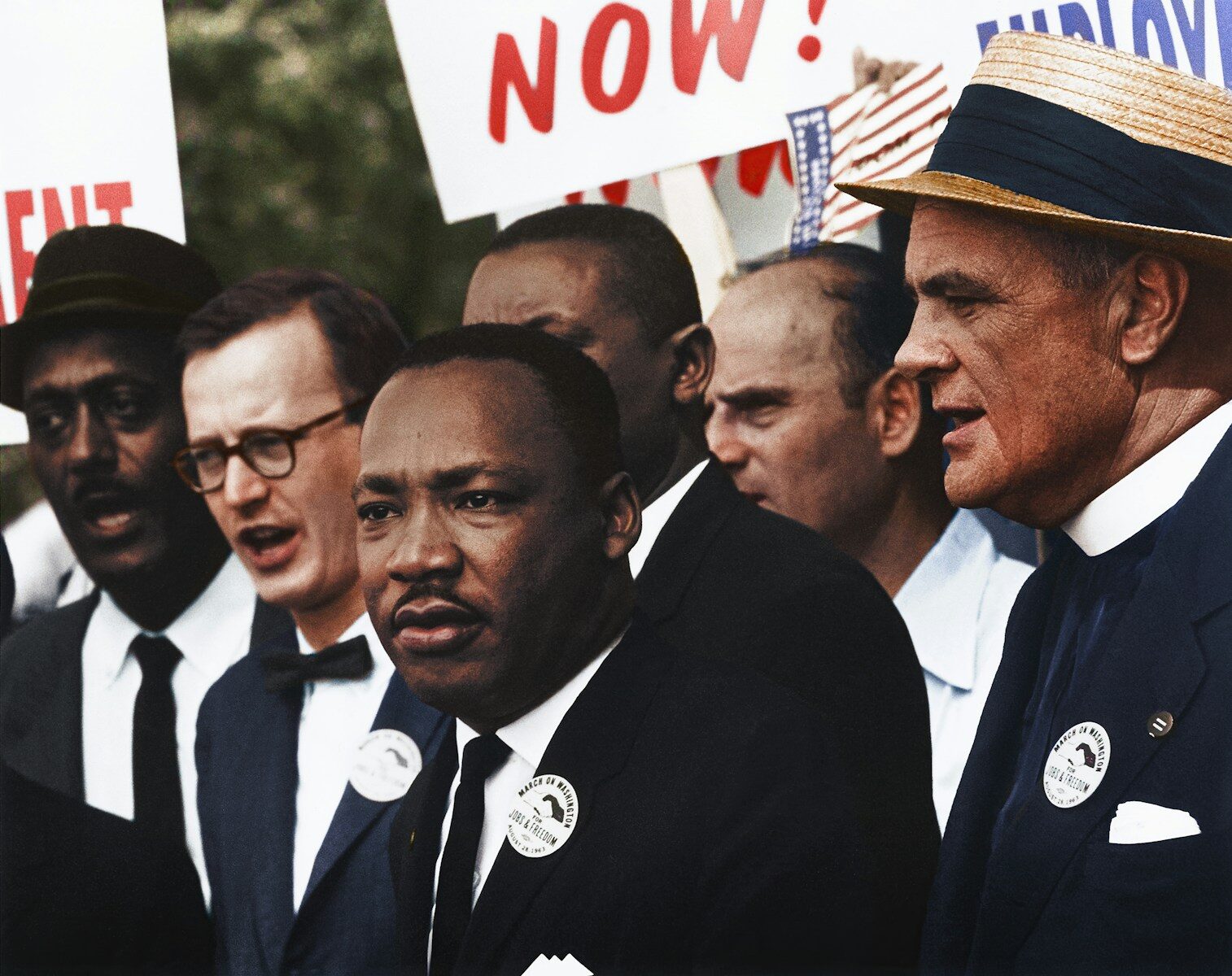
3. The Civil Rights Movement Was Not a Straight Line From Marches to Victory
The version of the civil rights era that most Americans absorb in school runs like a highlight reel: Rosa Parks refuses to give up her seat in 1955, Martin Luther King Jr. delivers the “I Have a Dream” speech in 1963, Congress passes the Civil Rights Act of 1964 and the Voting Rights Act of 1965, and the country turns a page. It is a satisfying arc. It is also dangerously incomplete.
The real timeline is jagged. The Supreme Court’s Brown v. Board of Education ruling came in 1954, but school desegregation met violent resistance for years afterward. The 16th Street Baptist Church bombing in Birmingham, Alabama, killed four girls just weeks after the March on Washington. Medgar Evers was assassinated in his own driveway. Legal victories arrived alongside brutal backlash, and progress stalled repeatedly.
Beyond the marquee events, thousands of local campaigns across the South and the North never made national television. Organizers like Fannie Lou Hamer, Ella Baker, and Bob Moses built grassroots networks that were essential to every headline-grabbing moment, yet their names rarely appear in the condensed version.
Compressing that history into a feel-good narrative carries a cost. It frames racism as a problem that was identified, confronted, and resolved, which makes ongoing fights over voting access, police accountability, and educational equity look like surprising new conflicts rather than unfinished chapters of the same struggle. Recognizing the era as incomplete does not diminish the courage of its leaders. It honors the reality that they were pushing against systems designed to outlast any single law or speech.

4. Shared False Memories Rewrite the Past in Real Time
This one is not about a single historical event. It is about the mechanism that distorts all of them.
In 2010, paranormal researcher Fiona Broome noticed that a surprising number of people shared a vivid memory of Nelson Mandela dying in a South African prison in the 1980s. Some recalled news coverage, a funeral, even a grieving widow on television. None of it happened. Mandela was released from prison in 1990, served as South Africa’s president from 1994 to 1999, and died in 2013. Broome coined the term Mandela Effect to describe these collective false memories.
Psychologists have since documented the phenomenon across dozens of examples, from movie quotes people swear they heard (Darth Vader never says “Luke, I am your father” with that exact phrasing) to brand logos that never looked the way millions of people picture them. Research published in Psychological Science suggests that when people encounter partial information, the brain fills gaps with plausible details and then stores the whole package as a single confident memory.
The effect matters for history because it shows how easily groups of people can “remember” events that diverge from the record. When millions share the same mistaken version, the false memory feels like confirmation. It is actually evidence that everyone consumed similar fragments and smoothed them into the same convenient shape. Understanding this tendency is the first step toward questioning your own certainty about what “really happened.”
5. Legends That Were Never History to Begin With
Some famous stories skip the distortion phase entirely and start as fiction. Nero fiddled while Rome burned. Vikings wore horned helmets. People in Columbus’s time believed the Earth was flat. Each of these claims has been debunked for decades, yet they keep circulating because they are vivid, simple, and easy to teach.
Start with Nero. The Roman historian Tacitus, writing a generation after the Great Fire of 64 CE, reported that Nero sang and played the lyre (not a fiddle, which would not be invented for more than a thousand years). Even that account is disputed. Tacitus himself noted conflicting reports, and other ancient sources like Cassius Dio offered different versions. The image of a mad emperor playing music while his city burned is dramatic, but it rests on shaky ground.
Viking helmets with horns? That image traces largely to costume designer Carl Emil Doepler, who created horned headpieces for the first Bayreuth production of Wagner’s Ring cycle in 1876. Archaeological digs across Scandinavia have turned up plenty of Viking-era helmets. None of them have horns.
The flat-Earth myth is perhaps the most stubborn. Educated Europeans in the fifteenth century understood perfectly well that the planet is a sphere. The Greek mathematician Eratosthenes had calculated its circumference around 240 BCE. The real debate before Columbus’s 1492 voyage was about distance: critics argued (correctly, as it turned out) that the ocean between Europe and Asia was far wider than Columbus claimed. The popular notion that Columbus proved the Earth was round was largely invented by Washington Irving in his 1828 biography, A History of the Life and Voyages of Christopher Columbus, which blended fact and fiction freely.
Researchers who catalog historical myths note that these stories survive because they serve a narrative purpose. A horned helmet instantly signals “Viking” in a movie. A flat-Earth believer makes Columbus look like a lone genius. The shortcut is satisfying, but it trains people to prefer the most cinematic version of events over the documented one. That habit does not stay confined to ancient history. It shapes how people interpret wars, elections, and social movements happening right now.
How Polished Stories Replace Messy Facts
A pattern runs through every example on this list. A real person or event leaves behind a trail of documents, testimony, and physical evidence. Over time, storytellers add color, simplify motives, and trim away complications. Audiences repeat the polished version until it feels more real than the archival record ever did.
Sometimes the change is small: exaggerating a queen’s callousness with a quote she never uttered. Sometimes it is sweeping: compressing an entire generation’s trauma into a few glamorous novels. And sometimes the distortion happens inside your own head, as the Mandela Effect research demonstrates, with your brain quietly editing memories to fit a cleaner narrative.
None of this means that history is unknowable or that every accepted fact is secretly wrong. It means that the stories people find easiest to remember are often the ones that have been shaped the most. Checking a familiar anecdote against primary sources is not pedantry. It is the only reliable way to keep the past from becoming a fairy tale that flatters the present.