6 Ways Technology Quietly Changed How People Think
Every previous information technology — writing, the printing press, the telegraph — produced a wave of contemporary panic about how it was rewiring human cognition. Most of those panics turned out to be overblown. The current panic about smartphones, social media, and AI may turn out the same way, or it may not.
What’s clear is that there are now a number of peer-reviewed studies showing specific, measurable cognitive shifts in people who use these technologies heavily, and the findings are more interesting than the usual thinkpiece version of them — partly because some of the most famous results have failed to replicate, which is its own kind of finding. Six documented effects, each with its primary source and the honest replication caveats.
You remember the folder where you saved the fact, not the fact itself — a 2011 Columbia study formalized the “Google effect”
Betsy Sparrow, Jenny Liu, and Daniel Wegner published “Google Effects on Memory” in Science in 2011. Across four experiments, undergraduates typed trivia statements into a computer. Half were told their entries would be saved; half were told they would be erased. The save group remembered the actual facts significantly worse than the erase group — but remembered better which folder each fact had been saved to.
A Stroop-style priming task in the same paper found that participants stuck on hard trivia questions had faster reaction times to computer-related words like “Google” and “Yahoo.” The implication: when stumped, modern minds automatically reach for the search engine before reaching into memory. The Google effect paper has been cited more than 2,000 times and gave the phenomenon its name.
The effect held up in a 2021 meta-analytic review, though with somewhat smaller pooled effect sizes than Sparrow’s original. The core finding — that we offload memory storage to retrievable systems and remember location rather than content — is one of the more durable results in the literature on digital cognition.
You comprehend printed text better than the identical text on a screen — and the gap is larger for younger readers, not smaller
Pablo Delgado and colleagues published the definitive meta-analysis on this question in Educational Research Review in 2018. Across 54 studies and 171,055 participants, paper outperformed screens for comprehension with a pooled effect size of Hedges’ g = -0.21. The finding survives across most reading contexts, and three of its details are counterintuitive.
First, the paper advantage is bigger under time pressure. When readers can self-pace freely, the screen-versus-paper gap shrinks; when they have to read fast, the screen disadvantage widens. Second, the advantage applies primarily to informational and expository text — novels and narrative fiction read about equally well on either medium. Third, and most counterintuitive, the paper advantage has been growing over time, not shrinking with the rise of so-called digital natives. The full screen reading meta-analysis has held up well across follow-up work.
Anne Mangen’s lab at the University of Stavanger has reproduced the finding in school populations. Norwegian 10th graders reading on screen scored lower on comprehension than peers reading the identical PDF on paper. The result inverts the common assumption that screens are equivalent to paper for serious reading. They aren’t.
The average time a knowledge worker spends on any one screen before switching has fallen from 150 seconds in 2004 to 47 seconds today
Gloria Mark at UC Irvine has spent two decades observing knowledge workers using screen-capture software rather than self-reported surveys. Her research consistently shows attention spans on screens are not what people think they are.
The dwell-time numbers come from five independent observational studies between 2004 and 2020. Average focused attention on a single screen: 150 seconds in 2004, 75 seconds by 2012, and approximately 47 seconds by 2020. A related and well-replicated finding: after a single workplace interruption, it takes an average of 23 minutes and 15 seconds to return to the original task at full focus. Mark’s work on attention spans is the most-cited empirical evidence for the popular sense that focused work has gotten harder.
The caveat Mark herself emphasizes is that the data come from workplace observations of knowledge workers, not a representative population sample. She also argues that technology is not the sole cause — workplace culture and self-initiated interruption account for much of the dwell-time collapse. The numbers themselves, however, are observational and durable.
Reading on a backlit iPad before bed suppresses melatonin by more than 50% — and the impairment carries into the next morning
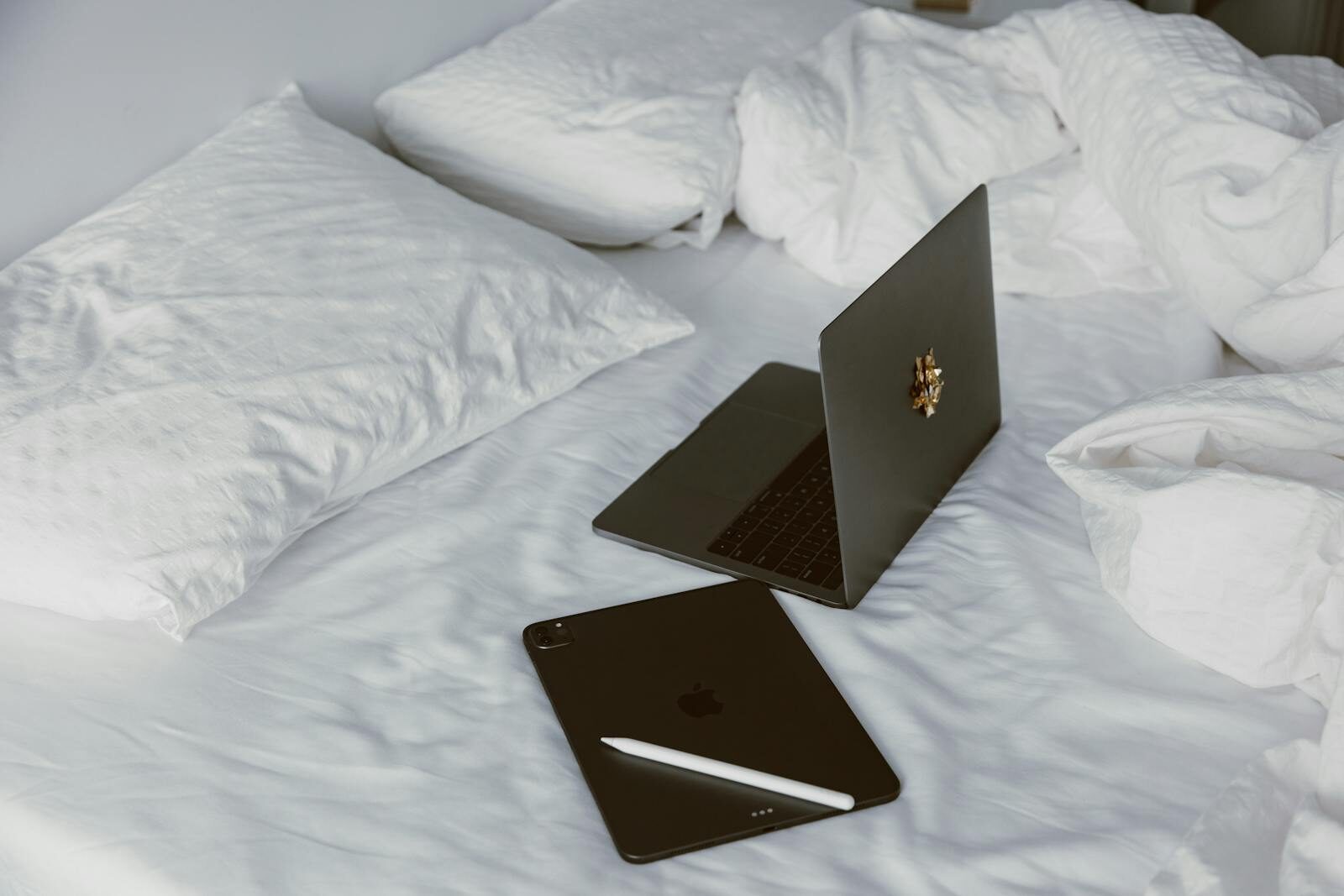
Anne-Marie Chang and Charles Czeisler’s lab at Brigham and Women’s Hospital ran a tightly controlled crossover study published in PNAS in 2015. Twelve participants alternated between five nights of reading a printed book before bed and five nights of reading on a light-emitting eReader (iPad), under controlled lab conditions with identical wake times.
The iPad nights produced striking effects. Melatonin was suppressed by more than 50% relative to print nights. Melatonin onset was delayed by approximately 90 minutes. REM sleep was reduced. Participants reported feeling sleepier the next morning despite identical total sleep time. The under-told part is the carryover impairment to next-day alertness, which suggests the effect isn’t just about falling asleep — it’s about restorative sleep quality. The full eReader sleep study remains the cleanest measurement of the effect.
The caveat is that the sample was small (n=12) and the lab conditions tightly controlled. The broader popular claim that “blue light blocking glasses help” is much weaker than this specific finding. What’s well-supported is the narrow result: backlit screens before bed measurably degrade sleep quality.
The famous “your phone in your pocket reduces your cognitive capacity” study has not replicated cleanly — which is itself the interesting story
Adrian Ward and colleagues published “Brain Drain: The Mere Presence of One’s Own Smartphone Reduces Available Cognitive Capacity” in 2017. With 548 undergraduates running working-memory tasks, the original study found a linear dose-response: phones face-down on the desk produced the worst performance, phones in the pocket or bag produced intermediate scores, and phones in another room produced the best. The phones were powered off. Mere presence appeared to be enough.
The 2017 result became one of the most-cited findings in popular tech-and-cognition writing. Multiple replication attempts have since produced messier results. A 2022 preregistered replication by Ruiz Pardo and Minda in Acta Psychologica failed to find the effect. A 2020 study by Johannes and colleagues also found no measurable cognitive cost from a phone on the desk. The original Brain Drain finding is now widely treated as questionable in the cognitive-science literature.
The honest takeaway is that whether your phone in your pocket measurably reduces your working memory is currently unclear. The popular version of the finding has substantially outrun the actual evidence, which is its own form of cognitive-tech effect — confidently believing a research-backed claim that the research no longer backs.
The 2009 “media multitaskers are worse at task-switching” finding survived replication — but the effect size shrunk by roughly two-thirds
Eyal Ophir, Clifford Nass, and Anthony Wagner published “Cognitive Control in Media Multitaskers” in PNAS in 2009. Heavy media multitaskers — the top quartile on the Media Multitasking Index — performed worse than light multitaskers on tasks measuring distractor filtering, task-switching, and working-memory updating. Nass’s quote at the time became famous: “We kept looking for what they’re better at, and we didn’t find it.”
The finding propagated through every “stop multitasking” article and self-help book for the next decade. The story since has been more nuanced. A 2017 meta-analysis by Wiradhany and Nieuwenstein, covering 12 follow-up studies, found the effect was real but much smaller than originally reported — Cohen’s d of about 0.17 versus Ophir’s much larger original effects. The full media multitasking literature now treats heavy multitasking as a real risk factor for attentional control, but a modest one.
This is what an effect looks like when it partially replicates: the direction holds, the magnitude shrinks, the popular version of the finding gets more dramatic than the science supports, and the actual conclusion is more cautious than either the original headline or the dismissive backlash.
Two patterns recur across the six. First, technology has produced real, measurable cognitive effects within the lifetimes of people using it — memory offloading, attention fragmentation, sleep degradation, and shifted reading comprehension. Second, the most famous individual results have often been larger than the careful replications, and the popular versions of them are usually more confident than the actual studies were. Both observations matter. The technologies are changing how we think, and the science of how to measure that is still figuring itself out in public.