5 Common Items From the Past That Quietly Disappeared
Some things vanish with ceremony. The last episode airs, the company announces bankruptcy, a politician declares an end of an era. Other things just stop being there one day. You realize sometime later that you haven’t seen a payphone in years, that nobody has handed you a TV Guide since you can remember, that the gas station no longer has a rack of free road maps near the cigarettes. Each disappearance has an actual story behind it — a specific terminal event, a final factory roll, a last store standing in a small town somewhere. Five mass-market items that defined ordinary life within living memory and then quietly stopped existing.
Encyclopedia Britannica ended its print edition on March 13, 2012 — after a 244-year continuous run that began in 1768
The Encyclopedia Britannica’s print edition started publishing in Edinburgh in 1768 — six years before the American Revolution. It outlasted the British Empire, the Soviet Union, the Habsburg dynasty, and Sears. On March 13, 2012, company president Jorge Cauz announced the end of the print edition.
The final 2010 set was a 32-volume, 129-pound run. Only 12,000 sets were printed; by the time of the March 2012 announcement, 8,000 had sold. The remaining 4,000 sold out by late April. NPR’s Britannica announcement coverage at the time captured the moment in real terms — the most thorough reference work ever assembled in English now lived only online.
The standard narrative is that Wikipedia killed it. The actual killer was Microsoft Encarta, the CD-ROM encyclopedia bundled with Windows starting in 1993, which destroyed the door-to-door sales model Britannica had depended on for decades. By the time Wikipedia launched in 2001, the print encyclopedia was already a wounded business. The 244-year run ended quietly, by press release, with no ceremony.
The world’s last roll of Kodachrome film was developed on January 18, 2011 in Parsons, Kansas — and Kodak gave the final manufactured roll to Steve McCurry
Kodak discontinued Kodachrome in June 2009 after 74 years of production. The K-14 processing chemistry was so specialized that only one lab in the world still ran it: Dwayne’s Photo, in Parsons, Kansas, a town of about 10,000 people. On January 18, 2011, Dwayne’s processed the last roll. After that date, any exposed Kodachrome in existence anywhere on Earth could no longer be developed as Kodachrome.
Kodak gave the very last manufactured roll of Kodachrome film to National Geographic photographer Steve McCurry — the man behind the 1985 “Afghan Girl” cover portrait. McCurry shot 36 frames across New York, India, and Kansas. Frame 36 was a group portrait of the employees at Dwayne’s Photo. The negatives were donated to the George Eastman Museum in Rochester, where they’re now part of the permanent collection.
The reason Kodachrome inspired this kind of pilgrimage is that nothing else produced its specific color saturation — a quality embedded in the dye-coupler chemistry rather than the emulsion. Digital photography killed the demand, but the film itself was also impractical to keep manufacturing: the K-14 chemistry required hazardous materials and a continuously running processing line that nobody else wanted to maintain.
The very last Blockbuster Video on Earth is the one in Bend, Oregon — opened in 1992 as an independent store, converted in 2000, and the only one left since March 2019
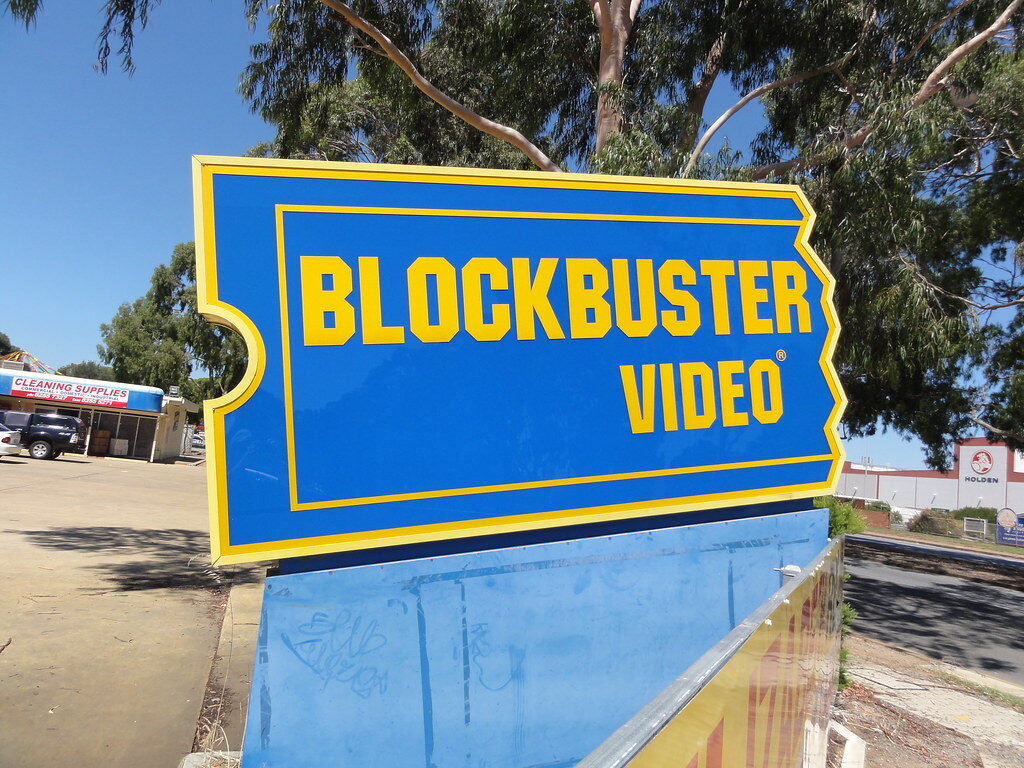
At its 2004 peak, Blockbuster operated 9,094 stores and employed 84,300 people worldwide. The corporate decline was fast. The last corporate-owned stores closed in November 2013. By July 2018, the Bend, Oregon location at U.S. Route 20 and Revere Avenue became the last in the United States. In March 2019, after the closure of two Australian stores, it became the last in the world.
The Bend store wasn’t even originally a Blockbuster. Ken and Debbie Tisher opened it in 1992 as “Pacific Video” and converted it to a Blockbuster franchise in 2000. The current manager, Sandi Harding, has run it for over two decades and has personally repaired its 1990s-era POS system multiple times because no replacement parts exist. It still rents physical DVDs and Blu-rays. Its full Blockbuster history is documented and updated.
The most-told story about Blockbuster’s decline is from a meeting in 2000: Netflix CEO Reed Hastings flew to Dallas and offered to sell his small DVD-by-mail company to Blockbuster CEO John Antioco for $50 million. Antioco laughed him out of the room. Hastings has confirmed the meeting in multiple interviews. Netflix’s current market cap is north of $300 billion.
New York City removed its last public on May 23, 2022 — the U.S. payphone count had fallen from 2.6 million in 1995 to roughly 100,000 by 2018
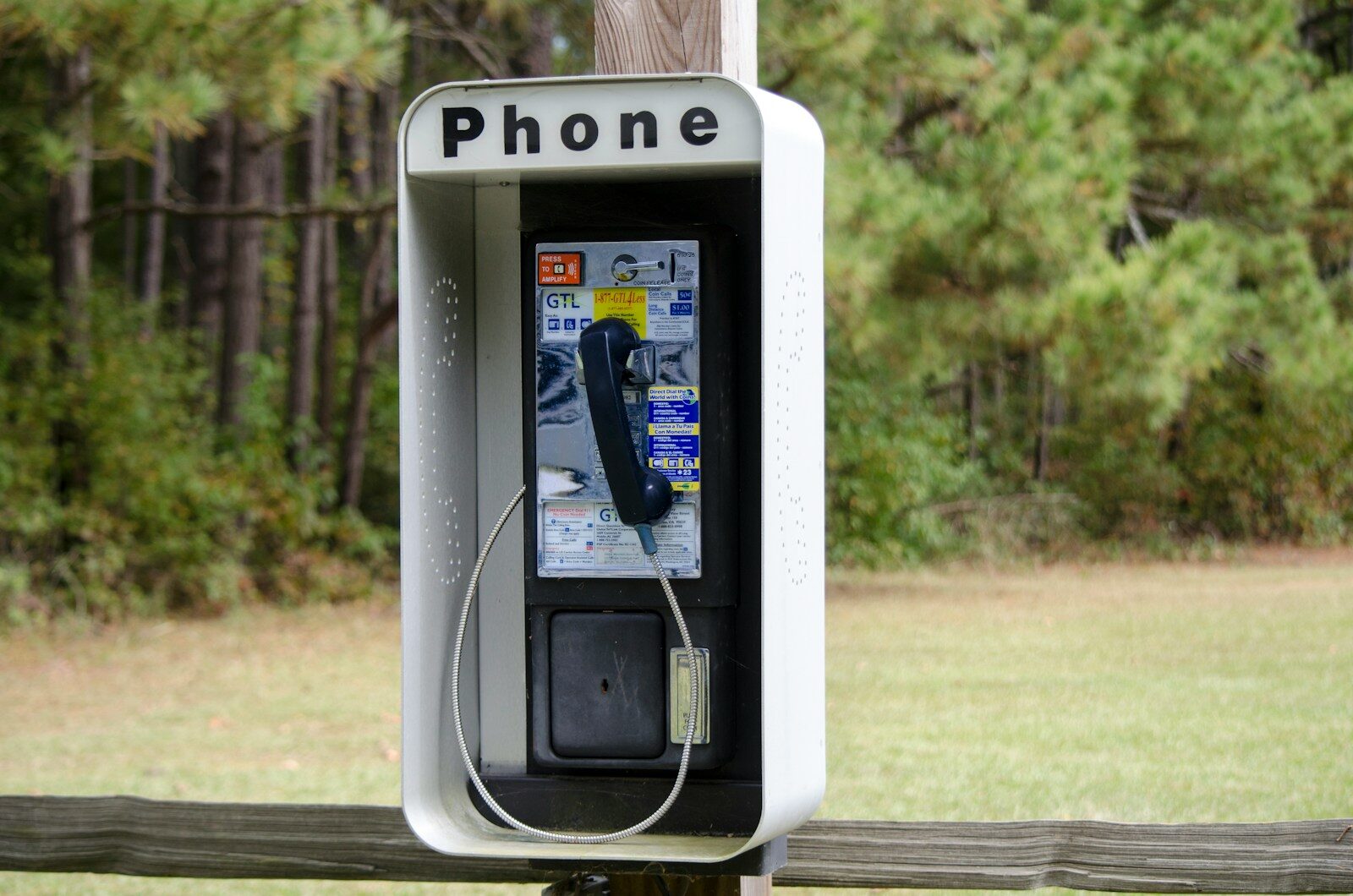
The first coin-operated public telephone was installed by William Gray in Hartford, Connecticut in 1889. At peak, there were 2.6 million payphones in the United States in 1995, per FCC data. The decline was not gentle. AT&T exited the payphone business entirely on December 3, 2008, ending its involvement in the service it had effectively invented.
By 2018, roughly 100,000 payphones remained nationwide — mostly in rural areas, airports, and prisons. New York City’s last sidewalk payphone was removed from Seventh Avenue near Times Square on May 23, 2022, a moment payphones coverage covered as a small ceremony with a few onlookers.
A few specialty payphones still exist — the Adirondack high peaks installations, prison phones, some highway rest areas — but the dense urban grid of payphones that defined American street life for a century is gone. The killer was cellular: U.S. wireless subscribers passed payphone usage around 2000, and the economics inverted from there.
Oil companies gave away an estimated 250 million free road maps in a single year — 1972 — and the giveaway model collapsed inside 18 months
For about seventy years, you could walk into almost any U.S. gas station and pick up a folded paper map of the state, the region, or the country for free, branded with the station’s logo. Esso, Texaco, Shell, Mobil, and Phillips 66 all gave them away by the millions. The 1972 peak: roughly 250 million free maps distributed in a single year. Across the seven-decade era, an estimated 8 billion total maps changed hands.
The giveaway model died on a specific date. The OPEC oil embargo began in October 1973, and oil companies cut promotional spending essentially overnight. The free road maps at the gas station were gone within 18 months. By 1980 the practice was entirely extinct. Rand McNally and H.M. Gousha pivoted to selling bound atlases at retail — the form that dominated American glove compartments for the next 25 years.
The Rand McNally Road Atlas, in its yearly print edition, is technically still in production. But routine use of paper road maps essentially ended with Garmin’s consumer GPS units (released 2000), Google Maps (2005), and the iPhone (2007). The category went from 250 million free units a year to a niche purchase by collectors and emergency-prep households inside a single human lifetime.
None of these vanished because of a single villain. Each was killed by a stack of small economic shifts — a chemistry that couldn’t be maintained, a CEO who didn’t take a meeting seriously, an embargo, a wireless network — that compounded faster than the people running the businesses could adapt. Which is the actual lesson, repeated five times: most things don’t end with announcements. They end on a Tuesday in a town you’ve never heard of, when the last machine shuts down and nobody notices for years.