7 Things From the 1970s That Feel Like Another World Now
If you could drop a person from 2026 into an ordinary afternoon in 1974, the strangest part wouldn’t be the clothes or the cars or the music. It would be the texture of daily life — the small assumptions about safety, privacy, communication, and risk that everyone simply took for granted, and that have since been quietly rewritten so completely that the old version feels almost fictional. The 1970s were not that long ago. Plenty of people reading this lived through them. And yet the decade operated on a set of defaults that would now seem reckless, charming, or simply baffling.
None of what follows is exaggerated for effect. These were the genuine, unremarkable conditions of ordinary American life fifty years ago. The remarkable thing is how thoroughly they’ve vanished.
You Could Smoke Almost Anywhere — Including the Hospital
In the 1970s, smoking wasn’t confined to designated zones. It was the ambient condition of indoor life. People lit up in restaurants, offices, airplanes, movie theaters, grocery stores, and — yes — hospitals, including patient rooms and waiting areas. Ashtrays were built into the armrests of airline seats and the consoles of cars. A non-smoker in a crowded room simply breathed whatever everyone around them was exhaling.
The shift had technically begun: cigarette commercials were banned from television and radio effective January 2, 1971, signed into law by President Nixon. But the ban applied to advertising, not behavior, and the cultural habit barely flinched — cigarette sales actually rose in the years immediately after. Smoking on commercial flights within the United States wasn’t prohibited until 1990. For most of the decade, a “non-smoking section” in a restaurant meant a few tables a polite distance from the rest, sharing the same air.
What makes this feel like another world isn’t just the health knowledge — the dangers of secondhand smoke were beginning to be documented even then. It’s the sheer omnipresence. The smell of cigarette smoke was woven into the fabric of every public space so completely that people stopped noticing it. To walk into a smoke-filled doctor’s office today would feel like a category error. In 1974, it was just Tuesday.
Kids Rode Around Loose in the Back of the Car
Seatbelt use in the 1970s was optional, widely ignored, and in many vehicles not even available in the back seats. There were no federal seatbelt laws — the first state law requiring adults to buckle up didn’t arrive until New York’s in 1984. By one accounting, as late as 1982 only about 11 percent of American drivers used seat belts at all.
For children, the situation was even more relaxed by modern standards. Kids rode in the front seat as a matter of course. They bounced around loose in the back of station wagons, sometimes in the open cargo area behind the rear seat, facing out the back window and waving at the cars behind. Child safety seats as we know them barely existed; the few that did were often designed more to keep a toddler contained than to protect them in a crash. Babies rode in a parent’s lap. Families thought nothing of any of it.
The transformation here is one of the most complete in the entire list. A parent today who let a four-year-old roam untethered around a moving vehicle would face not just social horror but potentially legal consequences. In 1974, it was the normal way to take the kids to the lake.
If You Weren’t Home, You Missed the Call
There was no voicemail in the average 1970s household. There was no caller ID. For most of the decade, before answering machines became common consumer items, a ringing telephone was a pure gamble: you had no idea who was calling, and if you weren’t physically present to pick up the receiver, the call simply evaporated. No record, no message, no missed-call notification. It was as if it had never happened.
The phone itself was tethered to the wall by a cord, usually in a central location like the kitchen or hallway. A conversation happened wherever the phone lived, within the radius the cord allowed. Long-distance calls were expensive enough that families rationed them, often waiting for evening or weekend rates, and a call to another country was a genuine event. If you wanted to reach someone, you called their house and hoped they were standing near the phone. If they weren’t, you tried again later. There was no other option.
This single fact reshaped the entire rhythm of social coordination. Plans had to be made in advance and kept, because there was no way to send a quick “running 10 minutes late” once you’d left the house. People agreed on a time and a place and simply showed up. The constant, frictionless reachability that defines modern life — the assumption that any person is a few taps away at any moment — would have been incomprehensible.
Gas Was Full of Lead, and Nobody Thought About It
Throughout the 1970s, the gasoline that powered nearly every car in America contained tetraethyl lead, added to boost engine performance. Every vehicle on the road was pumping a fine mist of lead compounds out of its tailpipe and into the air, the soil, and the lungs of everyone nearby — especially in dense urban areas thick with traffic.
The phase-out began mid-decade, prompted by the Clean Air Act and the introduction of catalytic converters that required unleaded fuel, but leaded gasoline wasn’t fully banned for on-road vehicles in the United States until 1996. The consequences of those decades of exposure turned out to be staggering. A 2022 research study estimated that Americans who grew up during the peak leaded-gas era collectively lost hundreds of millions of IQ points to childhood lead exposure, with measurable effects on cognition across an entire generation.
What’s eerie about this one is that there was no villain twirling a mustache. People weren’t ignoring a known danger; for most of the public, the danger simply wasn’t on the radar. The gas went in the tank, the car ran better, and the invisible cost accumulated silently in the bodies of children playing near busy roads. It’s a reminder that some of the most consequential risks of any era are the ones nobody is talking about yet.
You Watched What Was On, When It Was On
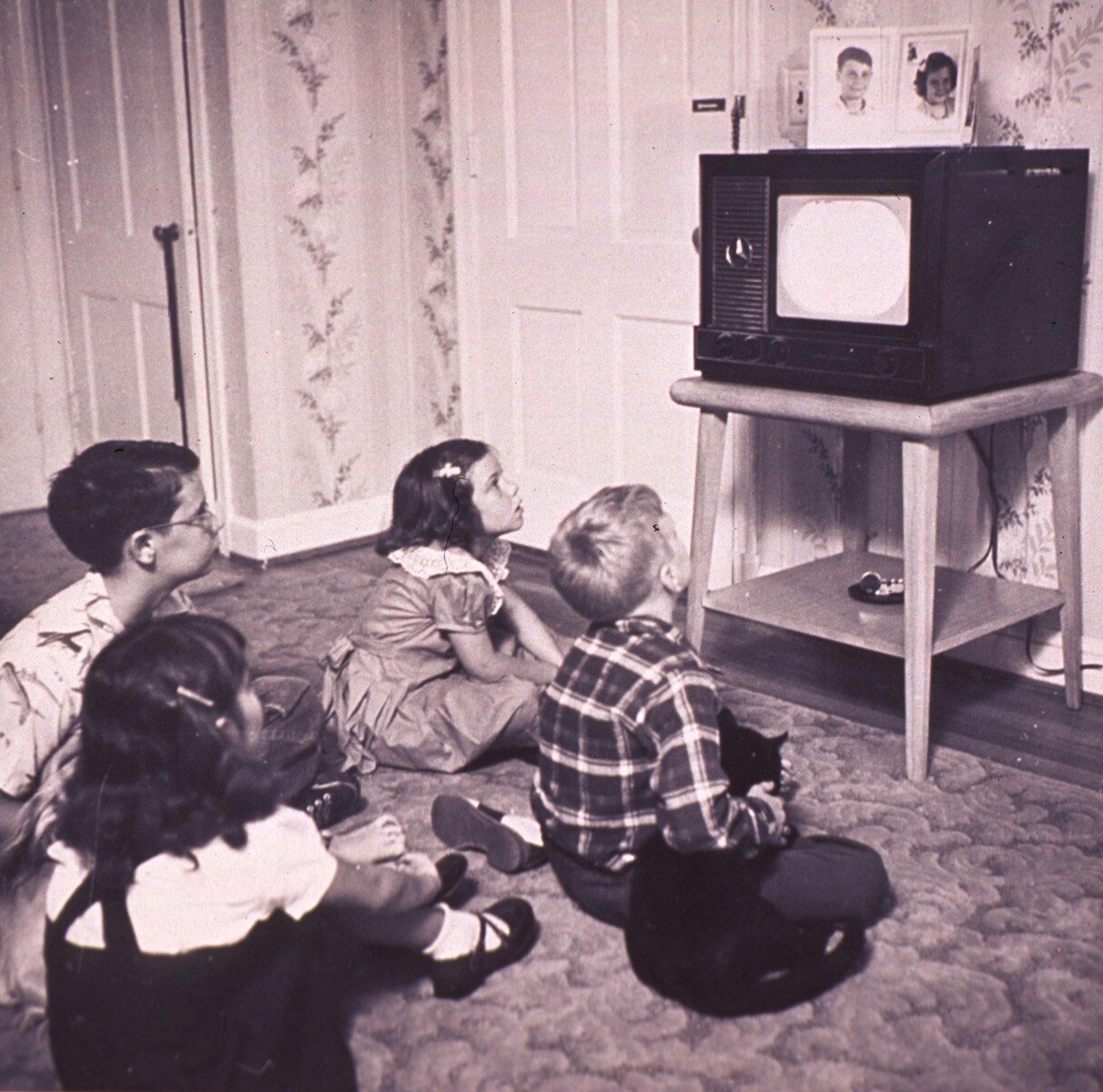
Television in the 1970s was an appointment, not a library. Most American homes received a handful of channels — the three major networks, a public station, and maybe a local independent or two — pulled out of the air with an antenna. There was no pausing, no rewinding, no recording (the VCR didn’t enter most homes until the 1980s), and absolutely no streaming. If a show aired at 8 p.m. on Thursday and you weren’t in front of the set at 8 p.m. on Thursday, you missed it, possibly forever.
This gave television a communal quality that has almost entirely disappeared. Tens of millions of people watched the same program at the same moment, then talked about it the next day, because there was no other way to have seen it. A popular finale or a major news event was a genuinely shared national experience, synchronized down to the minute. The schedule was printed in the newspaper and in weekly guides, and planning your evening around it was simply how watching worked.
The idea that you might watch any episode of any show at any hour, on a device in your pocket, pausing whenever you liked, would have sounded like pure fantasy. Television told you when to show up. You showed up.
Getting Lost Was a Normal Part of Going Somewhere New
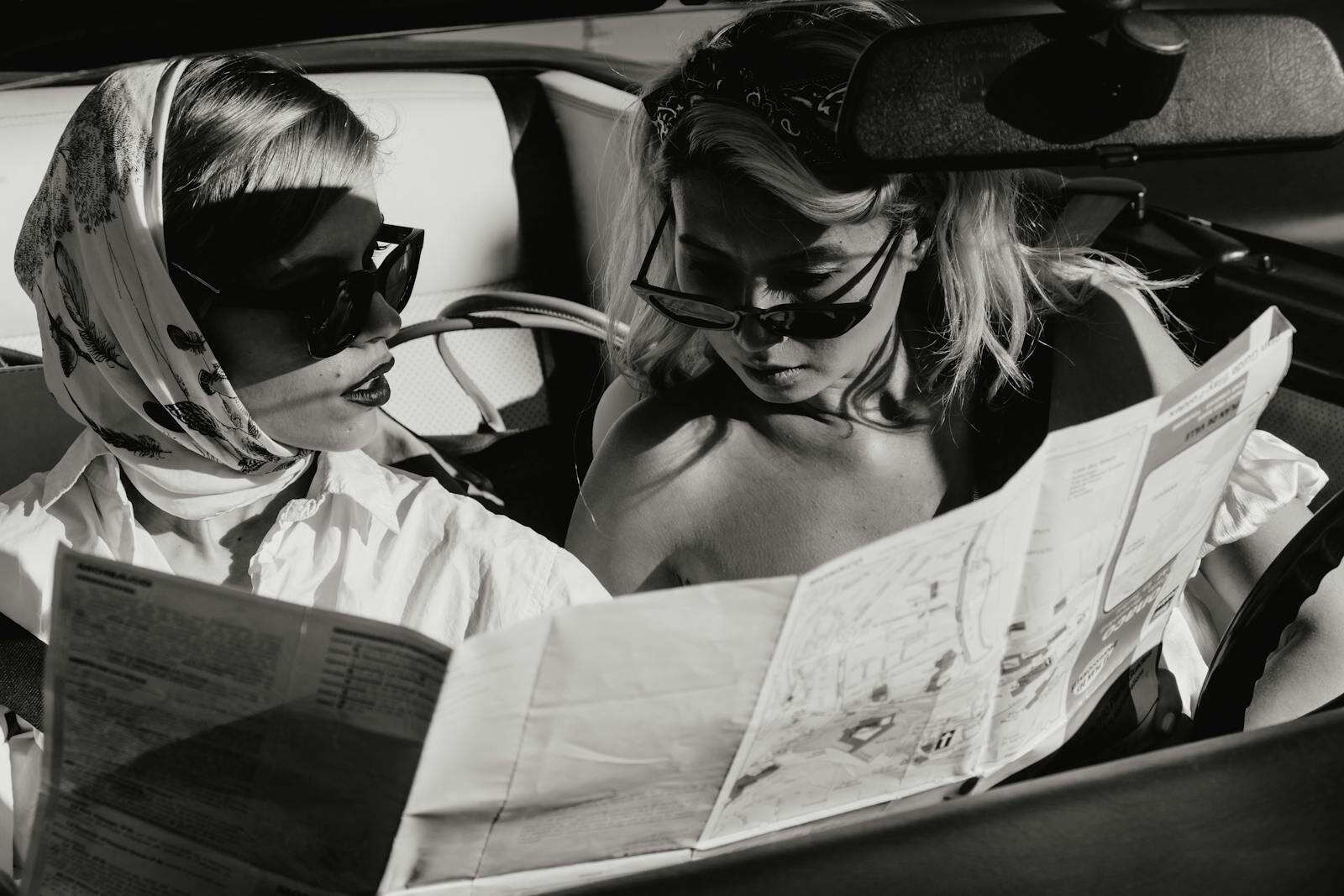
Without GPS, without smartphones, without any way to summon a map on demand, navigating to an unfamiliar place in the 1970s was an exercise in preparation and improvisation. You consulted a paper road map, unfolded across the steering wheel or the passenger’s lap, and traced the route by hand. You wrote directions on a scrap of paper. And when those directions failed — as they regularly did — you rolled down the window and asked a stranger, or pulled into a gas station, where the attendant would point you the right way.
Getting lost wasn’t a catastrophe; it was an expected feature of travel. People built extra time into trips for the near-certainty of a wrong turn. Families argued over folding maps in the front seat. The phrase “we’re lost” was a normal thing to say on a road trip, not a sign that something had gone wrong with the technology. There was no blue dot showing your exact position, no calm voice rerouting you, no way to know what was around the next bend until you drove around it.
This produced a different relationship with place. People developed real mental maps of their regions, knew landmarks and shortcuts by heart, and could give directions from memory. The skill of finding your way — genuinely knowing where you were and how to get where you were going — was a routine competence that the satellite in everyone’s pocket has quietly made optional.
Privacy Was the Default, Not the Exception
Perhaps the strangest thing to explain about the 1970s to someone who didn’t live through it is how fundamentally private ordinary life was — not through any effort, but simply because the infrastructure of constant documentation didn’t exist. There were no cameras in everyone’s pocket. There was no internet to post anything to. A moment that wasn’t deliberately photographed with a film camera — and film was expensive, and you couldn’t see the picture until it was developed days later — was gone the instant it passed, preserved only in memory.
A person could go to a party, say something foolish, wear something ridiculous, make a mistake, and walk away with the reasonable certainty that there would be no permanent record of it. Reputations were local and built on direct acquaintance. There was no searchable archive of a person’s past, no comment history, no photo someone else posted without asking. What you did on a Saturday night stayed, for all practical purposes, on that Saturday night.
This wasn’t privacy as a hard-won right or a careful practice. It was simply the ground state of existence, the natural consequence of a world without ubiquitous recording and global publishing. The modern condition — in which almost any moment can be captured, shared, and preserved indefinitely by anyone present — represents a reversal so total that it has changed not just how people behave in public but how they think about the very idea of a private self. In 1974, being unobserved was nothing special. It was just how life worked.
What ties these seven things together is how invisible they were to the people living inside them. Nobody in 1974 felt that they were living in a strange world. The smoke, the loose kids in the backseat, the tethered phone, the leaded air — all of it was simply normal, the unremarkable backdrop of an ordinary life. Which raises a quietly unsettling question worth sitting with: fifty years from now, which of our own everyday normals will read like dispatches from another planet?