7 Modern Comforts That Made People Less Patient
Patience used to be involuntary. For most of human history, waiting wasn’t a virtue people cultivated so much as a condition they had no way to escape — the letter took a week to arrive, the show came on once a week, the meal took an hour to cook, and there was simply nothing to be done about any of it but wait. The waiting built a certain tolerance into people, not because they were better, but because the world gave them constant practice.
Then, one comfort at a time, technology began removing the waiting. Each innovation was a genuine improvement that almost no one would give back. But researchers who study behavior have noticed a pattern: as the gaps closed, our collective tolerance for any remaining gap seems to have shrunk along with them. A Pew Research Center study on hyperconnected young people summarized the negative effects in language that sounded like a drug warning: a need for instant gratification and a loss of patience. Here are seven modern comforts that, in eliminating one wait after another, quietly recalibrated how long we’re willing to wait for anything.
Same-Day Delivery
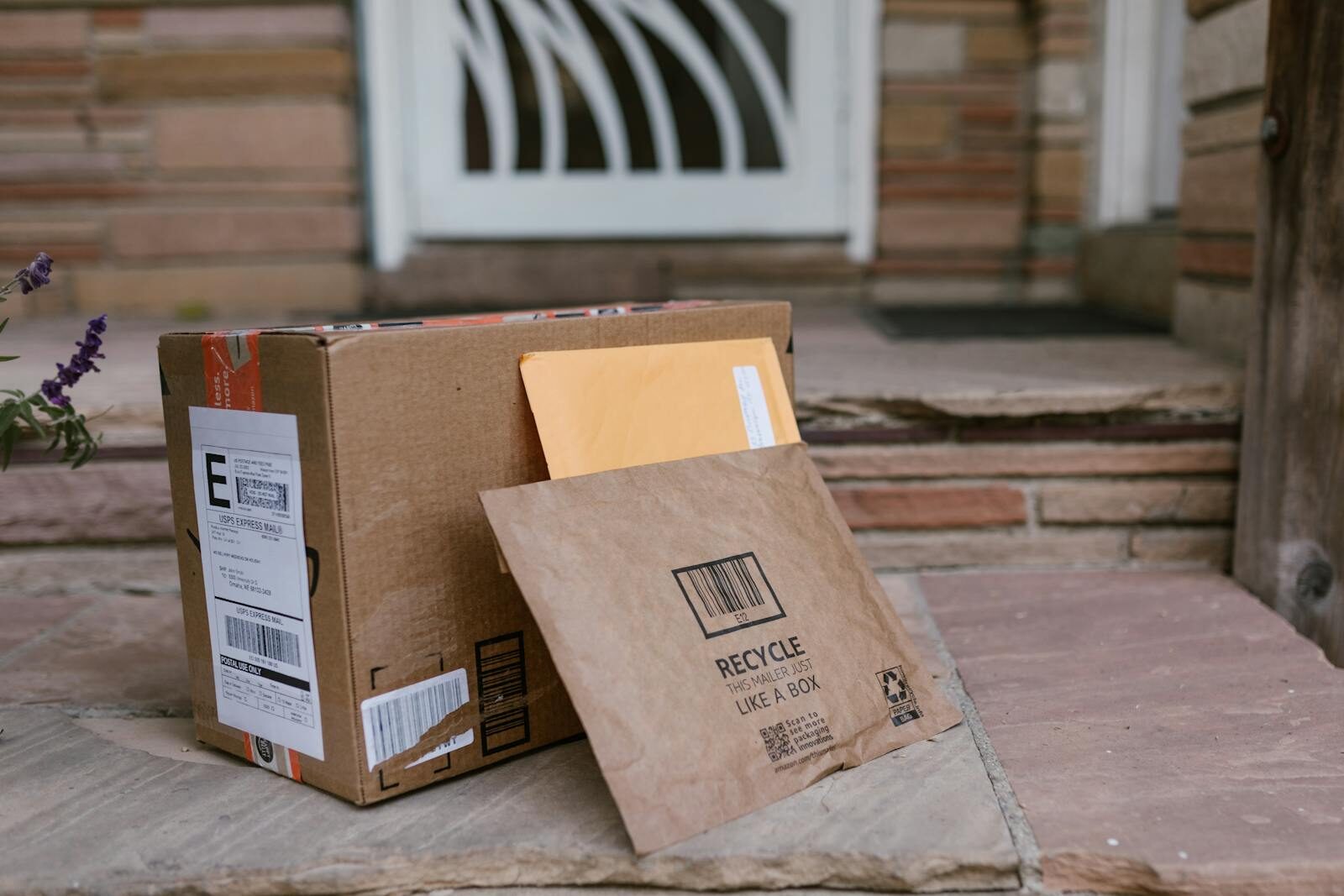
Within living memory, ordering something from far away meant waiting weeks — the mail-order catalog promised delivery in “four to six weeks,” and people accepted that timeframe without complaint because there was no alternative. Then shipping sped up to a week, then to two days, and now, in many places, to the same afternoon. A thing you want can appear on your doorstep within hours of the impulse to buy it.
This is a genuine marvel of logistics, and it’s wonderfully convenient. But it has also reset the baseline of what counts as a reasonable wait for a physical object. When same-day and next-day delivery become the norm, a five-day shipping estimate — which not long ago would have seemed almost miraculously fast — now reads as frustratingly slow, even unacceptable. The expectation has ratcheted in one direction only.
The deeper shift is in the relationship between wanting something and having it. That gap, which used to be measured in weeks and which forced a kind of built-in patience, has been compressed toward zero. We’ve grown accustomed to the near-instant satisfaction of a desire, and the old experience of ordering something and then simply waiting for it, with the waiting as an unremarkable part of the deal, has come to feel like a defect in the system rather than the way things naturally are.
Streaming On Demand
Television used to run on the network’s schedule, not yours. Your favorite show aired once a week at a fixed time, and if you missed it, you waited — possibly for a summer rerun, possibly forever. A season unfolded over months. The finale of a story you were invested in might be a full year away. Anticipation wasn’t a marketing tactic; it was the unavoidable structure of the medium.
Streaming demolished that structure entirely. Now entire seasons drop at once, any episode of almost any show ever made is available the instant you want it, and the next installment is always one tap away. The wait between you and the next piece of story has been reduced to the length of a “skip intro” button. Binge-watching — consuming a whole season in a sitting — became not just possible but the default mode.
The consequence for patience is subtle but real. The weekly broadcast schedule, for all its frustrations, cultivated the ability to anticipate, to sit with a cliffhanger for days, to savor something slowly because you had no choice. Researchers who study media consumption note that the loss of these traditional viewing rituals — waiting for a scheduled show, anticipating a favorite’s return — has eroded a kind of patience that the old constraints used to nurture by default. When everything is available immediately, the muscle that used to handle waiting for the next episode simply stops being exercised.
Web Pages That Load Instantly
In the early days of the web, a page loaded slowly, painting itself onto the screen piece by piece, and everyone simply accepted this as how the internet worked. Today, pages appear effectively instantly — and our tolerance for anything slower has collapsed to a degree that can be measured with startling precision.
The data here is genuinely revealing about modern impatience. Research by Google found that 53% of mobile users abandon a site that takes more than three seconds to load. More than half of all visitors will simply give up and leave over a delay of a few seconds. The frustration scales finely with time: as load time increases from one second to three, the probability that a user bounces — leaves without interacting — rises by 32%. We are now measurably impatient at the scale of individual seconds.
This is perhaps the purest illustration of how comfort recalibrates expectation. Three seconds is not a long time by any historical standard; it’s barely time to take a breath. Yet because we’ve grown accustomed to near-instant loading, three seconds of waiting for a web page now registers as a genuine irritation severe enough to make a majority of people abandon their goal entirely. The wait didn’t get longer. Our willingness to tolerate it got dramatically shorter.
Summoning a Ride With a Tap
Getting a taxi used to involve genuine uncertainty and waiting. You stood on a curb with your arm out, hoping an empty cab would pass; you called a dispatcher and were told a car would arrive “sometime in the next half hour, probably”; you simply didn’t know when, or whether, your ride would come. Hailing a ride was an exercise in patience and luck.
Ride-share apps eliminated nearly all of that. Now you tap a button and watch a small car icon move toward you on a map, with an exact arrival time counting down to the minute. The uncertainty is gone, replaced by precise, real-time information and a wait usually measured in single-digit minutes. It’s a real improvement in convenience and in peace of mind.
But it also turned a five-minute wait into something people now find genuinely annoying. When you can see the car coming and know exactly when it will arrive, every minute of that countdown becomes a monitored, impatient vigil, and a longer-than-expected wait — or a driver who stops moving on the map — produces a flash of frustration that the old, blind, much longer wait somehow didn’t. By making the wait visible and short, the technology made us less able to tolerate any wait at all. The standard is now “a car, here, almost immediately,” and anything short of that disappoints.
Instant Messaging
Communication used to have built-in delay at every level. A letter took days each way, so a full exchange might span two weeks. Even after the telephone, reaching someone meant catching them physically near their phone, and if you missed them, you waited and tried again. The gaps between messages were long, and everyone understood and accepted them as simply how staying in touch worked.
Instant messaging collapsed all of that to nothing. Now a message crosses the world in under a second, and most people carry the device that receives it every waking moment. A conversation can be continuous and real-time even between people on opposite sides of the planet. The delay between thinking of something and telling someone has effectively vanished.
The result is a new and often anxious impatience around response times. Because we know the message arrived instantly, and we can often see that it was delivered or even read, a reply that doesn’t come within minutes can generate real frustration or worry — the dreaded sight of “read” with no response. An unanswered text for a few hours, which represents communication vastly faster than anything available a generation ago, now feels like being ignored. We compressed the wait for a reply to seconds, and in doing so made even a short delay feel like a slight. The patience that letter-writing demanded as a matter of course has no place left to live.
Food Delivery at the Push of a Button
Getting a meal you didn’t cook yourself used to require real effort and time. You drove to the restaurant, or you called and waited the better part of an hour for delivery from one of the few places that offered it, or you simply cooked, which took longer still. Feeding yourself well, without doing the work, involved either travel or a substantial wait.
Delivery apps turned almost any restaurant in your area into a button on your phone, with the food arriving in a window you can track on a map, often within half an hour. The friction of getting prepared food — the driving, the calling, the not-knowing — has been smoothed down to a few taps and a countdown timer. It’s a remarkable convenience, especially on a tired evening.
And it has made waiting for food, of all things, feel newly intolerable. When a meal can appear at the door in thirty minutes with no effort, the prospect of cooking something that takes forty-five minutes can feel like an imposition, and a delivery that runs twenty minutes late produces genuine irritation tracked in real time on the app’s map. Hunger has always involved waiting, but the comfort of on-demand delivery has reframed the ordinary wait for food as a problem to be solved rather than a normal part of eating. The faster the food can come, the less patience we have for it taking any time at all.
The Answer to Any Question, Instantly
For all of human history until very recently, having a question and getting it answered were separated by real effort and time. You went to the library, asked someone knowledgeable, consulted a reference book, or simply lived with not knowing. Curiosity had to be patient, because the path from wondering to knowing was long and often inconvenient.
The search engine annihilated that gap. Now any question — factual, trivial, urgent, idle — is answered in seconds by the device in your hand. The reflex to simply look something up the instant you wonder about it has become so automatic that we no longer experience it as a sequence of steps at all. Knowledge went from something you pursued to something you summon.
This has quietly eroded our tolerance for not knowing, even briefly. The state of having an unanswered question — once the normal, sustained condition of a curious mind — has become almost unbearable; people will interrupt conversations, meals, and movies to resolve a minor factual uncertainty rather than sit with it for an hour. And the impatience extends to the answer itself: when a search takes a moment too long, or doesn’t immediately surface exactly what we wanted, the same frustration that once attached to slow web pages flares up. We’ve grown so accustomed to instant answers that the brief, ordinary experience of simply not knowing something yet now feels like a problem demanding immediate resolution.
It would be a mistake to read all this as a simple story of decline, or to conclude that people have become worse. The comforts are real comforts, and the conveniences solve genuine problems — few of us would actually surrender same-day delivery, streaming, or the ability to answer any question in seconds. The more interesting truth is about adaptation: human patience appears to calibrate itself to the conditions we live in, stretching to fill long waits when waits are unavoidable, and contracting when they’re not. We didn’t lose patience through some failure of character. We simply built a world with less and less waiting in it, and our tolerance for waiting adjusted to match. The open question — worth sitting with, if you can stand to — is whether a capacity that only develops through practice is one we can afford to stop practicing entirely.