6 Things Your Brain Does Behind Your Back
You are not in charge of your brain. This is a strange thing to confront in writing, because the part of you reading this — the inner narrator that feels like the captain of the ship — is generated by the same organ that runs all the operations you never see. The voice in your head is one small department in a vast company, and most of what the company does happens without consulting the voice at all.
This is not a metaphor. It is the working consensus of modern neuroscience. The brain handles an immense volume of perception, prediction, regulation, and memory maintenance every second, and almost none of it surfaces as conscious experience. Below are six specific operations your brain is performing right now, while you read this sentence, without your input or awareness. Each of them is documented. Each of them is happening to roughly 8 billion people simultaneously. Each of them suggests that “you” are a partial view of something much larger and more capable.
Your Brain Is Editing a Hole in Your Vision Every Second You’re Awake
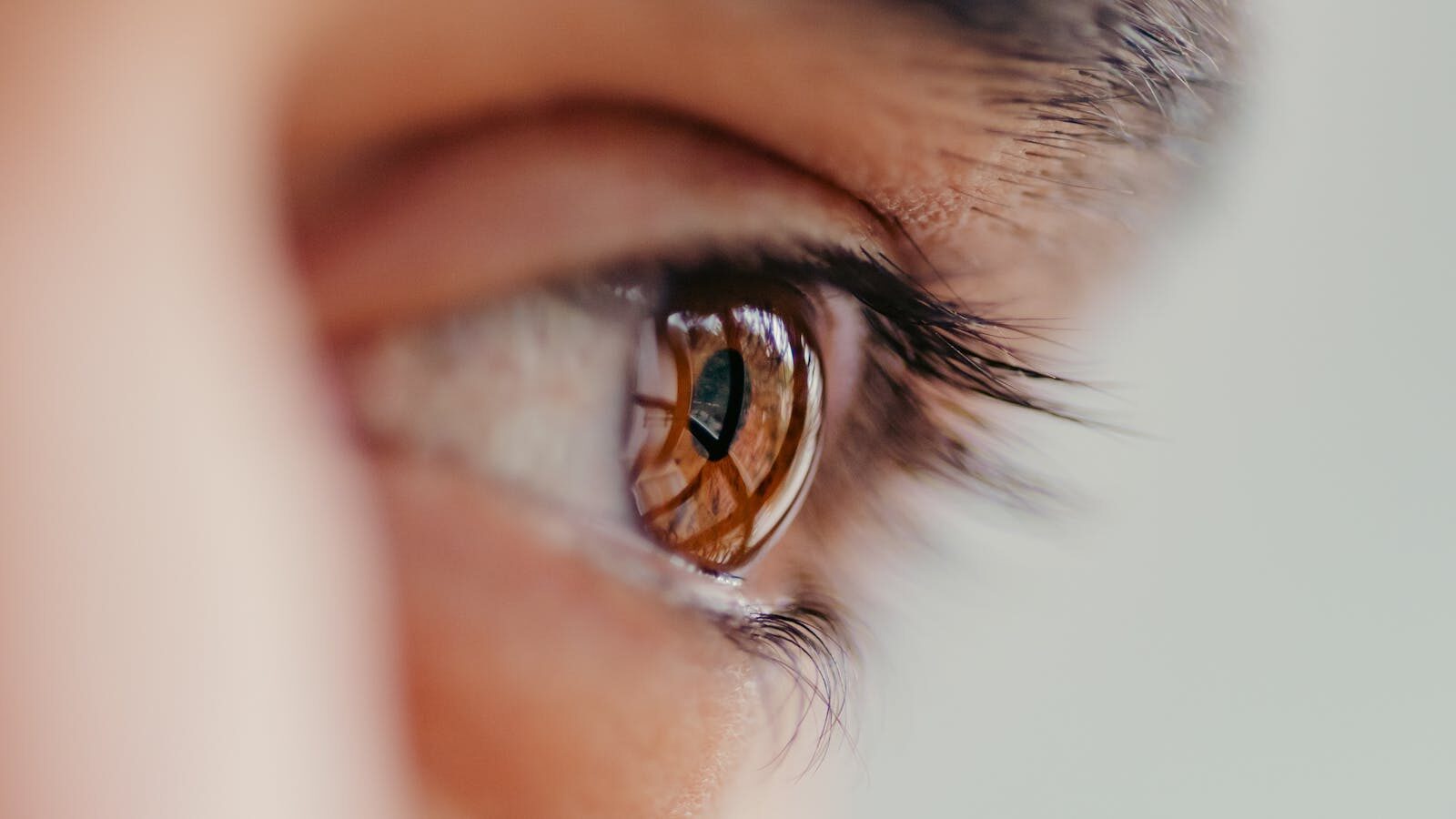
There is a spot in each of your eyes — about 15 degrees off-center, toward your nose — where the optic nerve exits the retina. At this point, there are no photoreceptors. None. The information your eyes are sending to your brain has a literal blank spot. You have never noticed.
The reason you have never noticed is that your brain fills the gap in. It does this without asking, without alerting you, and without giving any indication that the filling-in is happening. Researchers can demonstrate the blind spot easily — close one eye, focus on a marker on a page, slide a second marker off to one side, and at a particular point the second marker simply disappears. The brain replaces it with whatever pattern surrounds the blind spot: white paper, the background texture, the color, even motion. In experiments where the surrounding pattern contains stripes, color, or texture, the brain seamlessly extends those features across the missing region.
The neuroscientist V.S. Ramachandran spent much of the 1990s documenting what people perceive in their blind spots when surrounded by various test patterns. The brain doesn’t just patch the hole with neutral gray. It actively guesses what should be there based on contextual cues from the visible field and inserts that guess into your conscious experience as if it were real perceptual data. Whether you call this “predictive coding” or “Bayesian inference,” the effect is the same: your visual world is partly fabricated. You’re never seeing reality. You’re seeing reality plus your brain’s best estimate of what’s missing, presented as one seamless image.
It Replays Your Day Like a Movie While You Sleep
In 1994, two neuroscientists at the University of Arizona, Matthew Wilson and Bruce McNaughton, ran an experiment that seemed almost mystical when first reported. They placed electrodes in the hippocampus of rats and recorded the firing patterns of individual neurons while the rats ran through mazes. Specific neurons — called place cells — fired in specific sequences as the rats moved through specific locations. The sequences were precise enough to read like a map of the route taken. Then Wilson and McNaughton recorded the same neurons while the rats slept.
The neurons replayed the sequences. The same firing patterns that had recorded the maze-running, in the same order, fired again during sleep — sometimes compressed, sometimes in reverse, but unmistakably replaying the day’s events. Subsequent research from Wilson’s lab at MIT, and many others, has shown that these replays occur during both REM and slow-wave sleep, and that they appear simultaneously in the hippocampus and the visual cortex, as if the brain were running the experience back through both the memory system and the perceptual system at once.
This is currently the leading mechanism for memory consolidation. Each night, while you are unconscious, your brain selects which experiences from the day to keep, then rehearses them — sometimes hundreds of times — etching them more deeply into the neural architecture. A 2019 study showed replay continuing for up to 10 hours after a novel experience, far longer than previously thought. If you sleep badly, the replay gets disrupted, and the day’s memories thin out. You are not the one deciding what to remember. Your sleeping brain is doing the curation.
It Filters Out 99% of Sensory Data Before You’re Conscious of It
Right now, an enormous amount of sensory information is reaching your nervous system. The pressure of your clothing against your skin. The ambient temperature of the room. The faint hum of any electronics nearby. The proprioceptive feedback from every joint in your body. The taste of whatever is in your mouth. The smell of the room. The position of your tongue. The exact angle of your neck. You are perceiving almost none of it.
The brain operates an aggressive filtering system that promotes only a tiny fraction of incoming sensory data into conscious awareness. The classic demonstration is the cocktail party effect, first described by cognitive scientist Colin Cherry in 1953. Cherry asked participants to shadow one stream of speech while ignoring another, and found that listeners could lock onto a single voice in a crowd of voices, screening out the others — until something salient broke through, like the listener’s own name spoken across the room.
The implication is striking. The “ignored” voices were not actually being ignored. The brain was processing them deeply enough to detect specific words, then deciding whether each one merited promotion to consciousness. Most didn’t. The brain’s filter is not a wall; it is a triage system, constantly evaluating thousands of inputs and waving almost all of them past your conscious mind without comment. What you experience as “noticing” is the small fraction the system flagged. The rest is happening below the floor of your awareness, and it has been the whole time.
It Predicts the Future Constantly and Updates Reality to Match
The brain does not passively receive perceptual data and then construct an experience from it. Instead, it generates a continuous prediction of what the world is about to be, then uses incoming sensory data only to correct that prediction where it’s wrong. This is called predictive coding, and over the last two decades it has become one of the dominant frameworks in neuroscience.
You can feel the system working when it breaks. Walk down a flight of stairs in the dark and miscount the steps. The foot that expected one more stair lands too soon, your stomach drops, and a flash of fear hits before your conscious mind has time to interpret what happened. That sensation is the brain’s prediction failing in real time. The expected pattern of sensory data — one more step, then floor — did not arrive. The prediction error generated an emergency signal.
Most of the time, the prediction is correct, and you never notice it’s happening. The brain is essentially running an internal simulation of the next half-second of reality and using your senses to fact-check the simulation. When you reach for a doorknob, your brain has already predicted where your hand will end up, how the doorknob will feel, how much it will resist when you turn it. The reach feels effortless because the brain has done most of the work in advance. The world feels stable not because it is — it isn’t, you’re moving through it constantly — but because the prediction machinery is so fast that you experience the prediction itself as the world.
It Manages Your Heart, Lungs, Digestion, and Hormones Without Asking
Your heart is beating. You did not tell it to. Your lungs are pulling air at roughly twelve to twenty breaths a minute, adjusting depth and rate in response to your blood oxygen level. Your stomach is moving food along, releasing acids, signaling fullness or hunger through a constant chemical dialogue with your brain. Your liver is filtering toxins. Your kidneys are balancing electrolytes. Your endocrine system is releasing precise doses of dozens of hormones to keep your body within survivable ranges of temperature, blood sugar, and blood pressure.
This is the autonomic nervous system, and it is run almost entirely by the brainstem — specifically, structures called the medulla, pons, and hypothalamus — without consulting the conscious cortex. The brainstem is older, evolutionarily, than the parts of the brain that produce language and self-awareness. It runs the machinery of life. The conscious you is, in a real sense, a guest in a body being operated by a different department.
You can intrude on a few of these systems briefly. You can hold your breath, but only until the brainstem overrides you. You can clench your bladder, but eventually the system wins. You cannot consciously dilate your pupils, slow your heart by direct command, or release adrenaline on demand. The handful of bodily functions you can directly control — voluntary muscles, mostly — are the exception. The rest are managed for you, around the clock, with a precision and consistency you couldn’t match if you tried.
It Constructs a Self That Feels Continuous Even Though It Isn’t
You feel like one person. Across years, across moods, across the difference between waking and dreaming, there’s a “you” who persists. This sense of continuous selfhood is one of the most powerful illusions the brain creates — and “illusion” is the right word, because the underlying neural reality is far stranger than the seamless experience suggests.
The brain is constantly stitching together fragments. The version of you reading this is built from a working memory that holds only a few seconds of information at a time, a long-term memory that is reconstructed (not retrieved) from scattered storage every time you access it, a body schema that the brain updates based on proprioceptive feedback, and a narrative module that keeps producing a running explanation for what you’re doing and why. These systems can come apart. Patients with certain forms of brain damage have lost the ability to feel ownership over their own limbs, the capacity to recognize their own face in a mirror, or the continuity of their own life story — and the rest of their cognition can remain largely intact.
The self that feels so solid is not a thing your brain has. It is a thing your brain does. The construction runs continuously, in the background, weaving sensation and memory and prediction into a single first-person experience. When the brain stops doing this — under anesthesia, in deep dreamless sleep, in certain meditative states — the self thins out or vanishes entirely, and then reassembles when consciousness returns. The continuity is a feature of the construction, not of anything underneath it.
You’re never quite catching your brain in the act, because the brain is what’s doing the catching. But it’s working, all of it, every second, behind the curtain you’re standing on.